

How to Calculate Pain and Suffering in a Personal Injury Claim: A Thought Leader Perspective from AVGI
Overview and Quick Answer
In personal injury claims, pain and suffering—the non-economic damages that account for physical pain, emotional distress, and loss of enjoyment of life—are typically valued using either a multiplier or a per diem method. Pain and suffering refer to the physical and emotional distress experienced due to an injury caused by another’s negligence. Individuals can claim damages for pain and suffering from various types of accidents, such as car accidents and slip-and-fall incidents. Damage calculations for pain and suffering involve assessing factors such as emotional distress, loss of enjoyment of life, and the need for medical treatment. While these frameworks offer a starting point, AVGI’s three decades of intangible asset valuation reveal their limitations and yield a more empirical approach to quantifying human suffering.
When considering non-economic damages, emotional distress damages are a key component, especially in cases like car accidents, where claimants must document both physical and emotional suffering to support their claims.
Core Takeaway: Insurers and courts regularly rely on formulaic approaches that do not capture the full scope of pain and suffering. AVGI’s methodology, rooted in the actual valuation of intangible assets, delivers a more precise and thorough assessment.
What Counts When You Calculate Pain and Suffering Claims
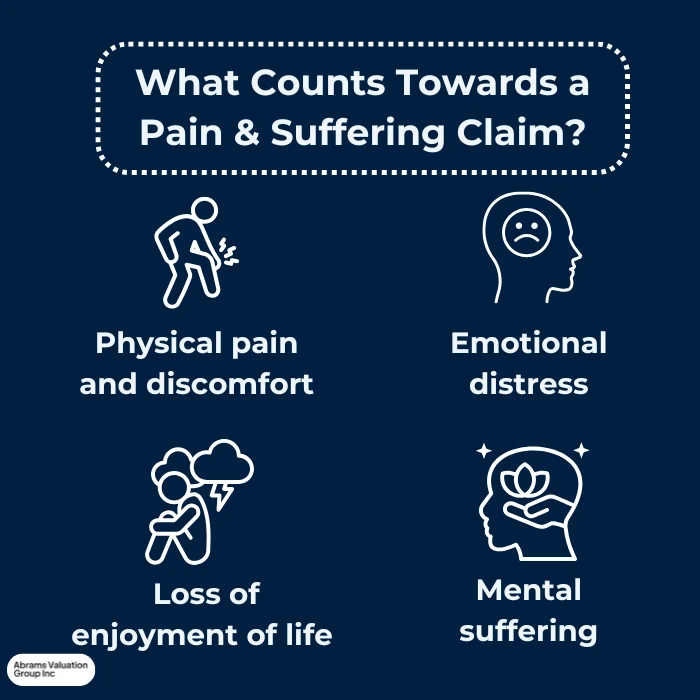
Pain and suffering damages go beyond reimbursing medical bills or lost income. They cover:
- Physical pain and discomfort
- Emotional distress and psychological trauma
- Mental suffering
- Loss of enjoyment of life and daily function
Loss of enjoyment of life refers to the reduction or inability of a victim to take part in activities that previously brought them pleasure due to their injuries.
Unlike economic damages, these losses lack receipts, making them intrinsically subjective. Severity, duration, and the impact on daily routines are critical drivers of value. Proving a pain and suffering claim usually involves submitting evidence of the injury’s impact on the individual’s life, including medical records and expert witness statements.
Each pain and suffering case is unique, and compensation is calculated on a case-by-case basis according to specific circumstances.
Types of Damages in Personal Injury Cases
In personal injury cases, knowing the types of damages available is necessary for anyone seeking fair compensation. Damages are generally divided into two main categories: economic and non-economic damages. Economic damages are the tangible losses that can be easily quantified, such as medical expenses, lost wages, and property damage. These are supported by documentation like medical bills, pay stubs, and repair receipts, making them straightforward to calculate.
Non-economic damages, on the other hand, address the intangible losses that don’t come with a price tag. This includes pain and suffering damages, which compensate for the physical pain, emotional distress, and mental anguish experienced as a result of an injury. Suffering damages also accounts for the loss of enjoyment of life and the impact on daily activities. Calculating pain and suffering in a personal injury claim needs a nuanced approach, as these non-economic damages are subjective and unique to each individual’s experience.
Identifying the distinction between economic and non-economic damages is important for anyone pursuing an injury claim. By learning how both types contribute to the overall value of a personal injury case, injured victims can better advocate for the full range of compensation they deserve.
Evidence: The Foundation of a Valid Claim
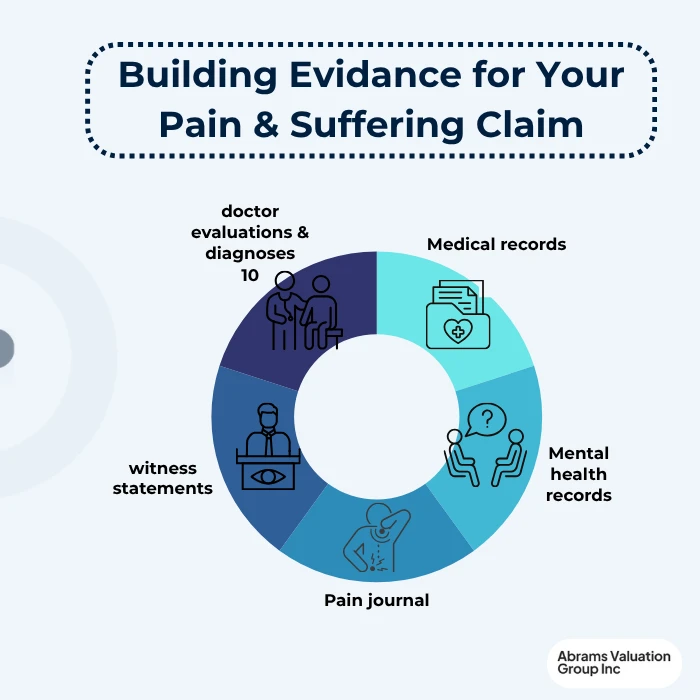
Strong claims are built on objective and subjective evidence, such as:
- Medical records: Document injury severity, treatment, and prognosis
- Mental health records: Substantiate psychological harm
- Document daily limitations through photos and witness statements: Illustrate loss of quality of life.
- Start a pain journal to record physical discomfort: Record daily experiences of pain and discomfort related to your injuries
Documenting your experiences as soon as possible is important for a pain-and-suffering claim.
Keeping a journal of your pain and suffering experiences, including physical discomfort and emotional distress, can strengthen your claim.
Photographs of injuries throughout recovery and statements from family, friends, or co-workers reinforce claims of lifestyle disruption.
Expert testimony can strengthen your case by explaining how injuries impact daily activities and quality of life.
The more detailed and human your documentation is, the more compelling your pain and suffering claim will be.
To prove pain and suffering, detailed documentation and credible evidence are essential, and proper documentation significantly increases the compensation for pain and suffering.
Standard Calculation Methods: Per Diem and Multiplier Approaches
Per Diem Method
This method assigns a daily dollar value to the claimant’s suffering and multiplies it by the number of days the injury affects the victim. It’s straightforward for short recoveries but becomes highly subjective for chronic or lifelong conditions.
Multiplier Method
Economic damages (medical costs, lost wages, future care) are added up and multiplied by a factor (typically 1.5 to 5) based on injury severity. In the Multiplier Method, a multiplier of 1.5–2 is usually applied for minor injuries, while a multiplier of 3–5 is used for severe, long-term, or permanent injuries. In some states, such as Kentucky, a permanent injury is a specific threshold that allows plaintiffs to claim pain and suffering damages beyond no-fault PIP limits. While this method is common, it can undervalue non-economic harm, especially when economic losses are minimal.
Example Calculations:
- Per diem: $150/day × 180 days = $27,000
- Multiplier: $40,000 × 3 = $120,000
Why Standard Calculation Methodology Falls Short
After decades of intangible asset valuation, AVGI experts recognize that these standard approaches consistently underestimate the true extent of non-economic damages. Here’s why:
- Narrow Focus: Standard methods usually overlook vocational impacts, family dynamics, and losses of individual satisfaction.
- Lack of Individualization: They don’t thoroughly capture how two similar injuries can impact people with different jobs, lifestyles, or psychological resilience in dramatically different ways.
- Evidence Gaps: Calculators and formulas rarely integrate detailed subjective evidence—such as daily pain logs or emotional trauma—resulting in undervalued claims.
In short, pain and suffering calculators are best for initial estimates, not for final, robust valuations.
The AVGI Advantage: Intangible Asset Valuation Applied to Pain and Suffering
With over 30 years of experience valuing brands, intellectual property, and other non-physical assets, AVGI brings empirical rigor to non-economic damage claims. Our experts:
- Integrate more extensive evidence, including vocational, psychological, and lifestyle impacts.
- Apply advanced valuation models that recognize the varied nature of pain and suffering.
- Collaborate with medical, vocational, and mental health experts to document and quantify long-term effects of the injury.
This all-encompassing, evidence-based approach produces defensible, higher-value assessments that withstand insurer review and court challenges.
Future Pain and Suffering: Accounting for Long-Term Impact
When it comes to pain and suffering damages, it’s important not to overlook the long-term effects of an injury. Future pain and suffering refers to the ongoing physical pain and emotional distress that may persist well after the initial incident. For many victims, especially those with serious injuries such as spinal cord damage or traumatic brain injuries, the consequences can last a lifetime.
Calculating future pain and suffering requires a precise assessment of the victim’s medical condition, prognosis, and the likelihood of needing future medical treatment or rehabilitation. Experienced personal injury lawyers collaborate with medical experts to evaluate the potential for permanent disability, chronic pain, and the impact on the victim’s quality of life. By documenting these factors exhaustively, victims can seek compensation that more closely reflects the future pain and suffering they are likely to endure.
This forward-looking approach ensures that suffering damages account not only for current hardships but also for the persisting challenges that may arise. In cases involving severe injuries, accounting for future pain is essential to secure the assistance and aid needed for long-term rehabilitation and well-being.
Emotional Distress: Detecting the Invisible Injuries
Emotional distress is a vital, yet commonly overlooked, component of pain and suffering damages in personal injury cases. While physical injuries are visible and can be documented through medical records, emotional distress encompasses the psychological and emotional pain that can deeply affect a victim’s daily life. Conditions such as anxiety, depression, and post-traumatic stress disorder (PTSD) are common forms of emotional distress that may arise after a traumatic event.
Proving emotional distress needs a strategic approach. Personal injury lawyers often work closely with mental health professionals to document the extent of psychological harm. Evidence may encompass therapy records, expert testimony, and statements from the victim and their loved ones about changes in mood, behavior, or ability to function. By highlighting the impact of emotional distress on daily life, lawyers can help ensure that these invisible injuries are recognized and that victims get fair compensation for all aspects of their suffering.
Acknowledging emotional distress as part of pain and suffering damages is necessary for a comprehensive personal injury claim. It makes certain that victims are not only compensated for physical pain but also for the mental anguish and suffering that can remain long after the physical wounds have healed.
Insurance Companies and Suffering Claims: Handling the Negotiation Process
Dealing with insurance companies can be one of the most challenging aspects of pursuing a pain and suffering claim. Insurance adjusters are trained to reduce payouts, often questioning the severity of injuries or disputing the extent of pain and suffering. Therefore, injured victims need to have an experienced personal injury lawyer advocating on their behalf.
A skilled personal injury lawyer understands the tactics insurance companies use and knows how to counter them with strong evidence and persuasive arguments. From collecting comprehensive medical records to submitting compelling documentation of emotional distress and daily limitations, a lawyer can help ensure that suffering claims are taken seriously. By negotiating effectively, they can help victims secure a fair settlement and maximize compensation for their pain and suffering.
Managing negotiations with insurance companies requires expertise and persistence. With proper legal support, victims can improve their chances of achieving the maximum compensation they deserve for their suffering damages.
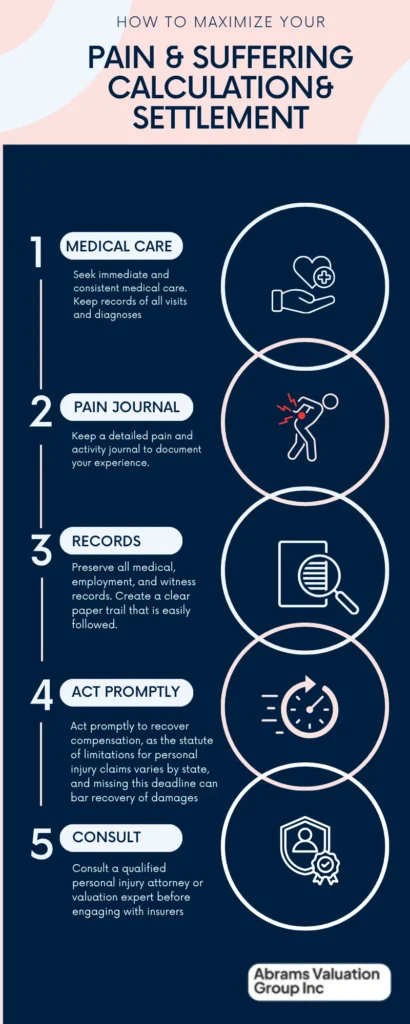
Practical Steps to Maximize Your Settlement
- Seek immediate and consistent medical care
- Keep a detailed pain and activity journal
- Preserve all medical, employment, and witness records
- Act promptly to recover compensation, as the statute of limitations for personal injury claims varies by state, and missing this deadline can bar recovery of damages
- Hiring a personal injury attorney can increase the likelihood of receiving a higher settlement for pain and suffering claims
- Consult a qualified personal injury attorney or valuation expert before engaging with insurers
Tax Implications of Pain and Suffering Awards
Understanding the tax implications of pain and suffering awards is an important step in the personal injury recovery process. Generally, pain and suffering damages awarded for physical injuries are not considered taxable income under federal law. However, there are exceptions. If a portion of the settlement is allocated to lost wages, emotional distress not tied to a physical injury, or punitive damages, those amounts may be subject to taxation.
Because the tax treatment of suffering awards can be complex, it’s wise to seek advice from a tax professional or an experienced personal injury lawyer. They can help explain which parts of a settlement are taxable and advise on approaches to reduce tax liability. This guidance is important for ensuring that victims retain as much of their pain and suffering compensation as possible, allowing them to concentrate on recovery and rebuilding their lives free of unexpected financial obstacles.
By actively addressing the tax implications of pain and suffering awards, injured individuals can protect the full value of their suffering damages.
Conclusion
While courts and insurers rely on per diem and multiplier methods, these frameworks often leave significant value on the table. AVGI’s perspective—formed by three decades in intangible asset valuation—delivers a more accurate, individualized, and evidence-backed calculation of pain and suffering, including emotional distress damages and the full range of personal injury damages.
Ready for a more accurate calculation? Contact AVGI today for a free consultation and a free case evaluation.


