

Valuing Minority Shares in a Company: Rights, Risks, and Valuation for Private Companies
Scope and Purpose
This guide provides a comprehensive overview of minority shareholding in private companies, focusing on valuation, rights, risks, and practical steps for minority shareholders and their advisors. It is designed to empower non-controlling shareholders to understand their position and safeguard their interests, with special attention to the nuances of valuing minority stakes.
Overview of Minority Share and Minority Interests
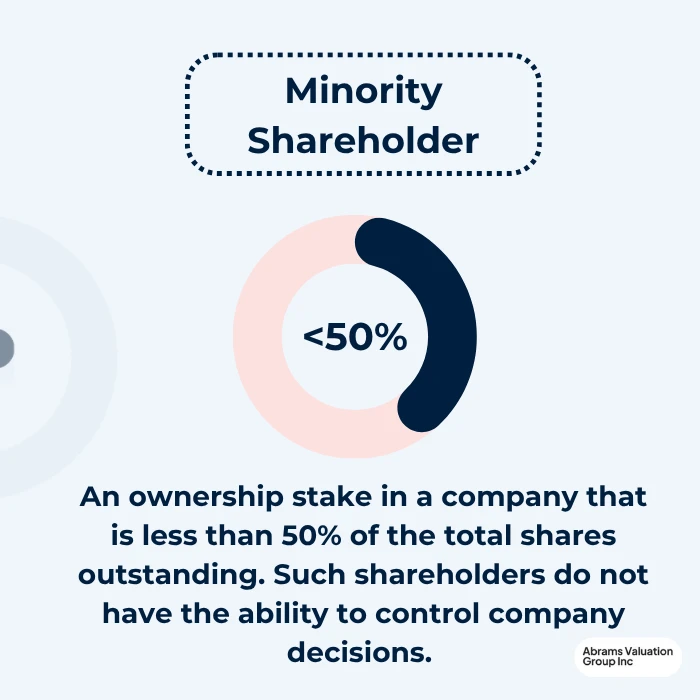
A minority share refers to an ownership stake in a company that is less than 50% of the total shares outstanding. Such shareholders do not possess the ability to unilaterally control company decisions. The distinction between minority interest and majority control is crucial: while majority shareholders dictate corporate strategy and decisions, minority shareholders have limited influence, making their rights and protections especially important. In private companies—where shares are not freely traded, and governance may be less transparent—these issues are heightened.
Who Qualifies as Minority Shareholders?
A minority shareholder is typically anyone holding less than 50% of a company’s voting shares. Common profiles include founders after dilution, employees with equity, early investors, or family members in family-owned businesses. Minority shareholders often face limitations on voting power and may find it difficult to influence company policy, especially if the majority owner(s) hold supermajority rights.
Types of Minority Stakes and Minority Interests
- Passive Minority Stakes: Held by investors without involvement in management or operations. These stakes seldom confer board seats or influence.
- Active Minority Stakes: Investors may secure board representation, veto rights, or other controls through negotiation.
- Financial Statement Appearance: Minority interests (also called non-controlling interests) appear on consolidated financial statements when a parent company owns less than 100% of a subsidiary.
How Private Equity Treats Minority Stakes
Private equity (PE) investors frequently negotiate control rights even when holding minority stakes. Typical PE arrangements may include:
- Board Seat Negotiations: PE investors can secure one or more board seats and special veto powers.
- Liquidity Expectations: PE funds often require contractual exit rights, such as put options or drag-along rights.
- Exit Routes: Typical exit expectations include company buybacks, sales to strategic buyers, or IPOs.
Rights of Minority Shareholders in Private Companies
Statutory Rights
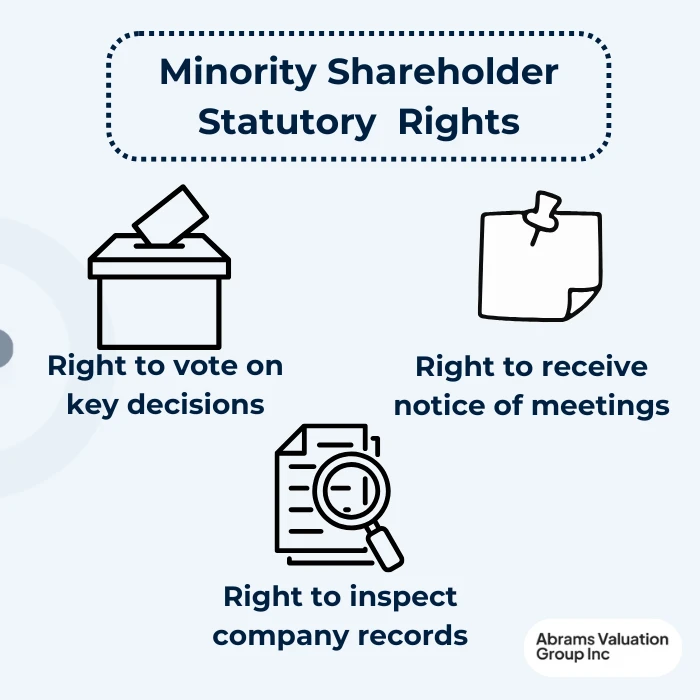
Statutory rights are set by law and may include:
- Right to vote on key decisions
- Right to receive notice of meetings
- Right to inspect company records
Contractual Rights
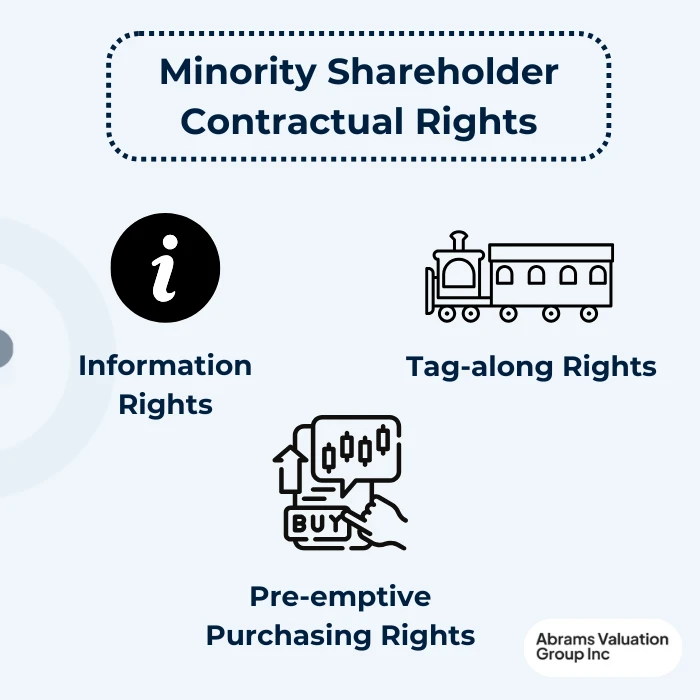
Established in shareholder agreements, these may cover:
- Information rights
- Preemptive rights to purchase new shares
- Tag-along and drag-along rights
Common Restrictions
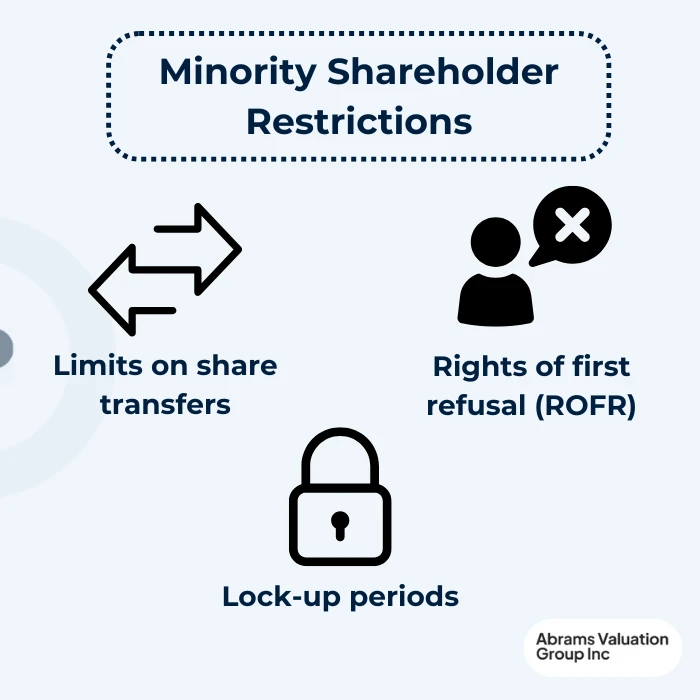
Shareholder agreements often impose restrictions, such as:
- Limits on share transfers
- Rights of first refusal (ROFR)
- Lock-up periods
Protections to Seek
Minority shareholders should negotiate for:
- Enhanced information rights
- Board representation
- Veto rights on key matters
- Clearly defined exit and buyout mechanisms
Right to Vote on Key Corporate Matters
Minority shareholders typically vote on:
- Election of directors
- Major company transactions (mergers, asset sales)
- Amendments to key documents
In some cases, supermajority votes are required, which can give minorities leverage. Review shareholder agreements to identify any veto or blocking rights.
Right to Access Information and Company Records
Minority shareholders generally have the right to inspect company books and records. Regularly request:
- Annual financial statements
- Board meeting minutes
- Cap tables
This aids in monitoring company performance and the value of your investment.
Right to Receive Dividends (If Declared)
Dividend rights depend on:
- The company’s charter and dividend policy
- Board discretion—boards may retain earnings for growth rather than pay dividends
Review governing documents to understand entitlements and the company’s past practices.
Rights to Attend and Participate in Shareholder Meetings
It is important to attend meetings to stay informed and protect your interests:
- Prepare questions in advance
- Take notes and document concerns
- Seek proxy access if unable to attend in person
Right to Transfer or Sell Shares
Private company shares are often subject to transfer restrictions:
- Rights of first refusal (ROFR) may require you to offer shares to existing owners before selling
- Review agreements for drag-along or tag-along rights
Plan your exit strategy early and ensure you understand all restrictions.
Minority Shareholder Oppression, Risks, and Remedies
Minority shareholder oppression occurs when majority owners act to the detriment of minority investors. Examples include:
- Withholding information
- Excluding from management
- Diverting company assets
Legal remedies may include:
- Lawsuits for breach of fiduciary duty
- Demands for buyouts at fair value
- Court-ordered dissolution of the company in extreme cases
Case Study: Oppression Claim in a Private Company
Background: A minority shareholder in a family-owned business is denied access to financial statements and is excluded from major decisions.
Legal Claims: Potential claims include breach of statutory inspection rights and breach of fiduciary duties.
Remedies & Outcomes:
- Court may order production of records
- Possible buyout of minority shares at fair value
- Potential damages or even dissolution if oppression is severe
Valuing Minority Stakes and Accounting for Minority Interest
Valuation Methods
Common methods include:
- Income Approach (Discounted Cash Flow)
- Market Approach (comparable company analysis)
- Asset Approach (net asset value)

Discounts Applied
- Discount for Lack of Control (DLOC): Reflects reduced value due to inability to direct company actions
- Discount for Lack of Marketability (DLOM): Reflects challenges in selling private company shares
Professional valuation experts are recommended for accurate assessments, especially in disputes or transactions.
Accounting Treatment of Minority Interest
- Consolidated financial statements show minority interest as a separate line item under equity.
- Dividends paid to minority shareholders reduce retained earnings and must be disclosed.
- Transparency in accounting is critical—clear disclosure of minority interests helps avoid disputes.
How Minority Shareholders Can Protect Their Interests
- Negotiate preemptive rights to maintain ownership percentage
- Negotiate information rights to ensure access to records
- Insist on board representation when possible
- Include exit mechanisms (e.g., put options)
- Include buyout provisions for fair value exits
- Document concerns and votes in meeting minutes
Next Steps and Where to Get Help
- Consult a corporate attorney experienced with minority shareholder matters
- Engage a valuation expert for share disputes or transactions
- Prepare a current cap table and key documents before seeking advice
By understanding their rights and the valuation process, minority shareholders can better protect their investment and navigate the complexities of private company ownership.


