

How to Navigate a Business Valuation Audit When the IRS Disagrees
Business valuations are a critical part of tax planning, estate management, mergers and acquisitions, and succession planning. However, when the IRS challenges your submitted valuation, it can create significant uncertainty and risk for business owners and their attorneys. This article provides a comprehensive roadmap to help you effectively navigate an IRS business valuation audit and protect your interests.
1. Understand Why the IRS Challenges Valuations
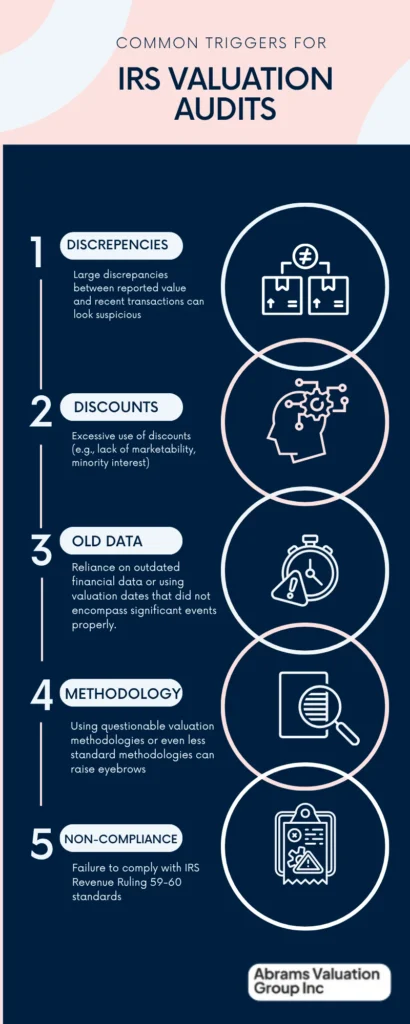
The IRS often scrutinizes business valuations submitted for tax purposes—such as gift/estate tax returns, S-corp elections, or charitable contributions—because undervaluing or overvaluing a business can lead to significant tax implications reflected in the financial statements. Common triggers for IRS challenges include:
- Large discrepancies between reported value and recent transactions
- Excessive use of discounts (e.g., lack of marketability, minority interest)
- Reliance on outdated financial data or questionable methodologies
- Failure to comply with IRS Revenue Ruling 59-60 standards
This scrutiny is especially prevalent for private equity funds, where valuation complexities often arise due to the nature of investments and portfolio companies determining fair market value based on significant assumptions.
2. Review the IRS Valuation Audit Critique Carefully
When the IRS disagrees with your valuation, you will typically receive a Notice of Proposed Adjustment (NOPA) or an Information Document Request (IDR). Carefully review the IRS’s reasoning, including:
- The specific aspects of your valuation under dispute, as presented in your financial statements
- The IRS’s alternative valuation or methodology
- Any cited errors, omissions, or noncompliance with valuation standards, particularly regarding fair value measurements and the significant assumptions used
3. Assemble Your Response Team
Immediate action is critical. Assemble a team that includes:
- The original valuation expert or appraiser
- Your tax attorney or CPA
- Internal stakeholders familiar with the business and its financial statements
Consider engaging an independent valuation expert if the dispute is highly technical or adversarial. This is particularly important for private equity funds, where specialized knowledge of fund structures, valuation methodologies, significant assumptions, and fair value concepts can be crucial.

4. Evaluate the Disputed Valuation Thoroughly
Conduct a rigorous review of your original valuation and the related financial statements:
- Check adherence to IRS guidelines and valuation standards (e.g., USPAP, AICPA SSVS No. 1)
- Re-examine all assumptions, financial data, and discount rates reflected in the financial statements
- Identify any weaknesses or areas that can be strengthened, especially in the calculation and justification of fair value and the significant assumptions underlying the valuation
5. Prepare a Detailed Rebuttal or Supplement
Draft a point-by-point rebuttal to the IRS’s critique. This should include:
- A clear explanation of the valuation methods used (income, market, asset-based)
- Justification for discounts or premiums applied
- Supporting evidence, such as comparable transactions, industry data, and expert opinions reflected in your financial statements
- Corrections or clarifications if any errors are found in the original report, including explanations of the significant assumptions applied
6. Engage in Constructive Dialogue
Whenever possible, engage directly with the IRS valuation specialist assigned to your case. Productive dialogue can help:
- Clarify misunderstandings related to your financial statements, fair value determinations, and significant assumptions
- Narrow the issues in dispute
- Identify areas of potential compromise
Maintain a professional, cooperative tone—aggressive or adversarial communication can escalate the dispute.
7. Consider Alternative Dispute Resolution (ADR)
If informal discussions stall, consider using alternative dispute resolution (ADR) options from the IRS such as:
- Fast Track Settlement
- Appeals mediation
These programs can resolve disputes faster and less expensively than full litigation.

8. Prepare for Litigation as a Last Resort
If resolution is not possible through negotiations or ADR, litigation may be necessary. Preparation steps include:
- Retaining litigation-savvy valuation experts
- Developing clear, compelling expert testimony based on the financial statements, fair value assessments, and significant assumptions
- Ensuring all documentation and evidence are well-organized for court
9. Learn from the Experience
Regardless of the outcome, use the audit as a learning opportunity:
- Review your valuation processes and financial statements for future improvements
- Ensure compliance with current IRS and professional standards on fair value reporting and documentation of significant assumptions
- Maintain thorough documentation for all future valuations and financial reporting
Conclusion
Facing an IRS challenge to your business valuation can be stressful and complex. However, with prompt action, expert guidance, and a methodical strategy, business owners and attorneys can significantly improve their chances of a successful outcome. Diligence, transparency, and professionalism are your best allies when navigating the audit process.
Key Takeaways:
- Understand the IRS’s concerns and process related to your financial statements, fair value measurements, and significant assumptions
- Assemble an experienced, multidisciplinary team
- Rigorously review and support your valuation and related financial statements
- Engage the IRS constructively and consider all dispute resolution options
- Prepare for litigation only if necessary, and use the experience to strengthen future valuations and financial reporting
This roadmap will help you steer through the challenges of a business valuation audit, protect your interests, and minimize potential tax consequences.


