

How Different Billing Models Impact Your Cash Flow—and the Value of Your Business
In the world of business valuation, few topics are as crucial—yet often overlooked—as the billing model a company deploys. At AVGI, we regularly counsel business owners, attorneys, and financial planners on the nuanced, sometimes hidden ways billing practices affect a company’s liquidity and, ultimately, its value. In this article, we’ll explore standard and alternative billing models, their pros and cons, and how these choices can drive or diminish enterprise value across industries.
Understanding Billing Models: The Standard, Hybrid Billing, and the Unconventional
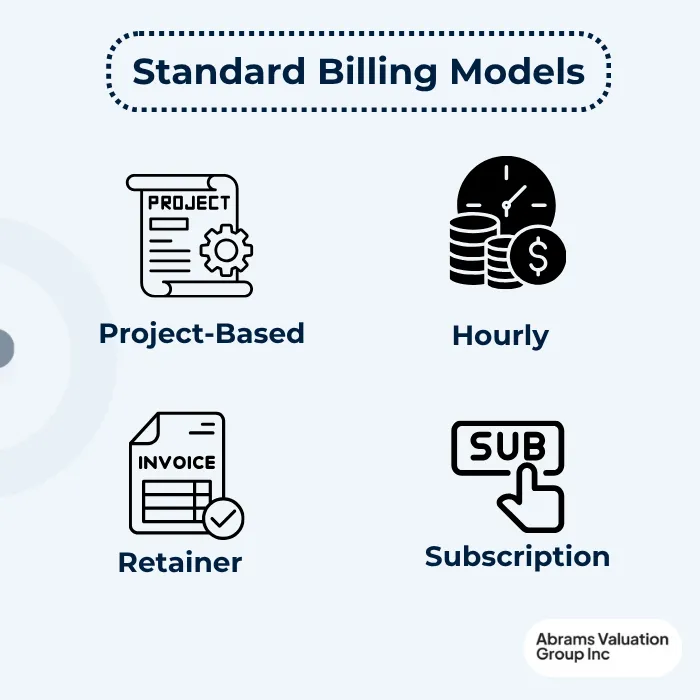
Standard Billing Models
Hourly Billing
Description: Clients are charged for the actual time spent working.
Industries: Law firms, consulting, accounting.
Fixed-Fee (Project-Based) Billing
Description: Clients pay a set fee for a defined scope of work, often as a flat fee.
Industries: Creative agencies, contractors, IT services.
Retainer Billing
Description: Clients pay a recurring fee, securing a set amount of work or access each period.
Industries: Legal, marketing, advisory services.
Subscription Billing
Description: Clients pay on a recurring schedule for ongoing access to a product or service. Common subscription pricing models include flat-rate pricing, which charges one price for all customers regardless of usage, and per-seat pricing, which charges based on the number of users or licenses.
Industries: SaaS, media, maintenance services.
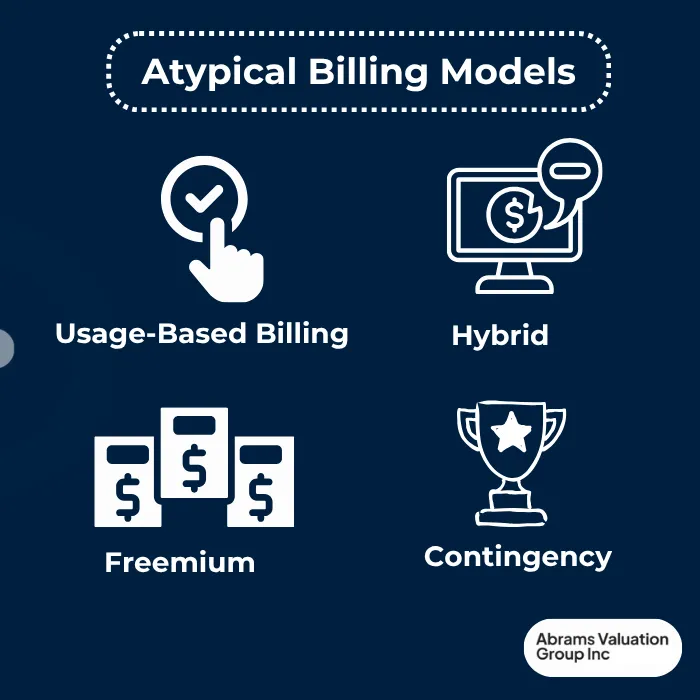
Atypical Billing Models: Usage-Based Pricing
Usage-Based Billing
Description: In usage based billing, customers pay according to the customer’s actual consumption rather than a fixed fee. This usage based pricing approach is one of several usage based pricing models and is a form of based pricing often measured by transactions, messages, or data volume.
Industries: AI, infrastructure, developer tools, and other usage based services.
Credit-Based Pricing
Description: Credit based pricing lets customers buy usage upfront and consume credits over time; credit based pricing models often track balances in real time and can automate top-ups. For example, a cloud storage provider might sell a set number of credits for a fixed price, with each credit representing a specific amount of data transfer.
Industries: Digital marketplaces, platforms with variable demand.
Hybrid Billing
Description: Hybrid billing combines fixed fees with usage charges, and a hybrid model often includes a base fee plus overage charges. It is common in API-based and cloud services, but hybrid models can introduce complexity in billing systems.
Industries: API-based products, cloud services, telecom.
Freemium and Overage Pricing
Description: Freemium and overage pricing offers basic services for free while charging for premium features or billing excess usage beyond a set limit.
Industries: Products with viral adoption or growing usage.
Success/Contingency Fee Billing
Description: Fees are tied to achieving specific results or milestones.
Industries: Recruitment, investment banking, legal (plaintiff work).
Milestone/Progress Billing
Description: Payments are scheduled at project milestones.
Industries: Construction, software development, manufacturing.
Advantages and Disadvantages: Billing Models & Liquidity
Hourly Billing
- Advantages: Transparent, simple to implement, aligns effort and revenue.
- Disadvantages: Unpredictable cash flow, harder to scale, clients may scrutinize invoices, though a usage-based approach can promote transparency by linking cost to value.
- Liquidity Impact: Cash flow can be lumpy; slow invoice collection can tie up working capital.
Fixed-Fee Billing
- Advantages: Predictable for clients, potentially faster payment cycles, easier budgeting.
- Disadvantages: Scope creep risk, underestimation can erode profit, some cash flow uncertainty if projects drag on.
- Liquidity Impact: Better predictability, but requires robust scoping and change management.
Retainer Billing
- Advantages: Predictable, recurring revenue, improves cash flow stability.
- Disadvantages: May require negotiation of value; clients may under-use (or over-use) hours.
- Liquidity Impact: Most favorable for cash flow, especially when paid in advance.
Subscription Billing
- Advantages: High predictability, supports long-term planning, attractive to investors.
- Disadvantages: Requires robust service delivery, churn risk.
- Liquidity Impact: Consistent inflow, enhances bankability and valuation multiples.
Usage-Based Billing
- Advantages: Flexible pricing model that aligns charges with consumption.
- Disadvantages: Automation is essential for managing usage-based billing effectively, and teams need accurate usage data for metering, invoicing, and customer visibility.
- Liquidity Impact: Can vary with customer activity; a robust billing infrastructure helps reduce customer confusion and prevent billing errors.
Tiered Pricing
- Advantages: Tiered pricing applies different rates to different volume bands, with each higher tier offering a lower price per unit.
- Disadvantages: For example, a company might offer a 10% discount on purchases over $100, which requires clear packaging and disciplined margins.
- Liquidity Impact: Works well when unit economics improve as customers grow or when a business serves many small accounts and a few large ones, because discounts increase with volume.
Contingency Billing
- Advantages: Attractive to clients (risk shared), high upside potential.
- Disadvantages: Highly unpredictable, may result in delayed or zero payment.
- Liquidity Impact: Volatile; not ideal for businesses needing steady cash flow.
Milestone/Progress Billing
- Advantages: Matches revenue to project progress, reduces risk of non-payment.
- Disadvantages: Requires negotiation and clear milestone definition, may slow down invoicing if milestones aren’t met.
- Liquidity Impact: Moderately predictable if projects are managed well.
Billing Models by Industry: Tiered Pricing and What Works Where?
- Professional Services (Law, Consulting, Accounting): Traditionally rely on hourly or retainer models. Retainers and subscriptions are increasingly favored for their predictability.
- Construction & Manufacturing: Progress or milestone billing is standard, aligning payments with project advancement.
- Technology & SaaS: Subscription-based models dominate, driving higher valuations due to recurring revenue, though many software companies also pair them with usage-based pricing models when demand varies.
- A typical project management tool may charge a recurring per-user monthly fee and prorate charges automatically when seats change mid-cycle.
- Many usage-based services, especially API-driven and cloud products, also use hybrid or usage-based billing when consumption is unpredictable.
- Creative & Marketing Agencies: Fixed-fee or retainer models are common; some experiment with value-based or milestone billing, while others use custom contracts for outcome-based work instead of a simple flat fee.
- Recruitment, Investment Banking, Litigation: Contingency or success fee models are prevalent, with associated cash flow risks.
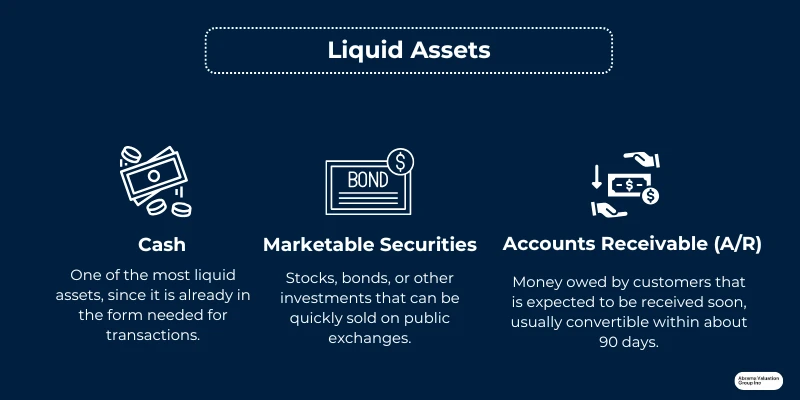
The Value Connection: How Billing Choices Shape Predictable Revenue and Business Worth
From a valuation standpoint, recurring revenue models (retainer, subscription) are gold. They provide stability, reduce risk, and command higher multiples. The way a business captures revenue also shapes perceived customer value and valuation. Conversely, models with unpredictable cash flow (hourly, contingency) can drag down value, especially if combined with slow collections.
Sophisticated buyers and investors scrutinize not just how much you bill, but how reliably you collect. Your pricing strategies should align with customer needs and cash-flow goals, and most successful companies experiment as they grow. Companies with predictable, diversified, and timely revenue streams are more attractive, and hybrid or usage-based approaches can work well when supported by flexible billing and clear usage data. Successful companies experiment with different ways to mix and match billing models as offerings mature. Billing models that speed up cash conversion, lower bad debt risk, and support growth will almost always translate into higher valuations.
Conclusion: Billing Is a Strategic Decision
At AVGI, we encourage business leaders to view billing not as a mere operational detail, but as a strategic lever. How you bill clients can directly affect your company’s liquidity, resilience, and ultimate market value. When deciding on billing practices, look beyond the immediate and consider the long-term implications for your business’s value. Smart billing is smart business.

