

How to Identify and Maximize Key Value Drivers in Your Business
What are Value Drivers?
Value drivers are key factors that increase the worth of a product, service, or business. These crucial aspects of the company can enhance performance, market position, and attractiveness to investors. Value drivers can be either tangible or intangible and financial or non-financial. Most companies have a mix of tangible and intangible drivers that positively impact company value. Depending on the company sector, the company may have niche-specific value drivers in addition to universal drivers.

Why are Value Drivers Important?
Identifying the key value drivers in a company is a crucial part of a business valuation, as value drivers can increase the company’s worth beyond the numbers on the balance sheet. Furthermore, identifying key value drivers allows the company to capitalize upon these drivers, using them to fuel further business growth, attract investors, and even prepare the company for sale. In this article, Abrams Valuation Group, Inc. explores methods to identify the value drivers in your business, common value drivers, and how to uncover value drivers that may be unique to your business.
Identifying Key Value Drivers
Analyzing different aspects of your business allows you to uncover key value drivers of your business. Keep an eye out for areas where your business is consistently excelling and growing. These are indicators that you’ve discovered a value driver. Consistent, predictable, positive growth in any area of your business can increase your company’s value.
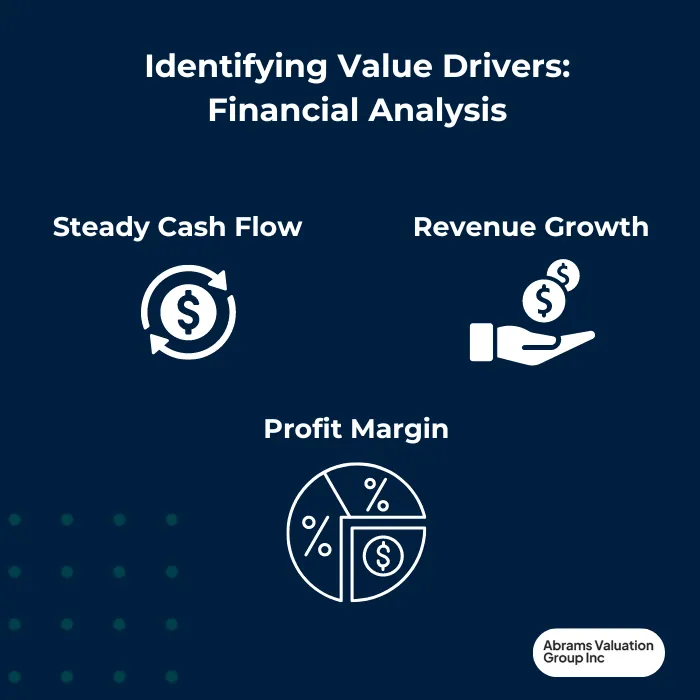
Financial Analysis
Analyze your business from a financial perspective. Review financial statements, examine key ratios, and compare them to your competitor’s performance (if that information is available). This can help you identify financial value drivers such as revenue growth, profit margins, and cash flow. If your business maintains steady cash flow and has predictable future cash flows, consistent year-over-year revenue growth, and an ever-widening profit margin, these are financial drivers that will increase your company’s worth, making it more attractive to potential buyers and investors.
Remember to look for areas of weakness that need improvement. Just as value drivers increase company value, liabilities undermine it. Be sure to identify and address these areas of weakness to maintain and improve your company’s value unhindered.

Customer Analysis
Another common area that drives value in businesses is customer base. Examine company data on customer relationships, demographics, behaviors, preferences, and feedback. Common customer value drivers include high customer acquisition and retention rates.
Allowing the data and value drivers to influence your strategic initiatives and marketing can help fuel further company growth. Also assess your company’s response to emerging customer needs and preferences. Consistently responding to customer needs, complaints, and feedback efficiently and effectively increases customer loyalty and can help businesses stay competitive especially in highly competitive industries. Company responsiveness can itself be a value driver.
Operational Efficiency and Business Value
Do an Operational Review
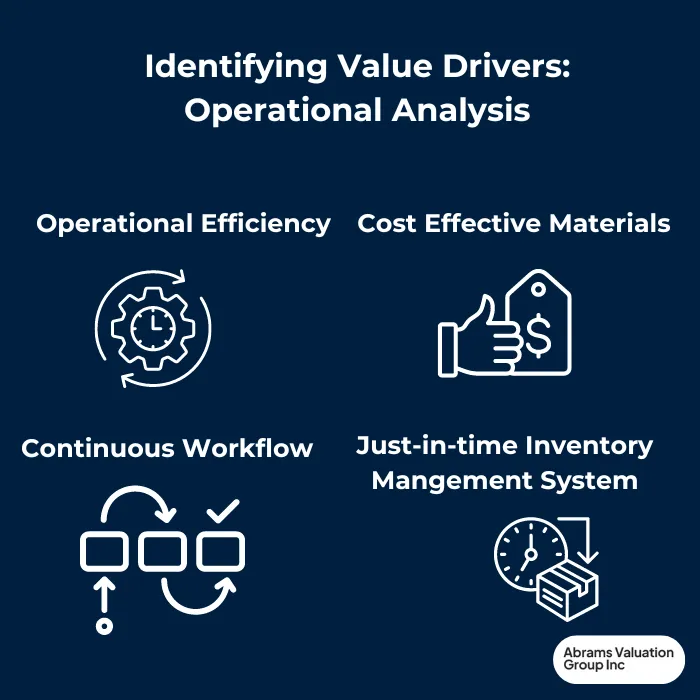
Take a close look at how efficient your business operations are to identify value drivers that directly affect the bottom line. Are things running at top efficiency and productivity levels, or are there time lags, bottlenecks, and compliance review loops? Operational efficiency is critical to business value, as it can help reduce costs and improve financial performance. Examples of operational value drivers include just-in-time inventory systems and efficient logistics. Uncovering these operational strengths in your business can fuel higher value.
Collect Employee and Stakeholder Feedback
Gathering and analyzing employee and stakeholder feedback is an excellent way to discover value drivers that are not readily obvious. You might be surprised to hear some of what employees and business partners consider to be vital value drivers contributing to the operational and cultural health of the business. Intangible factors like a positive work environment, high employee morale, recognition of employee achievements, and a clear company mission may contribute towards the business’s increased productivity and bottom line. Furthermore, having honest discussions with employees and stakeholders about company culture can help you identify areas for improvement that can increase business value.
Measuring and Tracking Performance
After identifying value drivers, it is important to quantify their effects on the company’s value. We know these value drivers increase the company’s value, so the question is, how much? Quantifying the impact of value drivers (particularly intangible value drivers) on company value is a complex topic best addressed by a professional business valuator.
Over- or understating the value of any one driver could paint an inaccurate picture of the company’s value. This has many potential detrimental outcomes, including losing out on profits from selling the business at a low asking price or not correctly fulfilling a tax obligation. Accurate value measurement is crucial when it comes to business, and AVGI strongly suggests having a professional perform a business valuation. Contact us today for a commitment-free consultation.
Measuring Nonfinancial Value Drivers
Measuring non-financial value drivers assesses the impact of intangible factors like customer loyalty on a company’s financial performance and total valuation. Quantifying non-financial value drivers can also help businesses identify areas for improvement that could further increase business value.
Benchmarking
Benchmarking value drivers against competitor performance and industry standards helps identify value drivers that contribute to the company’s competitive advantage. If a company has higher-than-average customer retention rates, this indicates a significant driver of value over competitors and could increase the company value further.
Benchmarking can also help businesses identify weak areas that need improvement that would have gone unnoticed without competitor comparison. Benchmarking is important when discussing value drivers, as it helps put value drivers in perspective for what is average, and above or below average performance for a company in any particular sector. Viewing the company’s performance relative to its competitors can provide deeper insights on the true value of the company.
Maximizing Value Drivers
Once you’ve identified the key value drivers in your business, it’s time to capitalize upon them and increase the value of your business exponentially.
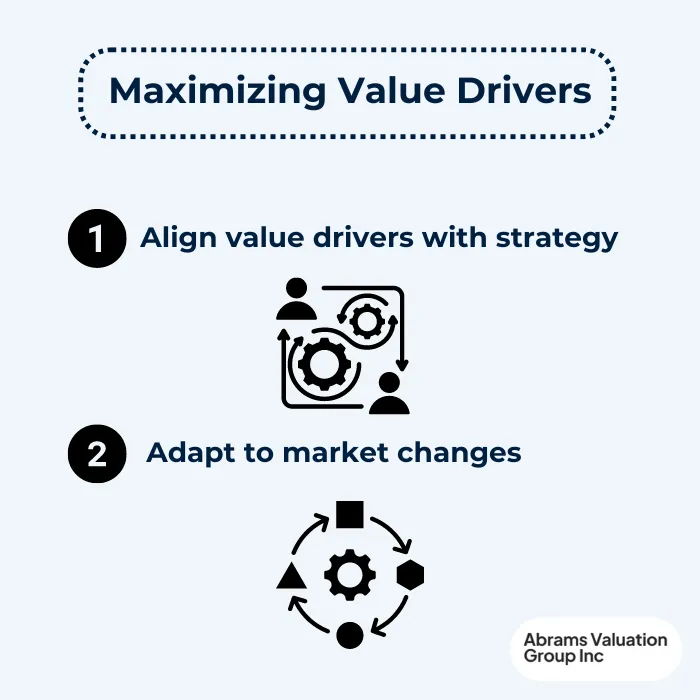
Align Value Drivers with Strategy
Align your business value drivers with your company’s strategy to ensure enduring business growth. Ensure that short-term actions support long-term goals that contribute to the company’s overall mission. This can be an excellent guide to avoid making business decisions that may have short-term sales gains but do not align with your company’s core.
For example, if a key value driver is company transparency, avoid glossing over significant pricing differences with competitors. Be open about your product or service pricing and explain why your pricing is higher or lower than competitors (be it quality of service, delivery turnaround times, etc.) This 100% transparency will help you stay true to your company’s culture and reputation of openness, which will build customer loyalty and employee morale.
Wise money transfer services is an excellent example of company transparency, as they show a chart with competitor rates and tell you if using a competitor would save you money on any transfer. Aligning each value driver with your strategy, although counterintuitive at times, can help businesses achieve a competitive edge and increase business value.
Adapt to Market Changes
Respond rapidly to changes in the business landscape based on reliable data. Address emerging customer preferences and new regulations by staying on top of compliance requirements and what’s important to your customers. As we mentioned before, staying responsive to customer needs and wants is a crucial part of staying ahead of the competition.
In a production-based business, supply chain management strategies are critical to adapting to market changes and ensuring operational efficiency. Shipping delays and manufacturing crises can seriously impact a business’s bottom line, so the more independent a company is, the more resilient and valuable it is. Having alternative sources for raw materials, backup delivery options, and crisis management policies in place future-proof the company against potential liabilities and make it more valuable.
Value Drivers: In Conclusion
In conclusion, identifying and maximizing key value drivers is essential for businesses looking to enhance their financial performance and overall business value. Through thorough financial analysis, customer insights, operational reviews, and accepting feedback from employees and stakeholders, businesses can pinpoint these drivers. Aligning these drivers with strategy, adapting to market changes, and consistently measuring and tracking performance are crucial for maximizing their impact. By overcoming common challenges and drawing insights from real-world examples, businesses can pave the way for success and ultimately increase their business value.


