

9 Signs It’s Time to Refer Your Clients to a Business Valuator (+Tips for a Successful Referral)
A business valuator objectively determines a business’s value. This is a key starting point for critical business decisions, tax strategies, and transactions. However, most businesses only need a valuation once or twice in their operating lifetime, so many business owners do not know when they need to hire a business valuator. Owners are more readily in contact with other advising professionals, including CPAs, business attorneys, and financial advisors.
Therefore, financial and legal professionals should clearly understand when clients need a business valuator and how to prepare them best for the valuation process. Abrams Valuation Group, Inc. explores 9 signals that a client might need a business valuator referral. In addition, we cover several practical tips for financial and legal professionals to facilitate a successful referral.
Why It’s Important to Have a Business Valuator on Your Client’s Financial Team
There are many scenarios in which it’s crucial for your client to have an accurate and impartial assessment of their business’s value. Some common instances include tax scenarios (income, estate, or gift tax), litigation (business, divorce), preparing for a business sale or acquisition, or raising investment capital for a startup company.
In all of these cases (and these are merely examples; many more instances necessitate valuation as well), having an exceedingly precise valuation can make thousands and sometimes millions of dollars of difference to the client in reduced tax obligations, business damage reparations, or securing more investor funding.
For example, in tax scenarios, IRS appraisers can be quick to use valuation assumptions that assign a higher value to the client’s company, obligating them to pay a higher rate of taxes. However, if the client engages a business valuator to perform a thorough and precise valuation, they may uncover looming competition or other factors that significantly undermine the company’s value. This precise valuation can support the company’s position in paying a lower rate of taxes and can withstand scrutiny in an audit or tax dispute.
Especially in tax cases, this can translate into millions of dollars saved, which can then be reinvested into growing the company. Therefore, a business valuation professional is an essential member of your client’s financial team. They have the quantitative skills and professional valuation experience to skillfully apply valuation theory to each client’s unique situation and reach the most accurate outcome.
Identifying When a Client Needs to Hire a Business Valuator
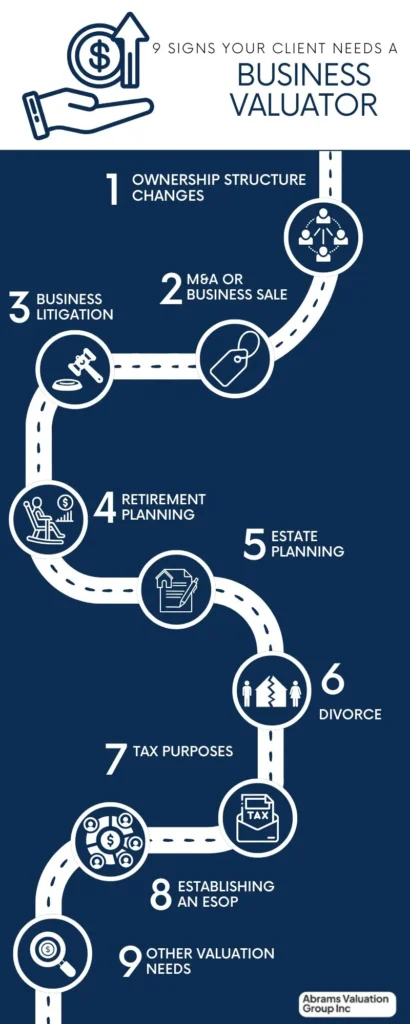
As we mentioned earlier, most clients only need a business appraisal once or twice throughout the lifetime of the business. Generally, a major business or life event prompts the necessity for a valuation. Here are several signs that may indicate that your client needs a valuation:
1. Changes in Business Ownership Structure
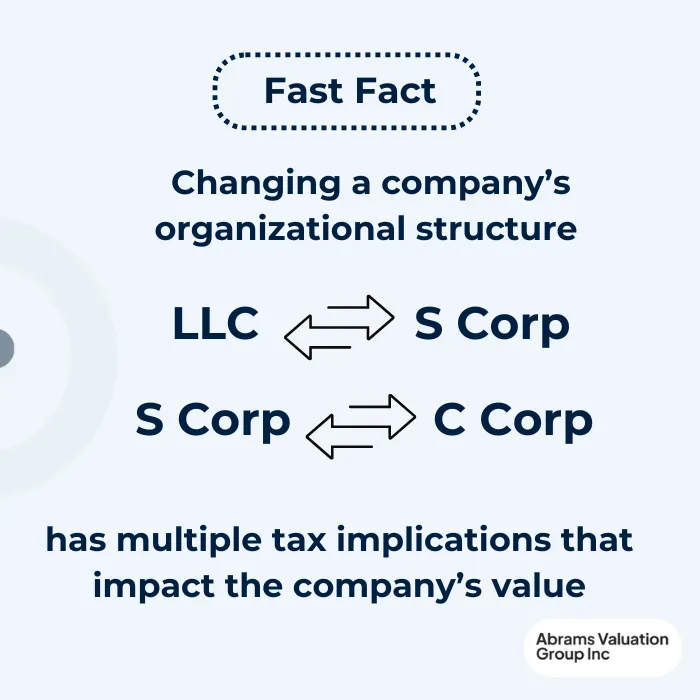
Changing a business’s status from an LLC to an S corporation or an S to a C corporation has multiple tax implications that directly affect the business’s value. Similarly, dissolving a partnership or taking on a partner can also impact business value. A business appraiser can accurately quantify the effect of these changes on the business’s value for accurate financial reporting and tax compliance.
2. Contemplating a Merger, Acquisition, or Business Sale
Expanding your business through an M&A deal or cashing out through a sale to an interested buyer or ESOP all require a precise valuation of the business’s value, both preceding and following the sale. This is crucial for setting a fair sale price as well as calculating the tax obligations for both buyer and seller in the aftermath of the transaction.
3. Business Litigation Scenarios
If your client is involved in any litigation concerning their business, including lost profit claims, business economic damages, intellectual property lawsuits, shareholder oppression disputes, or other business litigation, it’s crucial for them to obtain an expert business appraisal to build evidence for the case. Whether your client is the plaintiff or defendant, a valuation is the starting point to objectively establish the value of the business prior to and following the alleged tort. As the role of a business valuator is inherently impartial, the judge and jury often give a lot of weight to expert witness testimony from the appraiser (especially when establishing business damages). Business valuation can also be helpful outside the traditional courtroom setting , if both parties choose an alternative dispute resolution method such as arbitration or mediation.
4. Business Owner Considering Retirement
Preparing the business for the owner’s exit is an important step towards ensuring the profitable continuity of the business. Whatever the next steps will be, whether a sale, M&A, family succession, or other exit strategy, a business valuation is the starting point for a strong exit plan.
5. Estate planning
A business valuation can help owners ensure equitable distribution of assets as part of their estate. For instance, if a business owner passes away, their share in a family-owned company might need to be accurately valued to determine inheritance tax obligations and fair distribution among heirs. Additionally, when establishing a trust that includes a business interest, an accurate valuation helps define contributions to the trust and ensure that beneficiaries receive their fair share. Another example could involve a business partner’s death—an accurate evaluation of the partnership’s worth could dictate buy-out terms and facilitate a smoother transition for the surviving partner. In all these cases, a reliable business valuation is crucial for effective estate planning.

6. Divorce
When a divorcing couple owns a business either jointly or separately, a business valuation is essential to ensure the fair division of assets between the spouses. This is especially true if the spouses cannot reach an agreement between themselves and the situation escalates to the courtroom. As with other types of litigation, a divorce appraisal expertly quantifies the value of the business to be divided and gives the judge an unbiased source of information from which he can draw conclusions. Read our in-depth post about navigating divorce and dividing assets with a business appraisal.
7. Income, Gift, or Estate Tax Purposes
Major business or life events can impact the value of a business positively or negatively and directly influence the tax obligations of the business owner. It’s important to be aware of situations that indicate it’s time for a valuation, as this is the best way to ensure your client is not over or underpaying taxes and avoid unwanted consequences. For instance, significant rising market competition can put the business’s earning potential in jeopardy and undermining the business’s value- even before it impacts the company’s profits! A valuation helps establish this reduced value for tax purposes so the owner does not have to pay higher taxes on value that no longer exists. Other examples can include calculating the value of a business interest received as an inheritance to ensure the owner fulfills their accurate inheritance tax obligation.
8. Establishing an ESOP
Employee Stock Ownership Plans are complex retirement benefit plans with strict reporting and compliance obligations. There are numerous benefits to establishing an ESOP, but it must be done with the proper guidance to ensure compliance and viability for the company. Annual business valuations are part of the stringent requirements for ESOPs, so clients considering an ESOP will need valuations on a regular basis.

9. Other Valuation Needs
Open communication between financial and legal professionals and clients is essential to discovering other valuation needs. Discuss major upcoming life or business events directly with the client, as another situation may necessitate valuation.
Choosing the Right Valuation Expert
When selecting a valuation expert, it’s essential to consider several key qualifications that can significantly impact the effectiveness of their work. First and foremost, look for professionals with relevant certifications, such as ASA (Accredited Senior Appraiser), CFA (Chartered Financial Analyst), CVA (Certified Valuation Analyst), or CPA (certified public accountant) specializing in valuation. These credentials demonstrate the business valuation specialists’ expertise and robust knowledge of the field. Read more about the different types of valuation professionals here. It’s important to examine valuation experience and track record as well. Many successfully completed valuations in various sectors for satisfied clients speak of a broad range of expertise.
Perhaps counterintuitive, AVGI advises choosing an expert with more valuation experience over a valuator with specific industry knowledge. 30+ years in the valuation industry has shown that a professional with a deep understanding of valuation theory and practice has a higher success rate in performing accurate valuations across sectors than average practitioners with limited valuation experience only in a particular sector. While industry knowledge is a nice bonus, AVGI has found that many clients give too much weight to it, resulting in mediocre valuation results that are specific to the industry.
It’s also beneficial if the expert can share relevant case studies or examples of previous work with similar clients, as this showcases their capability and understanding of your particular needs. Beyond technical qualifications, don’t underestimate the importance of interpersonal skills and communication style. A valuation expert should be able to convey complex information clearly without confusing complicated jargon. Lastly, the expert should be readily available and responsive to questions and client requests. They should demonstrate the ability to work collaboratively with your client and other stakeholders throughout the process.
Preparing Your Client for the Business Valuation Process
When referring your client for a valuation, you’ll want to prepare your client for an efficient and seamless valuation process. A little preparation goes a long way in cutting out unnecessary time lags in requesting and waiting for crucial documents and data. Here is a short checklist to help you prepare your client for an efficient valuation.
Gathering Necessary Documents
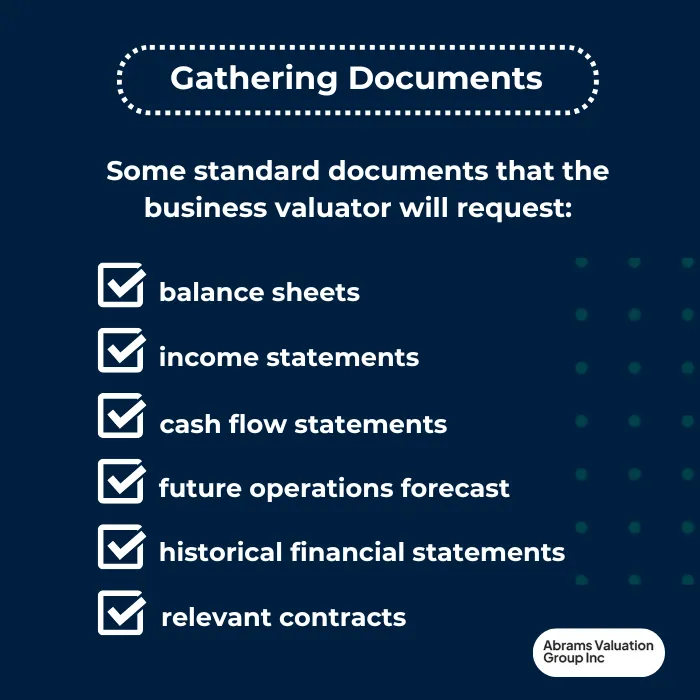
The starting point for any valuation is gathering the relevant data to work off of. The necessary documents will vary greatly depending on the purpose of the valuation. A very basic list of documents necessary for an initial business valuation can include:
- balance sheets
- income statements
- cash flow statements
- forecast for future operations (if available)
- Financial statements and history (ideally 5, 7, or 10 years)
- Documents establishing partner ownership agreements/contracts (if relevant)
After an initial meeting, the business valuation specialist should be able to provide your client with a more comprehensive list of required documents and data to perform the business valuation.
Accuracy of Data
Of course, providing accurate documents and data about the business is crucial to producing an accurate valuation. Especially if the valuation is for tax or litigation purposes, it will need to withstand intense scrutiny. Falsifying information to influence the outcome of the valuation and unlawfully decrease a tax obligation or the pursuit of justice in litigation can be a criminal offense. Therefore, it is essential to provide accurate company data to ensure an accurate valuation.
Expected Timeline for Business Valuation
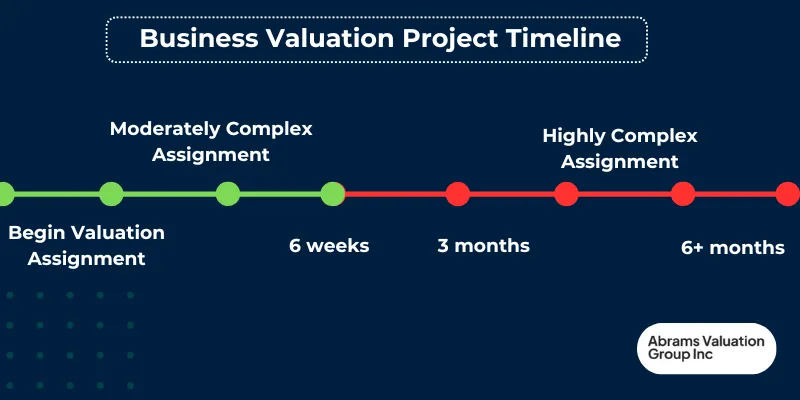
Preparing your client in terms of timeline expectations for a valuation can be helpful in mitigating unrealistic expectations and disappointment. AVGI standard valuation turnaround times for a moderately complex assignment is around 6 weeks from the beginning of the engagement. However, extremely complex assignments can take 3-6 months or even longer, depending on the valuation purpose and other factors. Other valuation practitioners may have different turnaround times, so it’s important to clarify timelines with practitioners before referring clients, especially if time is of the essence to the client’s valuation needs.
Understanding Valuation Methods and Standards of Value
Not every valuation assignment uses the same type of valuation methodology. Depending on the valuation purpose and circumstances, one or more valuation approaches may be more relevant to use than others. It’s important to ensure that your client’s valuation professional uses the correct standard of value for the assignment. Using the incorrect standard of value can completely skew the conclusions of the valuation report.
This is crucial to clarify in litigation assignments when the court requires the appraiser to quantify the fair value of business damages. “Fair value” in the judicial context refers to the value of damages that will restore justice and right the wrong that was done. That is usually a distinct standard of value from fair market value, which is the price a willing buyer would pay for the item. However, the definition of fair value in litigation varies by state. Therefore, it is essential to clarify with the valuation professional which standard of value they should use to complete the valuation assignment and ensure legal compliance with state laws. Read more about valuation methods and standards of value in our in-depth guide to understanding the business valuation process.
Collaborating with the Valuation Expert
Clear communication between the referring professional, the client, and the valuation expert is essential to a successful business valuation process. Responding in a timely fashion to document and data requests is crucial to avoiding unnecessary delays. It’s also crucial to keep all parties updated with any relevant developments that could impact the valuation or timeline. Making time to answer questions clarifying important points is essential to ensuring all facts and data are accurate for the valuation. Many AVGI clients have been particularly impressed with our responsiveness and availability to answer questions and make revisions as needed.
Conclusion: Referring Your Clients to an Excellent Business Valuator
In conclusion, it’s vital for attorneys, CPAs, and financial planners to be proactive in understanding the unique valuation needs of their clients. By cultivating strong relationships and effectively referring clients to valuation experts, you not only enhance the level of service you provide but also foster trust and loyalty among your clientele. When your client needs a skilled business valuator, don’t hesitate to reach out to Abrams Valuation Group, Inc. Our team is ready to assist you and your client with expert insights and over 30 years of successful valuation experience. Contact us today to ensure that your clients receive the exceptional valuation guidance they deserve!


