
Alt Min Tax Reform: How the OBBB Impacts Your Tax Bill
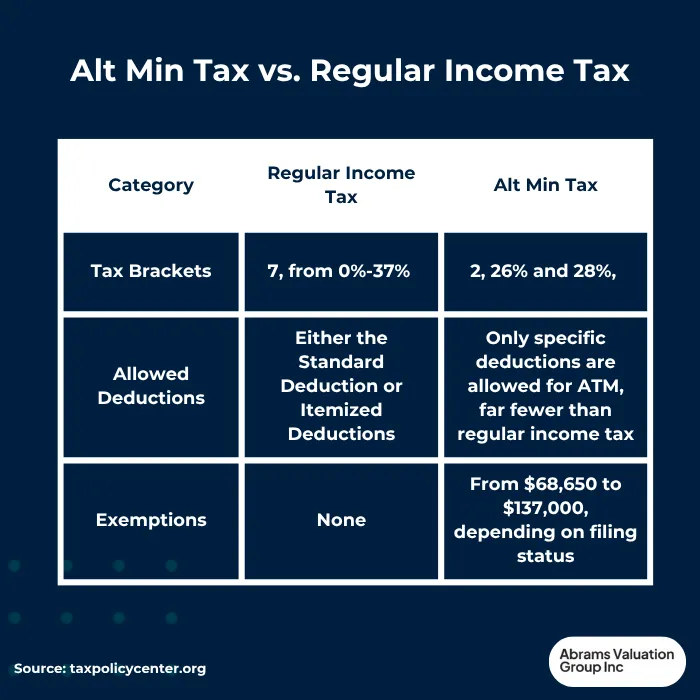
The US income tax system requires taxpayers to calculate their income tax obligations twice- once according to the regular federal income tax and again according to the alternative minimum tax (AMT). Taxpayers must determine which system results in a higher tax liability and pay that higher amount to ensure they are meeting their tax obligations.
The One Big Beautiful Bill (OBBB) passed into legislation on July 4, 2025 and contained hundreds of items, including alt min tax reform in the way certain credits, exemptions and deductions work, which can make a huge difference for high-income taxpayers. AVGI breaks down the alt min tax reform wrapped up in the OBBB.
Alternative Minimum Tax Overview
The Alternative Minimum Tax (AMT) is a parallel tax system designed to ensure that high-income taxpayers pay a minimum amount of tax. Taxpayers with income above the AMT exemption amount may be subject to the AMT, which can result in a higher tax liability than the regular income tax. AMT taxable income (AMTI) includes ordinary income plus disallowed deductions that are not included in calculating regular federal income tax liability.
Alt Min Tax History
When the Alt Min Tax was first introduced in 1969, it’s primary purpose was to ensure that high earners would indeed pay a mimimum amount of taxes, limiting these taxpayers ability to avoid taxes altogether by utilizing tax deductions and exemptions. However, as the alt min tax exemptions and threshold amounts were independent of rising inflation, more and more middle class taxpayers found themselves with a heavy alt min tax burden every year. Their income was considered high- for 1969- but the reality of inflation meant these were not the high-income earners that the alt min tax was originally intended to target.
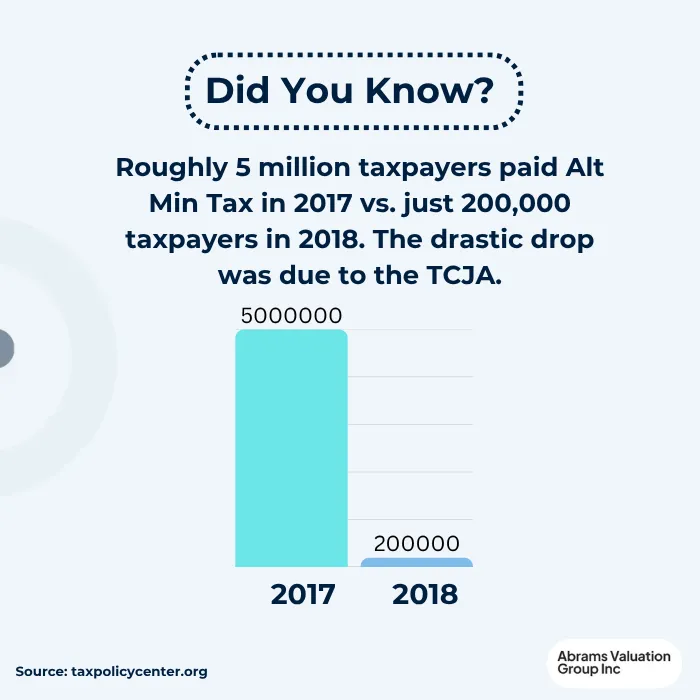
The 2017 TCJA brought some welcome relief to millions of taxpayers with an increased exemption amount that immediately dropped the number of taxpayers with alt min tax obligations from 5 million to around 200,000. However, since it was a static change rather than a dynamic reform, it left an opening for the same issue to develop again- a disparity between rising inflation rates and static alt min tax exemption amounts that would start to ensnare middle-class taxpayers.
Alt Min Tax Reform: OBBB
The 2025 One Big Beautiful Bill (OBBB) finally brought an important into being: forging the crucial and permanent link between inflation rates and alt min tax rules. This ensures that the tax affects high earners fairly and that middle class taxpayers are not hit with a significant additional tax burden. This crucial update will save millions of taxpayers from an unjust tax obligation.
Impact of the Jobs Act
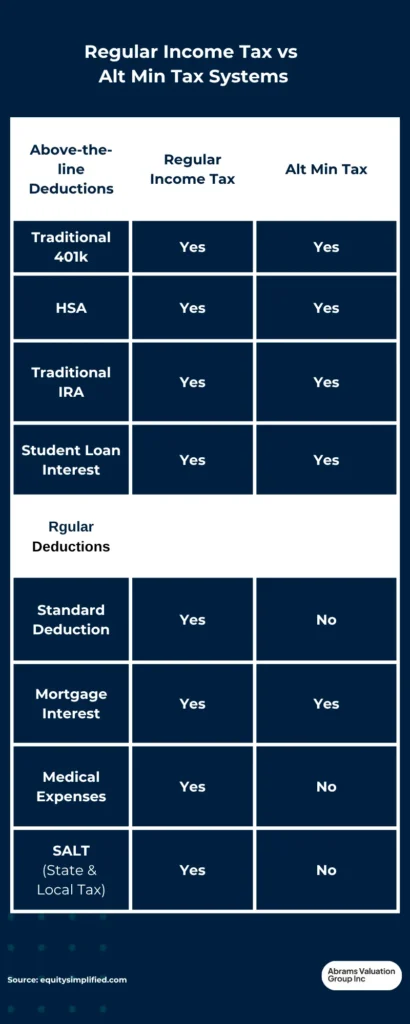
The Tax Cuts and Jobs Act (TCJA) significantly impacted the tax code, including the alternative minimum tax. The TCJA increased the AMT exemption amount and phase-out thresholds, drastically reducing the number of taxpayers subject to the AMT. The TCJA also limited state and local tax (SALT) deductions, which can affect taxpayers who itemize deductions on their regular income taxes. SALT deductions are not allowed in calculating AMTI.
TCJA also repealed the corporate alternative minimum tax, simplifying corporate tax compliance. However, the 2022 IRA introduced the 15% CAMT as a replacement, to tax discrepencies between book value and taxable income for very large corporations. Many of the TCJA’s changes to the tax code were only temporary and set to expire in 2025. However, the OBBB made many of those provisions permanent.
Corporate Taxation
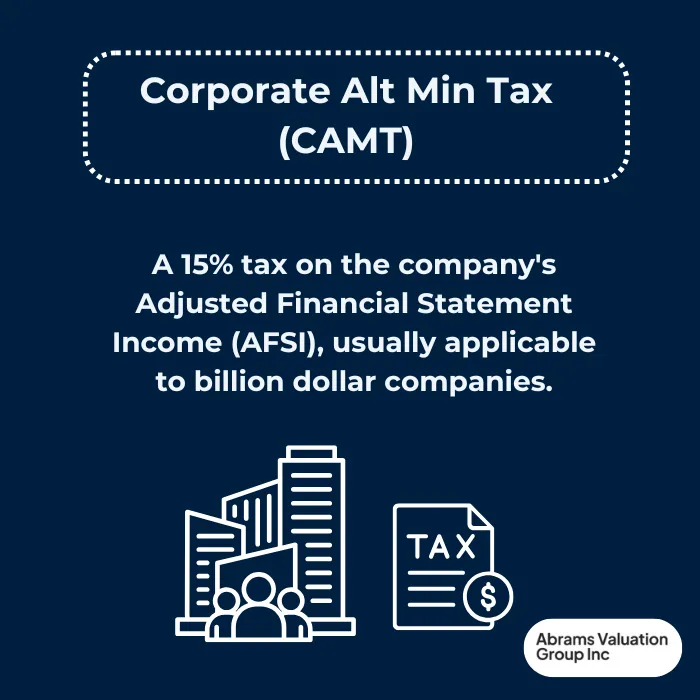
Corporate taxation is a complex area of tax law, with companies subject to various rules and regulations designed to ensure proper tax compliance. The corporate alternative minimum tax (CAMT), introduced in the Inflation Reduction Act of 2022, was created to address discrepancies between book income and taxable income.
While the Tax Cuts and Jobs Act (TCJA) repealed the previous corporate AMT, the CAMT was introduced as its replacement, requiring corporations to carefully consider their tax planning strategies to minimize their tax liability. Additionally, corporations can claim tax credits, such as the minimum tax credit, to reduce their overall tax burden, making strategic tax planning essential in navigating the evolving corporate tax landscape.
Tax Cuts and Their Effects
Tax cuts, such as those implemented by the Tax Cuts and Jobs Act (TCJA), can have significant effects on both taxpayers and the broader economy. These cuts often reduce tax liability and can stimulate economic growth, but they may also contribute to an increase in the national debt. While many of the TCJA’s tax cuts were initially temporary and set to expire in 2025, the One Big Beautiful Bill (OBBB) legislation has made many of these provisions permanent, providing long-term relief for numerous taxpayers and impacting the economy over time.
Given the complexity and far-reaching consequences of tax cuts, taxpayers must carefully evaluate how these changes affect their individual circumstances and plan their finances accordingly to maximize benefits and minimize potential drawbacks.
Tax Planning Strategies
Tax planning is crucial for minimizing tax liability and achieving financial goals. For a robust approach, taxpayers must consider various tax planning strategies, including income tax planning, estate tax planning, and gift tax planning. Taxpayers can use tax-deferred savings accounts, such as 401(k) plans and IRAs, to reduce taxable income and lower tax liability. Taxpayers must also consider the impact of tax law changes, their individual circumstances, and their personal goals and plan accordingly with the help of a qualified tax professional or financial advisor.
Conclusion on Tax Reforms
Tax reforms, such as the TCJA, can have significant effects on both taxpayers and the broader economy. Because these reforms are often complex, taxpayers must carefully consider how the changes impact their individual circumstances and plan accordingly to minimize tax liability and achieve their financial goals.
Staying informed about tax law changes is crucial to ensure compliance with regulations while taking advantage of opportunities for tax planning and liability reduction. For business owners seeking to navigate these complexities, contact the experts at AVGI to accurately calculate business value for tax purposes. We can provide the expertise, guidance, and support needed to optimize tax outcomes and minimize valuation exposure from tax audits.


