

Funding Value Adjustment: A Key to Accurate Derivative Valuation
Introduction to Derivative Valuation
In today’s complex financial markets, accurate valuation of derivatives is essential for effective risk management and informed decision-making. Derivatives—such as swaps, options, and forwards—are valued by considering a range of factors, including funding costs, credit risk, and capital requirements. Among these, the funding value adjustment (FVA) has emerged as a crucial element in modern valuation frameworks. FVAs ensure that the cost of funding associated with trading derivatives is accurately reflected in their fair value, which in turn influences both pricing and risk assessment.
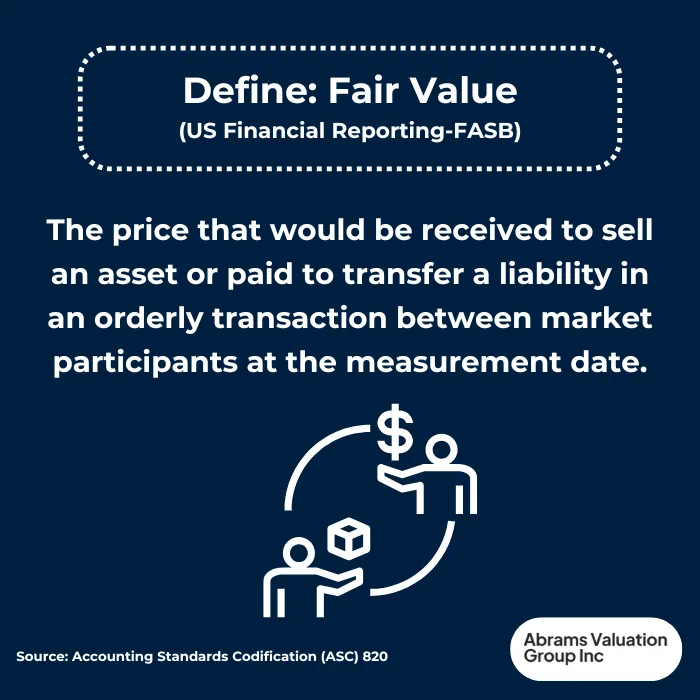
Funding Value Adjustment and Fair Value
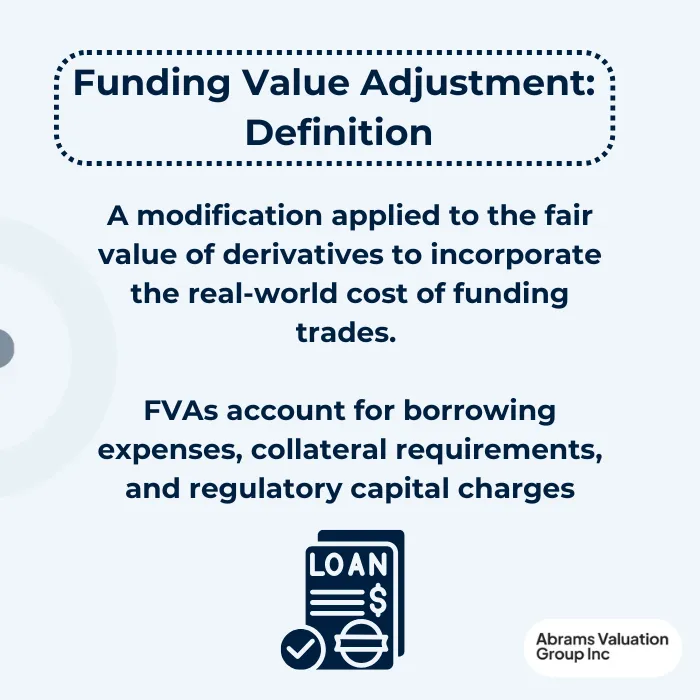
The funding value adjustment is a modification applied to the fair value of derivatives to incorporate the real-world cost of funding trades. FVAs account for borrowing expenses, collateral requirements, and regulatory capital charges, particularly under frameworks such as Basel III. By including these adjustments, financial institutions ensure that their derivative valuations reflect the actual economic costs and align more closely with market realities.
FVAs are closely related to other valuation adjustments, such as the debit value adjustment (DVA), which represents the benefit to shareholders if a bank defaults on its obligations. Together, these adjustments encourage alignment between trading desks and shareholders. Although the inclusion of FVAs in fair value calculations has become a standard market practice, it remains a topic of ongoing debate among practitioners and regulators regarding the most appropriate methodologies.
Credit Risk and Funding Value Adjustment
How Does FVA Differ from CVA?
While both the funding value adjustment (FVA) and the credit valuation adjustment (CVA) are essential for accurate derivative valuation, they serve distinct purposes and address different aspects of risk:
Purpose and Focus:
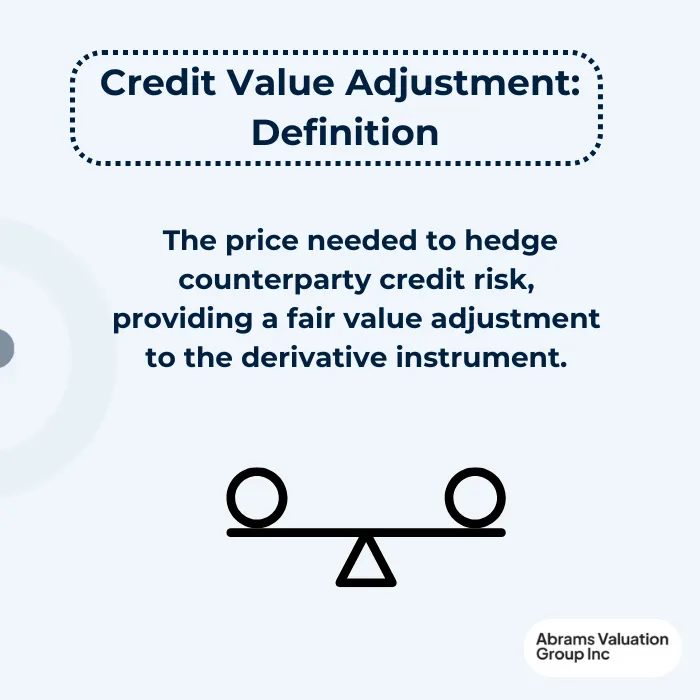
CVA measures the expected loss from counterparty default, quantifying the risk that a counterparty will fail to meet its obligations. It reduces the value of a derivative to reflect this credit risk. FVA, in contrast, reflects the cost of funding the collateral or cash required to support a derivative position. It adjusts the value of a derivative to account for the actual cost of funding and liquidity.
Risk Addressed:
-CVA focuses exclusively on credit risk—the potential loss due to counterparty default. FVA addresses funding and liquidity risk—the cost to the institution of raising and deploying funds necessary to enter and maintain derivative trades, including securing collateral.
Calculation Methodology:
CVA is calculated by estimating the probability of counterparty default and the potential exposure at default, typically using credit spreads and market-implied default probabilities. FVA is determined by evaluating the difference between an institution’s actual funding rate and the risk-free rate, applied to the expected future funding requirements of the derivative transaction.
Market Debate
There has been debate in the financial industry about whether FVA should be included as a separate adjustment or whether funding costs are already implicitly captured by CVA and other adjustments. However, most modern frameworks now incorporate both to provide a comprehensive view of risk and cost.
Summary Table:
- CVA = Adjustment for expected loss from counterparty default (credit risk)
- FVA = Adjustment for cost of funding trades (funding/liquidity risk)
In summary, while FVA and CVA both impact the valuation of derivatives, CVA addresses the risk of counterparty default, whereas FVA captures the cost and risk of funding derivative positions. Together, they enable financial institutions to achieve a more accurate and holistic valuation of their derivative portfolios.
A comprehensive derivative valuation must also consider credit risk, typically through the credit valuation adjustment (CVA). CVA quantifies the potential loss from counterparty default and is fundamental to understanding the total risk embedded in a derivative position. The credit risk component of the funding value adjustment is particularly important, as it mirrors the potential financial impact of counterparty credit events on funding costs.
Effectively managing credit risk within the FVA framework allows banks and other financial institutions to minimize potential losses and protect shareholder value. This requires robust credit risk assessment processes and the integration of credit-related inputs into overall valuation models.
Valuation Processes and Methodologies
Modern derivative valuation processes involve a series of interconnected adjustments, including the funding value adjustment, CVA, and capital costs. Accurately determining these adjustments demands a thorough understanding of market data, funding costs, and credit exposures. Financial institutions employ various methodologies to estimate FVAs—ranging from risk-free rate models to those incorporating credit spreads and real-time market data.
Each institution may tailor its approach to funding value adjustment based on its unique funding structure and risk appetite; however, the goal remains the same: to determine a fair and realistic value for each derivative position.

Funding and Risk Management
Funding costs and risk management strategies are tightly linked to the valuation of derivatives. The funding value adjustment plays a crucial role in ensuring that funding costs—such as those associated with posting cash collateral—are accurately accounted for and minimized in valuation models. Strategic use of hedging techniques, like covered interest parity, can further control funding risks but depends on a precise assessment of FVAs.
Additionally, regulatory capital requirements, such as those imposed by Basel III, necessitate the balancing of funding and capital costs, compelling institutions to implement robust funding value adjustment methodologies as part of their broader risk management frameworks.
Implementation and Infrastructure
Implementing an effective funding value adjustment process requires significant investment in technology, data infrastructure, and human expertise. Institutions must deploy advanced systems capable of integrating market data, credit risk measures, and funding cost calculations. The adoption of standardized practices, including DVA and other valuation adjustments, is vital for consistency and regulatory compliance.
A well-designed infrastructure enables financial institutions to optimize funding strategies, minimize costs, and ensure that valuations remain accurate and reflective of actual market conditions.
Derivative Pricing and Value
The pricing and value of derivatives are inextricably linked to the funding value adjustment. FVAs affect not just the book value of positions, but also their quoted market prices and the perceived risk profile. By incorporating FVAs, institutions can more accurately represent the true economic value of derivatives, support informed decision-making, and improve market transparency.
Considering all relevant factors—funding costs, credit risk, and capital requirements—is essential for accurate pricing and for maintaining the integrity of the derivatives market.
Conclusion and Best Practices
In summary, the funding value adjustment is a critical component of contemporary derivative valuation. By correctly accounting for funding costs, FVAs help ensure that derivative prices and risk assessments are realistic and robust. Financial institutions are encouraged to adopt advanced models, invest in technology and talent, and rigorously manage both funding costs and credit risk.
Best practices also include ongoing alignment with regulatory requirements, such as those under Basel III, as well as the continuous refinement of valuation methodologies. A strong understanding of funding value adjustments is fundamental for accurate valuation, prudent risk management, and the long-term success of financial institutions in the derivatives market. Contact AVGI for an expert valuation consultation.


