

AI Valuation: The Value of AI in Business – Assessing the Intangible Asset Revolution
The ongoing AI revolution has rapidly transformed artificial intelligence from a futuristic concept into a practical engine driving business transformation across every industry. The AI startup ecosystem has reached extraordinary maturity, with the top 25 companies alone representing over $1 trillion in combined valuation—demonstrating the transformative potential of AI technologies and the winner-take-most dynamics typical of platform markets.
Notably, four mega unicorns now control 66.7% of the total market value among top startups, highlighting a significant concentration of value in the AI space. Companies large and small, including leading AI companies and ambitious startups, are competing fiercely in this space, investing significant capital into AI-powered systems to streamline processes, enhance decision-making, and create new sources of value. As a result, the way we assess what a business is truly worth is evolving, with intangible assets—particularly those tied to AI—playing a more prominent role than ever before. The same pattern of valuation premiums and intense competition is seen throughout the AI sector, underscoring the strategic importance of AI in today’s market.
The Role of Intangible Assets in Business Valuation
In today’s dynamic marketplace, intangible assets have become a cornerstone of business value. Unlike tangible assets such as machinery, buildings, or inventory, intangible assets are non-physical resources that contribute significantly to a company’s potential for growth and profitability. These include intellectual property (like patents, trademarks, and copyrights), brand reputation, proprietary technology, customer relationships, and—critically in the modern age—AI-driven systems and data.
In the context of AI, data quality is paramount: access to exclusive, high-quality, and clean datasets is considered a critical asset, often accounting for 70–80% of a company’s value. High-quality datasets not only enable more accurate measurement and effective integration of AI into business processes, but can also increase valuation premiums by 15–35%. Up to 70–80% of an AI startup’s value frequently lies in its intangible assets, such as exclusive datasets and patented algorithms.
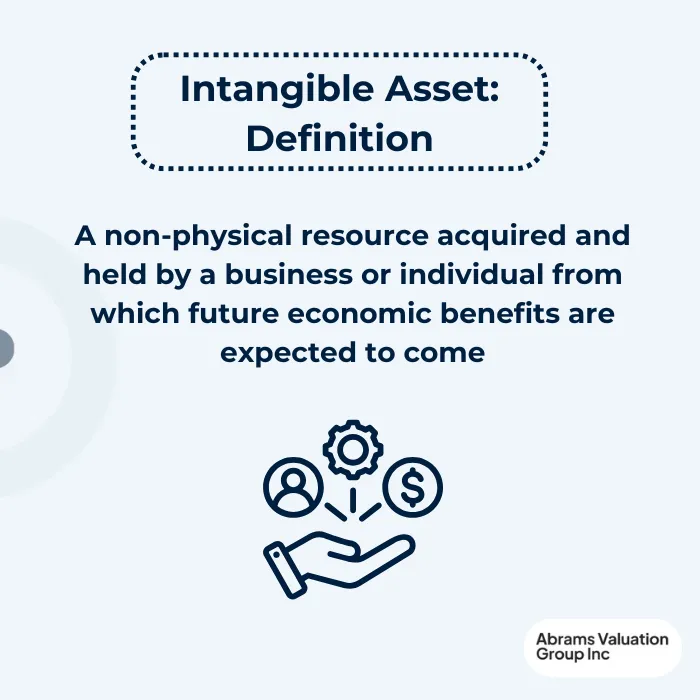
Traditionally, business valuation methods focused primarily on physical and financial assets, including cash flow, property, and equipment, and turnover-based valuation approaches that often overlook critical drivers of enterprise worth. However, as the digital economy has matured, much of a company’s worth is now tied to assets that cannot be seen or touched. The adoption of AI has accelerated this trend, as advanced algorithms, unique datasets, and automated decision-making tools are frequently the differentiators between industry leaders and laggards, underscoring why business value based on turnover alone is incomplete.
The increasing prominence of intangibles in business valuation is supported by recent trends: technology companies, service-based businesses, and even legacy enterprises are seeing a larger share of their value derived from things like proprietary software, trade secrets, and data-driven insights. To dive deeper into what constitutes an intangible asset and why they matter so much in today’s valuations, see the AVGI blog’s comprehensive overview of intangible assets.
As AI continues to permeate every sector, understanding and properly valuing these intangibles is essential for investors, executives, and valuation professionals alike.
How AI Contributes to Intangible Asset Value
- Increased Operational Efficiency
One of the most immediate and tangible ways AI adds value as an intangible asset is by increasing operational efficiency. AI-driven, efficient processes can automate repetitive tasks, ranging from data entry to inventory management, freeing up employee time for more strategic duties. Businesses also benefit from streamlined workflows, as embedding AI into core business processes—such as scheduling, resource allocation, and supply chain management—reduces bottlenecks and errors while enhancing measurable value.
2. Saved Time and Faster Decision-Making
AI’s ability to synthesize vast amounts of data in real time provides decision-makers with actionable insights faster than ever before. This speed enables companies to respond quickly to changing market conditions, capitalize on fleeting opportunities, and make informed choices with greater confidence. Enhanced agility and responsiveness become core intangible strengths that set businesses apart from competitors. Measurable top-line growth, such as increased conversion rates, is essential in evaluating AI’s revenue acceleration.
3. Decreased Labor Costs
By taking over lower-level, routine, or repetitive jobs, AI helps businesses lower their labor costs. This doesn’t just mean replacing workers—often, AI allows human resources to be reallocated to higher-value, creative, or customer-facing roles. As a result, companies can operate more leanly while focusing talent on innovation and growth-driving activities.
4. Innovation and Competitive Advantage
Perhaps the most significant intangible value comes from AI’s role in fostering innovation. Companies that develop proprietary AI models, algorithms, or data sets can create unique products, services, or customer experiences. Leading, future-built companies approach AI integration differently, implementing distinct strategies that drive innovation and value creation. This differentiation acts as a strong competitive moat, attracting new business, increasing customer loyalty, and boosting the company’s overall value in the eyes of investors and stakeholders.
Assessing the Value of AI as an Intangible Asset
With AI becoming a central driver of business value, organizations must measure its contribution as an intangible asset to gain insight into its true impact. Unlike tangible assets, which can be appraised based on physical characteristics and market comparables, AI-related assets require a more nuanced approach that accounts for both expected future benefits—such as productivity improvements or cost savings—and the strategic plan companies develop for AI investment and deployment, often supported by specialized business growth consultants focused on maximizing company value.
Several methods exist for estimating the value of AI within a company. Cost-based approaches consider the investment in developing or acquiring AI technology, including research and development expenses, data acquisition costs, and implementation costs. Income-based methods estimate the present value of future cash flows directly attributable to AI initiatives—for example, the incremental revenue or cost savings generated by AI-driven automation or analytics. Market-based comparisons, while more challenging due to the proprietary nature of many AI solutions, can sometimes be used if similar transactions or licensing deals exist. Evaluators also measure daily active users (DAU) and workflow penetration to assess user adoption, while technical audits measure model accuracy, inference speed, low latency, and cost per prediction at scale.
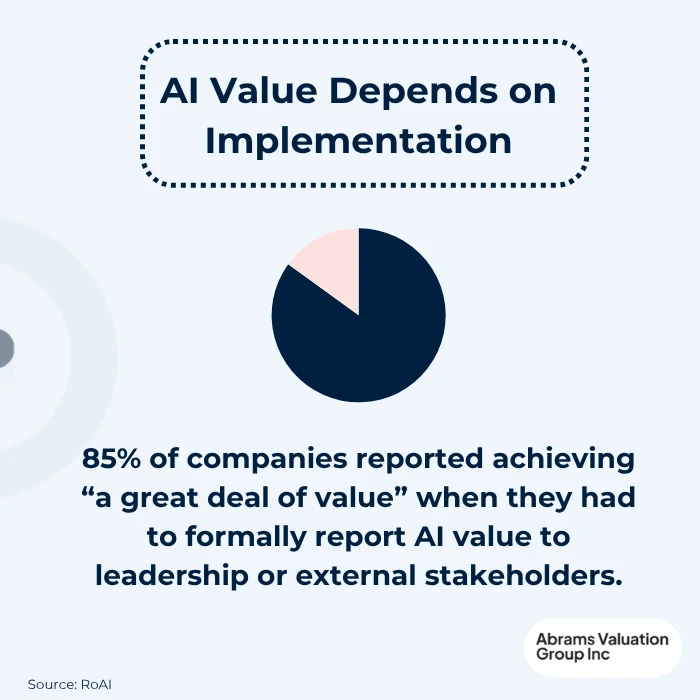
Key metrics that signal the value of AI as an intangible asset include measurable productivity gains, cost reductions, the creation of new revenue streams, and the generation or protection of intellectual property such as algorithms and data sets. Companies may also consider the value of exclusive data access, improvements in customer satisfaction, and the degree of competitive advantage conferred by proprietary AI models. Organizations that manage AI effectively—by measuring outcomes after implementation and reporting results—are far more likely to translate use cases into consistent enterprise value, with 85% achieving a great deal of value when they formally report AI value to leadership or external stakeholders.
The Return on AI Institute’s study found that 45% of organizations report getting a ‘great deal’ of value from AI, while another 45% report moderate value, indicating broad adoption but uneven outcomes across enterprises. The report outlines a six-stage economic maturity model, showing that organizations that move from pilot to production without measuring outcomes see only 18% reporting a great deal of value, compared to 44% when post-implementation measurement is introduced.
As firms progress in their AI maturity, they focus on scaling AI from initial adoption to broader implementation, often investing in advanced capabilities such as agentic AI to accelerate value creation. Foundation models currently underpin major AI valuations, but as the industry evolves, value is expected to shift toward specialized applications and infrastructure. Analytical AI is cited as the most valuable type by 50% of organizations, while generative AI accounts for only 9%, reflecting both the challenges in measuring ROI for generative AI and the current focus on more established forms of AI.
The rapid growth of AI startups has transformed the investment landscape, with the number of AI companies increasing by 39% in the first seven months of 2025 and AI firms securing 40% of all capital raised during that period. By mid-2025, half of the top 20 companies by revenue multiple were AI-focused, showcasing the premium investors are willing to assign to companies leveraging AI as a core differentiator.
The super unicorn tier in AI includes eight companies valued between $10-49.9 billion, while the large unicorn category encompasses companies valued between $5-9.9 billion, representing the most dynamic segment of the AI market. Venture capital plays a crucial role, with active VC firms like Sequoia Capital driving sector growth and often appearing in the cap tables of successful AI companies.
AI leaders such as OpenAI, Anthropic, Hugging Face, and Mistral AI command revenue multiples ranging from 35x to 50x, significantly higher than the 6x to 8x range typical for SaaS companies like Spotify. At the 75th percentile, AI firms command a 217% valuation premium over non-AI companies, while the median premium is 139%. Leading AI companies exhibit a median revenue growth rate of 200%, 1.5 times that of non-AI peers.
These insights highlight the importance of a robust business model, scalability, and the strategic allocation of AI budgets to agentic AI and other advanced capabilities. As agentic AI becomes more prevalent, it is widening the value gap between future-built companies and the rest, with firms that make these investments gaining a competitive edge.
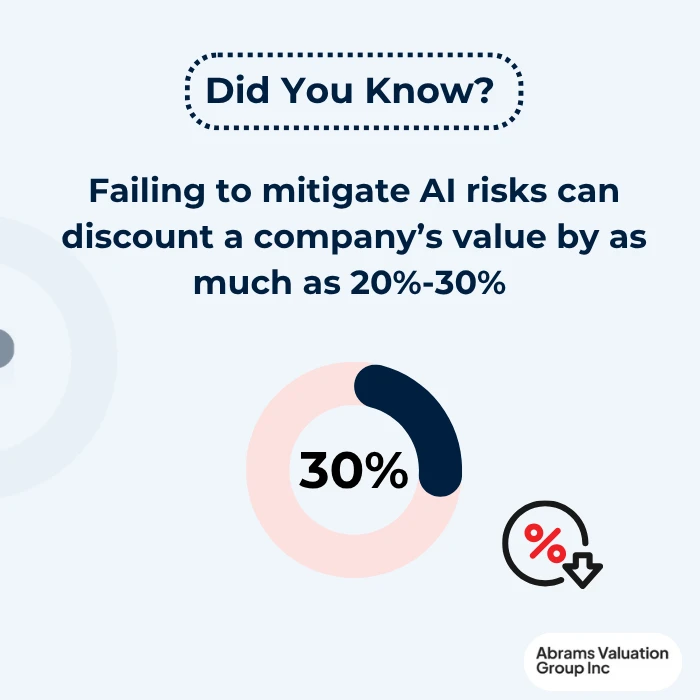
Hardware, particularly GPUs and specialized chips, is increasingly critical to the efficient deployment of generative AI and foundation models, with companies competing to optimize performance and reduce costs. Proactive compliance with regulations such as the EU AI Act and GDPR is also essential, as failure to manage AI risks can result in a 20–30% discount in valuation.
However, valuing AI is far from straightforward. The uniqueness of proprietary algorithms and datasets creates challenges for benchmarking and market comparisons. Many of AI’s benefits—such as enhanced agility or better decision-making—are difficult to capture in purely financial terms. As a result, valuation experts must blend quantitative analysis with qualitative judgment, considering both the direct and indirect ways AI shapes a company’s future prospects, and always keeping a clear focus on the point at which measurement, management, and scaling intersect to drive long-term value—often beginning with a tailored engagement initiated through professional AI and intangible asset valuation services.
Risks and Liabilities Associated with AI Adoption
While the benefits of AI are significant, businesses must also contend with a unique set of risks and liabilities that can directly threaten their value if not properly managed.
Reputational Risks
One highly publicized risk is the potential for reputational damage when AI is used irresponsibly. For example, in the famous Mata v. Avianca, Inc. case, the plaintiff’s lawyers presented AI-generated legal precedent cases to the court to support their client’s case without proper fact-checking. Chat-GPT had made up those cases, and the lawyers were fined $5,000 by the judge for acting in “subjective bad faith”.
Such incidents can erode client trust, damage a firm’s credibility, and lead to negative media coverage. In industries where reputation is a key intangible asset, even a single misstep involving AI can have outsized consequences on brand equity and client relationships.
Operational and Legal Risks
AI systems are not infallible; they are susceptible to errors, biases in training data, or producing outputs that are factually incorrect—commonly referred to as “hallucinations.” These operational risks can lead to flawed decision-making, financial losses, or even legal exposure if automated outputs are used in regulated environments. Additionally, the rapidly evolving regulatory landscape means companies must keep pace with new compliance requirements regarding data privacy, algorithmic transparency, and accountability. Failure to do so can result in fines, lawsuits, or restrictions on business operations.
Potential Impact on Company Value
The cumulative effect of these risks can offset or even outweigh the value AI brings if not proactively addressed. Investor confidence, customer loyalty, and long-term profitability can all be undermined by poorly managed AI implementations. Strong governance, clear policies on AI usage, and robust oversight mechanisms are essential to minimize these risks and ensure that AI remains a net positive contributor to enterprise value.
Balancing Value Creation and Risk Mitigation
To maximize the value AI can deliver while safeguarding against its inherent risks, organizations must adopt a balanced, proactive approach to integration. This means developing processes and cultures that support both innovation and responsibility.
Strategies for integrating AI responsibly begin with clear frameworks for evaluating and managing AI projects. Companies should establish cross-functional teams—including legal, compliance, IT, and business leaders—to oversee AI adoption and ensure alignment with organizational values and strategic objectives. Ongoing staff training and education are essential to ensure all stakeholders understand both the potential and the pitfalls of AI technologies.
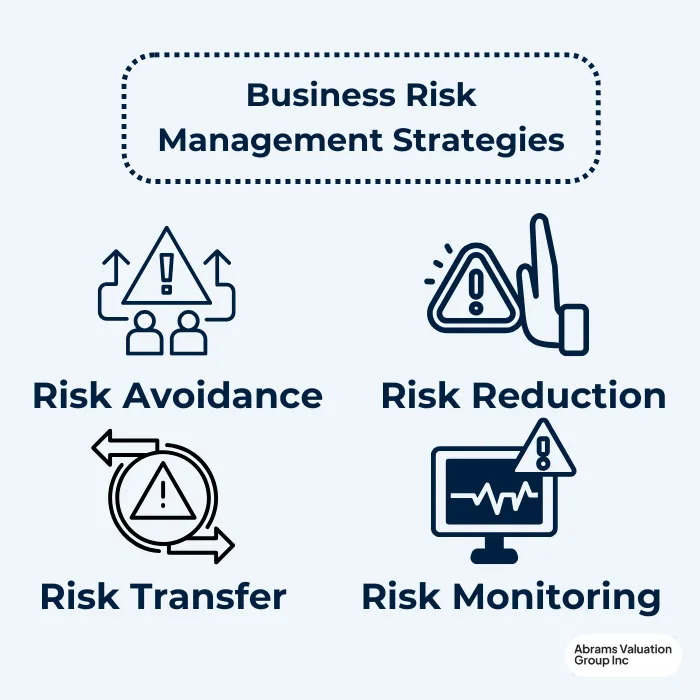
Building transparency, accountability, and robust quality controls is crucial. This involves implementing rigorous testing and validation protocols for AI systems before deployment, as well as ongoing monitoring to detect issues such as bias, drift, or malfunction. Transparent reporting on how AI models make decisions—and allowing for human oversight—helps build trust with customers, regulators, and other stakeholders. Companies can further protect themselves by maintaining clear documentation of data sources, model development, and decision logic.
The role of leadership in fostering ethical AI use cannot be overstated. Senior executives and boards must set the tone from the top, promoting ethical guidelines and a culture of accountability around AI. Leadership should support the creation of ethics committees, encourage whistleblowing on questionable AI practices, and ensure that considerations of fairness, privacy, and social impact are embedded into all AI initiatives. By doing so, organizations can harness the full promise of AI while minimizing its downsides, positioning themselves for sustainable, long-term value creation.
How AI Value Impacts Valuation: In Conclusion
Artificial intelligence has ushered in a new era of business valuation, fundamentally altering how intangible assets are accounted for and understood. No longer are a company’s most valuable assets limited to what can be seen or touched—today, proprietary algorithms, unique datasets, and AI-augmented processes are among the most critical drivers of worth.
This evolution has elevated the importance of accurately assessing intangibles, demanding that investors, executives, and valuation professionals stay abreast of best practices for both quantifying potential and managing risks. As AI continues to mature, the line between value creation and liability will be defined by an organization’s ability to integrate these technologies responsibly, with transparency, oversight, and ethical leadership at the forefront.
Looking ahead, companies that embrace the intangible asset revolution—while proactively addressing the risks that accompany AI—will be best positioned to realize sustainable growth and resilience. In a world where innovation is the currency of competitive advantage, preparing for the future of AI-driven business value is no longer optional, but essential for long-term success.


