

How Market Sentiment Influences Company Value – The Impact on Startups and IPO Entrants
Market sentiment is a powerful force that can propel companies to soaring valuations or send them into steep decline—often independent of their underlying fundamentals. In the world of finance, how investors collectively feel and act shapes company value just as much as earnings reports or balance sheets. This influence is especially pronounced for startups and companies making their initial public offering (IPO), where a lack of long-term financial data means perception frequently outweighs reality.
For these newer entrants, market sentiment can open doors to rapid growth and generous funding, or trigger sharp corrections and volatility. As we explore how sentiment is formed, measured, and wielded in the marketplace, it becomes clear that understanding its mechanics is essential for founders, investors, and anyone watching the next wave of innovative companies step into the public eye.
Understanding Market Sentiment and Investor Psychology
Market sentiment refers to the overall attitude of investors toward a particular security, sector, or the broader financial market. It is shaped by collective perceptions, emotions, and reactions to current events, news, and data. For example, a positive earnings report or promising industry trends may generate optimistic sentiment, driving asset prices higher, while negative headlines or economic uncertainty can lead to pessimism and lower prices.
Several key drivers shape market sentiment. News headlines, economic data releases, and social media trends can quickly sway investor attitudes. For example, a viral tweet from a well-known investor or a sudden change in macroeconomic policy can spark rapid market moves. Additionally, broader events such as geopolitical tensions or shifts in the global economic outlook significantly influence how investors collectively feel about the market at any given time.
Bullish vs Bearish Sentiment
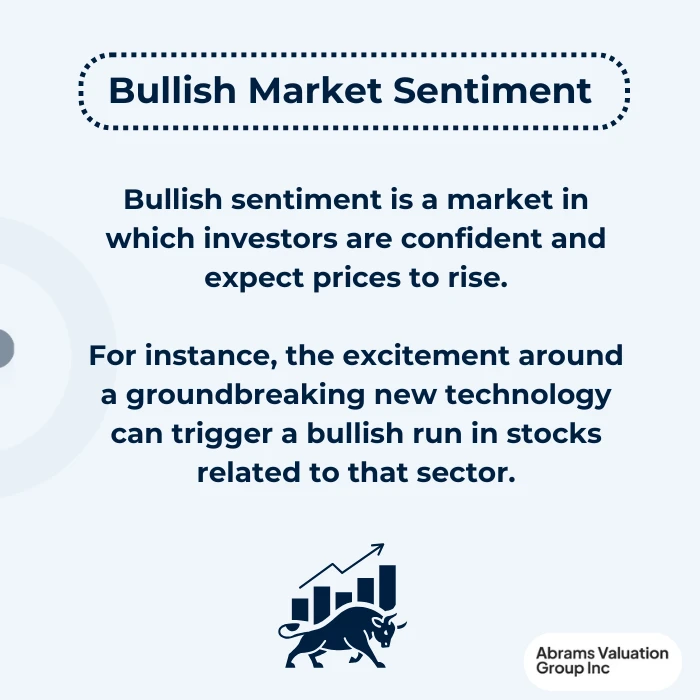
Bullish sentiment describes a market environment in which investors are confident and expect prices to rise. This optimism can be fueled by strong economic data, robust company performance, or positive news. For instance, the excitement around a groundbreaking new technology can trigger a bullish run in stocks related to that sector.
In contrast, bearish sentiment occurs when investors expect prices to fall. Pessimism may stem from disappointing earnings, unfavorable policy changes, or broader economic downturns. During periods of bearish sentiment, investors may sell off assets or avoid new investments, often leading to declining prices across the market.
Fear and greed are fundamental emotional drivers in financial markets. Fear can cause panic selling and sharp price declines, while greed can lead to excessive risk-taking and speculative bubbles. The interplay between these emotions often results in overreactions, pushing prices far above or below their intrinsic value.
One way to quantify fear in the market is through the “fear index,” most commonly represented by the CBOE Volatility Index (VIX). The VIX measures expected market volatility based on options pricing, with high readings indicating increased investor anxiety. For example, during times of geopolitical crisis or economic uncertainty, spikes in the VIX serve as a warning sign that fear is dominating investor behavior.
Conversely, the concept of a “greed index” aggregates multiple market indicators to gauge periods of excessive optimism. When this index reaches extreme levels, it can signal that investors are overlooking risks in pursuit of quick gains, setting the stage for potential corrections.
Emotional extremes—whether fear or greed—often act as contrarian signals for savvy investors. When fear drives prices to irrational lows, it may present a buying opportunity for those who remain objective. Similarly, when greed pushes valuations to unsustainable highs, cautious investors may choose to trim their positions or avoid new investments until sentiment cools.

Measuring Market Sentiment
Market sentiment is measured through a variety of tools and indicators. Surveys, such as the American Association of Individual Investors (AAII) Sentiment Survey, gauge investor outlook directly. Sentiment indexes, including the CBOE Volatility Index (VIX) and the Fear & Greed Index, provide quantitative measures of prevailing attitudes. Trading volume and market breadth indicators, like the Put/Call Ratio and 52-week High/Low Indicators, offer further insight into how sentiment is translating into actual market behavior.
Each key sentiment indicator provides a different lens on market mood. The CBOE Volatility Index (VIX), often called the “fear index,” measures expected volatility and tends to rise during periods of market stress. The Fear & Greed Index aggregates multiple market signals to assess whether emotions are leaning toward fear or greed. The Bullish Percent Index (BPI) tracks the percentage of stocks in a bullish technical pattern, helping identify overbought or oversold conditions.
The AAII Sentiment Survey captures the proportion of investors who are bullish, bearish, or neutral, which can be interpreted from a contrarian perspective. The Put/Call Ratio compares the volume of bearish put options to that of bullish call options, and spikes can sometimes indicate market bottoms. High/Low Breadth Indicators look at the number of stocks hitting 52-week highs versus lows, especially when paired with trading volume, to detect shifts in market leadership and sentiment extremes.
Investor psychology is the study of how human emotions and cognitive biases drive investment decisions. Unlike rational economic models, investor psychology recognizes that fear, greed, optimism, and herd behavior often influence buy and sell decisions. A classic example is the dot-com bubble, where widespread optimism led to soaring valuations, only to be followed by a sharp crash when sentiment reversed.
Company Value: Intrinsic Value vs. Market Value
The fundamental or intrinsic value of a company refers to its actual worth based on objective financial measures—such as revenue, profit margins, cash flow, balance sheet strength, and growth prospects. Analysts use these factors to assess a business’s true value, regardless of current market hype. For example, a profitable software company with steady growth and a strong competitive position may have a high intrinsic value, even if its share price doesn’t fully reflect this strength. In contrast, market valuation is the price investors are willing to pay for a company’s shares at any given time, and it is influenced not only by fundamental data but also by investor sentiment, prevailing trends, and external events.
There are times when market valuation aligns closely with intrinsic value, but often, perception can cause prices to swing far above or below what fundamentals would justify. A classic example is the dot-com bubble, when excitement and speculation drove technology stocks to unsustainable heights before a dramatic collapse. This divergence between perception and reality is why some investors adopt a contrarian approach—using sentiment indicators to buy when fear depresses prices below intrinsic value, and to sell or reduce exposure when greed inflates prices beyond reasonable levels.
Ultimately, the most effective investment strategies combine both perspectives: using sentiment analysis to time entries and exits, while relying on fundamental analysis to ensure that investments are grounded in real, sustainable value.
The Double-Edged Sword: Market Sentiment & Startups
Market sentiment has an outsized impact on startups because these companies often lack the established track records and financial stability of mature firms. With limited operating history, startups are especially vulnerable to shifts in investor mood, media hype, and prevailing market narratives. Positive sentiment can quickly fuel rapid growth, attract major funding rounds, and drive up valuations—even when the business is still unprofitable or unproven. Conversely, a sudden turn in sentiment can dry up investment, deflate valuations, and expose startups to sharp corrections or even failure. This sensitivity makes understanding, anticipating, and responding to market sentiment absolutely critical for startup founders and early investors, as perception can become reality long before fundamentals catch up.
IPOs: Riding the Sentiment Wave
Market sentiment has an outsized impact on startups because these companies often lack the established track records and financial stability of mature firms. With limited operating history, startups are especially vulnerable to shifts in investor mood, media hype, and prevailing market narratives. Positive sentiment can quickly fuel rapid growth, attract major funding rounds, and drive up valuations—even when the business is still unprofitable or unproven. Conversely, a sudden turn in sentiment can dry up investment, deflate valuations, and expose startups to sharp corrections or even failure.
This effect is especially visible when a startup goes public through an initial public offering (IPO). The IPO process is often driven as much by investor excitement or skepticism as by the company’s actual financials. The key for IPO companies is to stay clear and true to the intrinsic value of the company to continue creating solid value for investors. Companies with strong internal value will often have the wherewithal to ride the waves of sentiment without being sucked under the water. In contrast, companies that solely build on their “rising star” status quickly lose their market footing as soon as investor sentiment turns less favorable or the newest darling of the sector captures investor attention and excitement.
Risks, Limitations, and Opportunities for Startups
Market sentiment has an outsized impact on startups, as these companies typically lack long-term financial track records and the operational stability of established firms. This makes them particularly susceptible to shifts in investor mood, media coverage, and broader market narratives. When sentiment is positive, startups can experience rapid growth, secure large funding rounds, and achieve high valuations—even if they have yet to demonstrate sustained profitability.
On the other hand, negative sentiment can quickly dry up investment, deflate valuations, and expose startups to sharp corrections or even failure. This dynamic is especially evident during the initial public offering (IPO) process, where investor excitement or skepticism can significantly influence both the pricing and performance of a newly public company.
A notable example is Uber’s 2019 IPO, which was buoyed by years of anticipation and positive sentiment, leading to a lofty initial valuation. However, once trading began, concerns about profitability and increased competition shifted investor sentiment, resulting in a steep decline in Uber’s share price in the months that followed. This demonstrates how the emotional climate surrounding an IPO can drive prices above or below what company fundamentals might suggest, shaping the early fortunes of startups as they enter public markets.
Strategies for Managing Sentiment Risk
Market sentiment can be volatile and have a significant impact on a business’s market value in either a positive or negative direction. Here are several practical strategies for managing sentiment risk.
Maintain transparency in communication and investor relations.
Monitor key sentiment indicators regularly, such as the VIX, Fear & Greed Index, and market breadth statistics.
Set entry and exit rules based on clearly defined sentiment thresholds.
Apply position sizing strategies tied to sentiment-driven risk levels.
Use stop losses to limit the impact of sudden sentiment reversals.
Rely on official indicator providers and data feeds for accurate sentiment metrics.
Leverage social media sentiment analysis tools to capture real-time shifts in perception.
Utilize AI models for large-scale parsing of news and social sentiment data to identify rising threats and manage PR and investor communications
Conclusion
Market sentiment is a powerful, ever-shifting force that can define a company’s trajectory—especially for startups and those making their public debut through an IPO. While solid fundamentals provide the backbone for a company’s true value, it’s the collective psychology of investors, shaped by fear, greed, optimism, and doubt, that ultimately determines how the market values a business in the short term. For newer companies and startups, where there’s often limited historical data and more uncertainty, sentiment can overshadow even the most promising fundamentals, leading to dramatic swings in valuation and access to capital.
Throughout this article, we’ve explored how market sentiment forms, the psychological drivers behind investor behavior, and the key indicators—such as the VIX, Fear & Greed Index, Bullish Percent Index, AAII Sentiment Survey, Put/Call Ratio, and High/Low Indicators—that help decode the market’s mood. We’ve seen how perception can diverge sharply from reality, illustrated by real-world examples like Uber’s IPO, and how emotional extremes can present both risks and opportunities for contrarian investors. At the same time, we’ve highlighted the practical strategies and tools—ranging from transparent communication and regular indicator monitoring to leveraging AI-driven sentiment analysis—that can help startups, founders, and investors navigate the unpredictable waters of public markets.
Ultimately, success in this landscape depends on a disciplined, balanced approach: monitoring core sentiment indicators as part of a regular review routine, combining these insights with rigorous fundamental analysis, and being mindful of the limitations and risks of sentiment-driven signals. By respecting both the power of perception and the grounding of objective data, investors and founders can make informed decisions, mitigate risks, and seize opportunities—even when market sentiment turns volatile. In a world where perception can quickly become reality, especially for startups and IPOs, mastering the interplay between sentiment and substance is the key to enduring success.


