
IPO Readiness: Building Value for Founders and Investors
Going public is a defining milestone for any private company, but creating true lasting value begins well before the bell rings on the first day of trading. For startup founders and investors, IPO readiness is not simply a compliance exercise—it is a strategic journey that can dramatically impact valuation, market confidence, and long-term success.
Understanding the IPO Process and Pathways
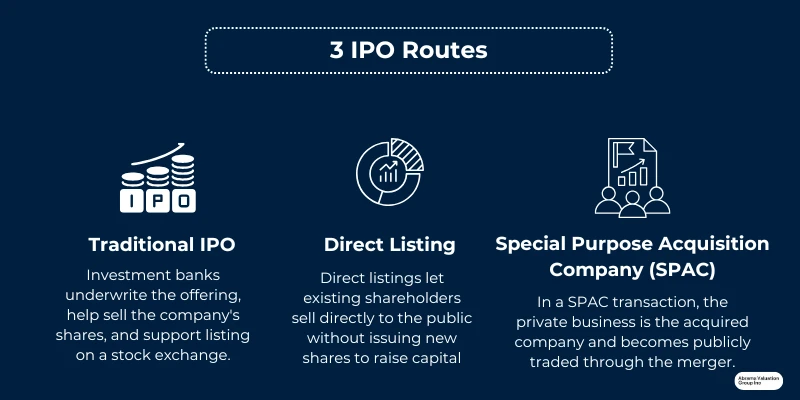
As part of the broader IPO process, an initial public offering can take several forms: a traditional IPO, a direct listing, or a Special Purpose Acquisition Company (SPAC). In the traditional route, investment banks underwrite the offering, help sell the company’s shares, and support listing on a stock exchange. Direct listings let existing shareholders sell directly to the public without issuing new shares to raise capital.
In a SPAC transaction, the private business is the acquired company and becomes publicly traded through the merger. Each comes with distinct regulatory, disclosure, and market implications. Founders and investors must evaluate which pathway aligns with the company’s growth story, capital needs, and investor base. The right choice can optimize liquidity, minimize dilution, and set the foundation for future growth.
The Value of Early Planning
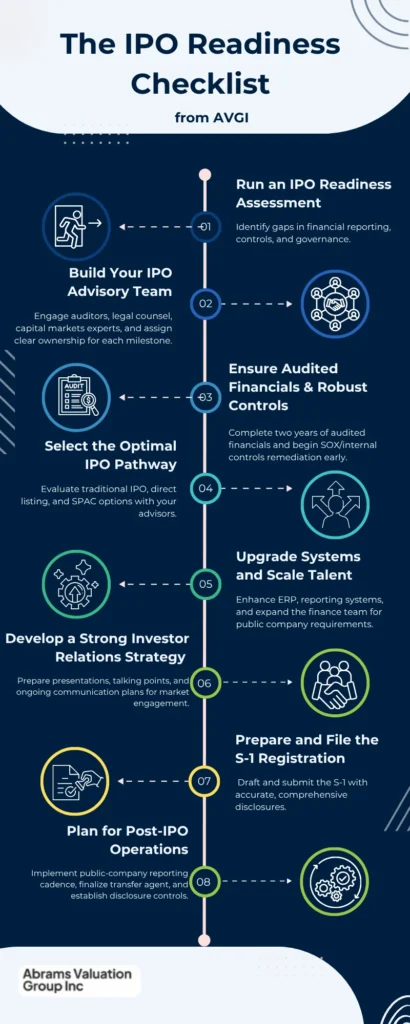
IPO planning starts with a rigorous IPO readiness assessment that reviews the entire business through a public company compliance lens. This process helps identify gaps in financial reporting, internal controls, and governance as part of a structured remediation approach. By assigning clear ownership and timelines to remediation tasks, companies reduce risks that could delay or derail an offering. For founders, this discipline translates to stronger positioning during valuation and pricing discussions. For investors, it means greater confidence in the company’s ability to meet public market expectations. An IPO roadmap often begins in the pre-IPO stage 12 to 24 months ahead and follows three phases: assess, execute, and thrive.
Building a Bulletproof Foundation with Strong Financial Statements
Preparation is everything in IPO preparation and in moving into the public markets, because transforming from a private enterprise to a publicly traded company requires stronger governance, financial rigor, and operational controls. Assembling a team of seasoned advisors—auditors, legal counsel, and capital markets experts—ensures your company is audit-ready and compliant with SEC requirements, and the right professional advice should come from specialists with technical accounting expertise and experience taking a company public, including portfolio companies backed by private equity firms.
Thoroughly audited financial statements, including ideally two years of historical statements audited to PCAOB standards, help meet regulatory standards and broader regulatory requirements before listing. Clear accounting policies, accurate revenue recognition, and reconciled balance sheets support accurate financial reporting and build trust with potential investors.
Enhancing Investor Confidence
Public investors demand transparency, consistency, and credible guidance, so strong investor communications are essential to building investor trust. Developing a robust investor relations strategy, clear MD&A (management discussion and analysis) narratives, and well-practiced earnings calls can make or break market sentiment, while a compelling equity story can strengthen investor interest by clearly explaining the company’s growth strategy, competitive advantage, and long-term financial objectives to key stakeholders.
The Board of Directors should also support public-facing credibility with a majority of independent directors and functional Audit, Compensation, and Nominating/Governance committees. For founders, this is an opportunity to tell the company’s story with clarity and conviction. For existing investors, it helps maximize exit value and supports a healthy aftermarket for the stock. It should also include an investor roadshow to present the equity story and gauge demand among potential investors during the IPO journey.
Capital Markets Strategy and Timing
Market conditions in the IPO market are dynamic, and shifts in market activity and market trends can make timing a favorable window critical to value creation. Founders and boards should monitor comparable company valuations and partner closely with capital markets advisors to select the optimal structure and timing for a successful IPO while preserving shareholder value. Timing decisions often hinge on when the SEC clears the filing, and the marketing phase can begin after the S-1 is cleared and the preliminary prospectus is filed.
Avoiding Common Pitfalls
Many IPO missteps stem from underestimating the complexity and increased scrutiny involved in the broader IPO readiness process. Building SOX compliance and SOX readiness early through strong internal controls, current financials, and documented accounting judgments is essential, as internal controls support reliable reporting, effective operations, and compliance with laws and regulations.
Using the COSO internal control framework helps management ensure compliance, assess gaps, and detect material weaknesses before audits, including the regular internal audit work that SOX requires. Neglecting these areas can erode investor confidence and lead to costly delays. In practice, upgrading systems and using an IPO readiness checklist can reinforce governance and accountability, helping demonstrate investor trust.
Post-IPO Success: The True Test of Readiness
The transition doesn’t end at the IPO; after listing, companies face public life and broader company transitions that require new reporting cadences, upgraded systems, and expanded finance teams to operate at public-company scale. Founders who invest early in technology and talent are better prepared for SEC filings, including timely reporting within 45 days for 10-Q and 90 days for 10-K, as well as mock procedures such as mock close exercises, mock investor calls, and audits using public-company standards.
Investors benefit from reduced operational risk and improved long-term value realization. The management team often needs greater financial capacity because preparing detailed financial statements, meeting regulatory requirements, and deciding what to handle internally versus externally are time-consuming processes.
Conclusion
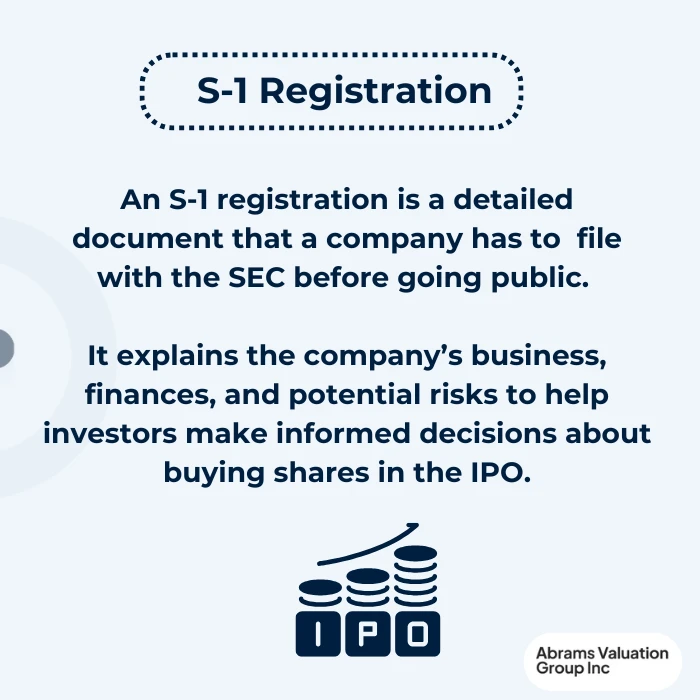
IPO readiness is ultimately about creating value—for founders seeking to tell their story to the world, and for investors seeking liquidity and upside. The broader IPO journey demands early preparation, often beginning at least two years ahead of the IPO timeline, to meet regulatory compliance expectations and build operational readiness. Late-stage execution then includes drafting the S-1 registration statement and submitting Form S-1 with the prospectus, business risks, and strategy, setting up an electronic data room for underwriter review, and coordinating with an underwriting syndicate when multiple banks share offering risk.
Simplifying the corporate structure and capitalization tables, while pausing major transactions during the filing window, can help avoid disclosure re-drafts and support smoother SEC and investor diligence. For high-growth companies and other issuers, this work can cost roughly $3 to $5 million for an average offering and more than $10 million in complex cases, which is why early planning matters. By approaching readiness as a proactive, strategic process, private companies can unlock the full potential of going public and navigate the journey with confidence.


