

Special Damages in Personal Injury Litigation: A Practical Guide
Overview of Special Damages
Special damages are the specific, quantifiable monetary losses a plaintiff suffers because of an injury, often described as economic damages. In personal injury cases, these damages refer to measurable or quantifiable financial losses tied to the injury, such as medical bills, lost wages, property damage, rehabilitation expenses, and other documented costs. They are treated differently from general damages because they reflect actual out-of-pocket loss rather than subjective harm, and they must be specifically pleaded and supported in detail to be recoverable.
For injured plaintiffs trying to prove what an accident has cost them, and for lawyers building or evaluating a personal injury claim, understanding special damages affects how fully those losses can be recovered. This overview explains the main categories of special damages, how to document and calculate them, how they differ from general damages, and how injury lawyers use records, bills, wage information, and other evidence to present a stronger claim.
Economic Damages (Special Damages) Categories
Medical expenses (past and future)
Lost wages and loss of earning capacity
Property damage
Rehabilitation and transportation costs
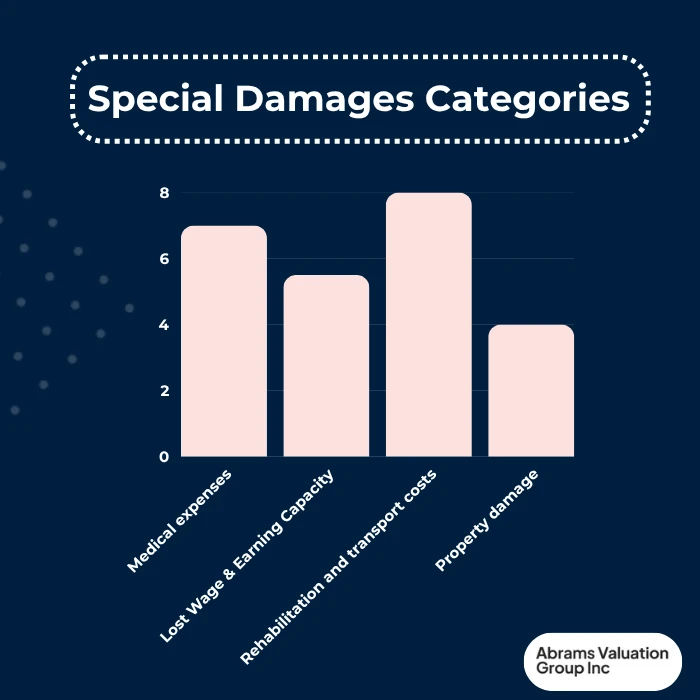
These amounts are generally provable with receipts, invoices, or other documentation. It is essential to separate past economic losses (already incurred) from future economic losses (projected to occur), because courts rely on specific supporting proof, and calculating special damages is easier when bills, receipts, and similar records are available.
Examples of Special Damages
These are common examples of measurable financial losses in personal injury claims:
Medical expenses: Hospital bills, doctor visits, prescriptions, and physical therapy. E.g., a plaintiff submits $10,000 in hospital and pharmacy invoices.
Lost wages: The plaintiff missed six weeks of work, resulting in $6,000 of lost income, supported by wage records such as pay stubs and verification letters, along with evidence of how the injury limited normal job duties.
Property damage: A car repair estimate and receipts totaling $3,500 after a car accident, showing damaged property as a direct result of the incident.
Rehabilitation and transportation: Receipts for taxi rides to medical appointments or payments for specialized rehabilitation services, including documented rehabilitation expenses related to recovery.
Documenting Medical Expenses
Typical current medical expense items include hospital stays, surgeries, doctor visits, prescription drugs, physical therapy, and home healthcare. To effectively document these expenses, keep detailed records of medical records, bills, and payment documents when tracking medical costs, and be attentive to any medical liens, which represent providers’ rights to be paid from settlement proceeds.
Quantifying Future Medical Expenses
An expert medical prognosis requires obtaining detailed reports from treating physicians outlining the likely needs for future medical care of the injured party, and those projected costs may also require expert evaluations. To estimate lifetime care costs accurately, a life-care planner is often engaged to project expenses for anticipated future treatments, surgeries, therapies, rehabilitation costs, and other long-term treatment needs, as well as necessary medical equipment. All future cost projections should be clearly documented, including the assumptions and sources underpinning these estimates, to ensure a comprehensive and credible presentation of anticipated medical expenses.
Lost Wages and Earning Capacity
Documenting past lost wages involves gathering pay stubs, tax returns, and employer verification letters to show how injuries affect income when someone cannot perform normal job duties after an accident. Assessing reduced earning capacity means calculating lost earning capacity as a type of special damage, including future losses tied to a reduced ability to work because of reduced hours, demotion, or an inability to return to prior employment.
Consulting vocational experts is essential to support these assessments, as experts can evaluate the long-term effects on earning potential and clearly document the differences between the injured party’s past earning power and their diminished current and future capacity. The involvement of an expert witness can be critical in cases with multiple complex factors, as their professional valuation and testimony often make the difference between a successful outcome and a disappointing loss in court.
Documentary Evidence and Proof
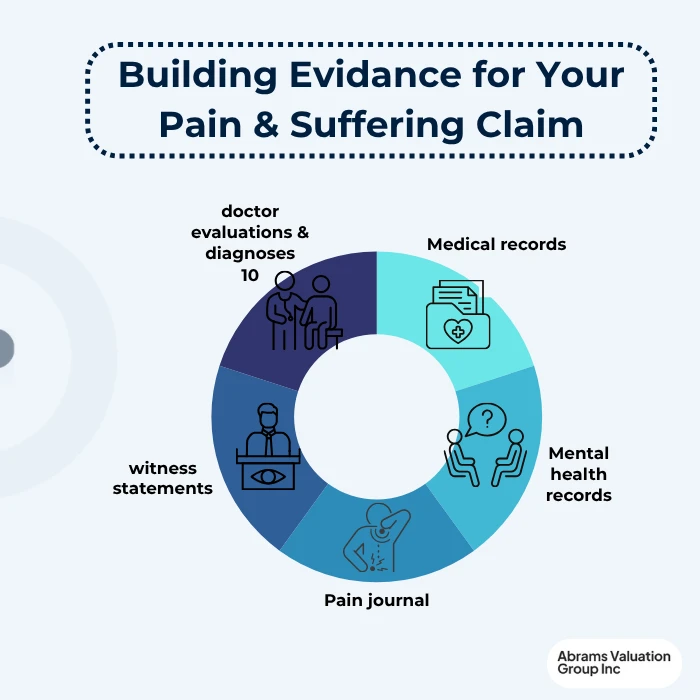
Essential records for proving special damages include medical bills, pharmacy receipts, pay stubs, tax returns, repair invoices, and expert reports, and injured individuals should organize documentary proof showing exact dollar amounts for each claimed loss. It is important to organize this evidence carefully by filing all receipts and pay stubs chronologically and creating digital backups to ensure nothing is lost, since maintaining detailed records helps support full compensation. Additionally, obtaining supporting statements from employers, medical providers, or property valuation experts can help authenticate the claimed losses and strengthen the case, which is especially important in most personal injury claims.
How to Calculate Special Damages
Calculating special damages involves summing all documented out-of-pocket expenses incurred to date and projecting future costs based on expert medical and economic reports. It is also important to consider present-value discounting and any applicable interest as required by law or court rules. This thorough approach ensures that both past and anticipated financial losses are accurately accounted for in the claim.
Special Damages vs General Damages
General damages and special damages differ primarily in how they are measured and proven. In many personal injury claims, there may be both special damages and non-economic damages, but general damages do not come with a clear price tag. Special damages are calculated using concrete evidence such as receipts and records, making them easier to quantify. In contrast, general damages can include physical pain, chronic pain, emotional harm, human impact, personal impact, and effects on daily life as examples of non-economic losses, so they are more subjective and typically estimated by a jury or judge based on the injured party’s experience. Courts evaluate general damages based on injury severity and recovery time.
Special damages can often be calculated early in the claims process, while general damages are usually determined during settlement negotiations or at trial. A key distinction lies in provability: special damages require objective evidence, whereas general damages largely depend on subjective testimony. Consequently, the plaintiff bears the responsibility of meticulously documenting each item of special damages to ensure a strong claim. In personal injury cases, fair compensation often requires accounting for non-economic losses as well.
How Injury Lawyers Build Special Damages Claims
Involving a personal injury attorney early on is crucial when people suffer harm because of someone else’s negligence in personal injury cases, helping preserve vital receipts and evidence necessary for a strong special damages claim. Injury victims may also use a free consultation to understand available damages and make informed decisions about the claim. Attorneys often retain medical, economic, and vocational experts to provide professional evaluations used in personal injury claims and support throughout the claims process. Additionally, they prepare a detailed damages schedule—a comprehensive spreadsheet that itemizes all claimed damages and their corresponding supporting documents—to facilitate effective settlement negotiations.
Documentary Evidence Checklist
Medical and pharmacy receipts/invoices
Pay stubs and employer letters
Property repair bills
Expert medical and economic reports
Insurance correspondence
In Conclusion
Most personal injury claims seek both special damages and general damages so the claimant can pursue fair compensation. Always check for jurisdictional limits, caps, or statutes that may affect the damages you can recover. In rare cases, punitive damages may also be available for reckless or malicious conduct, and a permanent injury can affect the limits on damages in some jurisdictions. Consult with an attorney to ensure your claim is thoroughly documented and fully supported.
Note: This article provides a general overview and is not a substitute for legal advice. Damages laws and requirements vary by jurisdiction.


