

IPO 2025-2026: Lessons from Recent High-Profile IPO Valuation Surprises
Based on the IPOs of Reddit, Shein, Stripe, Databricks, Chime, and Discord (2025–2026)
The years 2025 and 2026 saw a resurgence in high-profile initial public offerings (IPOs), with several technology and consumer companies making their public market debuts. These IPOs were highly anticipated, not only because of the stature of the companies involved but also because of the volatile market environment and shifting investor sentiment. IPO valuations, always a focal point for both investors and companies, became even more critical as the gap between private-market expectations and public-market realities widened. This case study examines six recent IPOs—Reddit, Shein, Stripe, Databricks, Chime, and Discord—to extract key lessons from their surprising valuation outcomes and to offer guidance for future IPO candidates and market participants.
Background: The Six IPOs at a Glance
To provide context, it is essential to understand the unique characteristics and circumstances of each featured company:
- Reddit: A leading social media platform known for its diverse communities and user-driven content, Reddit’s IPO was closely watched due to its cultural impact and questions about sustainable monetization.
- Shein: The fast-fashion e-commerce giant, headquartered in China, had experienced explosive global growth but faced regulatory and sustainability challenges leading up to its public debut.
- Stripe: As one of the world’s most valuable fintech startups, Stripe’s IPO was a bellwether for the payments industry, generating high expectations around its growth prospects and profitability.
- Databricks: Positioned at the forefront of AI and data analytics, Databricks drew attention for its rapid scaling and large enterprise client base, but faced scrutiny over its valuation multiples.
- Chime: The neobank, recognized for its user-friendly approach to banking, was seen as a disruptor in the financial sector, raising questions about long-term profitability and competitive threats.
- Discord: Originating as a communication tool for gamers, Discord’s broader appeal to communities and creators made its IPO a test of engagement-driven business models.
Each IPO was marked by substantial media attention, market speculation, and significant institutional and retail investor participation, setting the stage for valuation surprises both positive and negative.
Pre-IPO Valuations vs. Market Reality
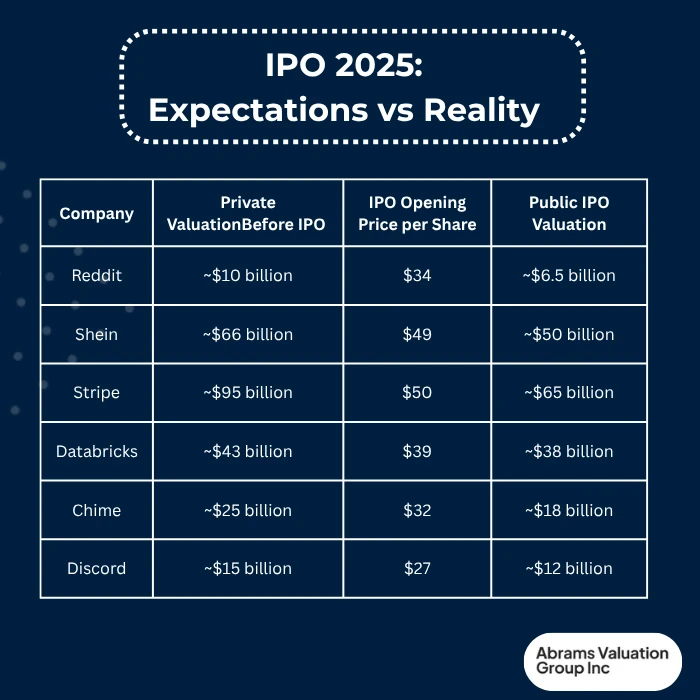
The private funding environment of the early 2020s fueled increasingly lofty valuations for growth-stage companies. As these six companies approached their IPOs, private market valuations often exceeded $10 billion, with some—like Stripe—commanding pre-IPO valuations north of $50 billion. These numbers were driven by large funding rounds, investor optimism, and bullish projections for future growth.
However, public markets frequently challenged these valuations. For example, while Stripe’s last private round valued the company at over $95 billion, its IPO priced it closer to $65 billion, reflecting a more cautious investor stance toward fintech growth and profitability.
Similarly, Shein’s regulatory and geopolitical headwinds led to a lower-than-expected IPO price despite its impressive revenue growth. In contrast, Reddit’s IPO pricing was relatively conservative, but strong retail interest pushed its shares higher on debut, briefly exceeding private market expectations.
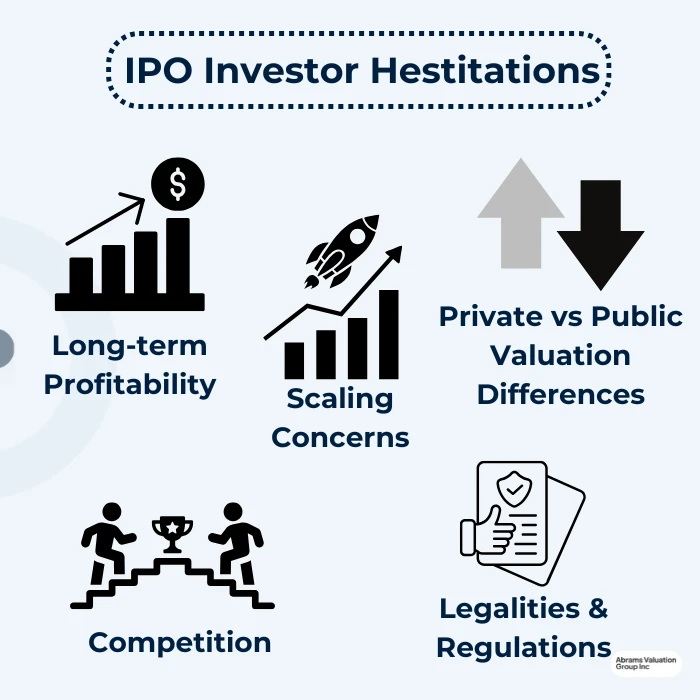
This divergence between private and public valuations underscored the importance of market sentiment, transparency, and timing. Investors scrutinized not only growth stories but also fundamentals such as profitability, scalability, and regulatory risks.
Case Narratives: Company-Specific Valuation Surprises
Reddit: Community Value vs. Monetization Challenges
Reddit’s IPO was a test of whether deep user engagement could translate into sustainable revenue. While its cultural relevance was undeniable, the company faced skepticism about its advertising model and ability to diversify revenue streams. The IPO pricing reflected this caution, but a surge of interest from its own user base led to a strong public debut—though volatility followed as investors weighed long-term profitability.
Shein: Growth Meets Regulatory Scrutiny
Shein’s extraordinary global growth was offset by concerns over regulatory compliance, supply chain transparency, and sustainability practices. Despite high private valuations, these factors weighed down its IPO pricing. Post-IPO, the company experienced significant volatility as investors reacted to ongoing regulatory developments.
Stripe: Fintech Hype vs. Market Volatility
Stripe’s debut was perhaps the most anticipated, with years of speculation and sky-high private market valuations. However, public investors were more cautious, focusing on Stripe’s path to profitability amid rising competition and a tougher macroeconomic environment for fintechs. This resulted in a notable downshift in valuation at IPO, though Stripe’s strong fundamentals helped stabilize its share price over time.
Databricks: AI/Data Analytics Premium and Competition
Databricks rode the wave of excitement around AI and big data, but public market investors scrutinized the company’s valuation multiples and growing competition from established tech giants. The IPO saw healthy initial demand, but the share price settled as investors took a more measured view of the company’s growth prospects and the timeline for profitability.
Chime: Disruption vs. Profitability Questions
Chime’s IPO highlighted the challenges faced by neobanks: rapid user acquisition does not always equate to sustainable profits. Public market investors were wary of Chime’s reliance on interchange fees and its exposure to regulatory changes. The IPO valuation came in below some private estimates, and post-IPO performance was mixed as the market awaited evidence of improving margins.
Discord: Engagement Metrics Under Scrutiny
While Discord boasted impressive engagement and a loyal user base, the company’s revenue model remained underdeveloped compared to peers. Its IPO pricing reflected uncertainty about scaling monetization, and the stock experienced swings as Discord worked to prove its value proposition to the broader market.
Key Factors Behind Valuation Surprises
Several recurring themes emerged from these IPO stories:
- Macroeconomic Environment: Shifts in inflation, interest rates, and economic growth influenced investor risk appetite.
- Investor Sentiment: Appetite for high-growth tech and consumer companies fluctuated, impacting IPO demand and pricing.
- Regulatory and Geopolitical Factors: Heightened scrutiny, particularly for global companies like Shein and fintechs like Stripe and Chime, played a decisive role in valuation outcomes.
- Company Fundamentals: Public investors focused on proven revenue streams, profitability, and realistic growth projections.
- Brand vs. Business Model: While strong brands drove initial interest (Reddit, Discord), questions about monetization led to valuation discounts.
Market and Media Reactions
The media played a crucial role in shaping public perception of these IPOs. Analyst reports dissected financials and growth prospects, often contrasting public market discipline with private market exuberance. Social media and retail investors influenced trading, especially in the cases of Reddit and Discord, where user communities were highly engaged. Stock performance in the weeks following each IPO varied, with some companies stabilizing above their offer price and others experiencing sharp corrections.
5 IPO Lessons Learned
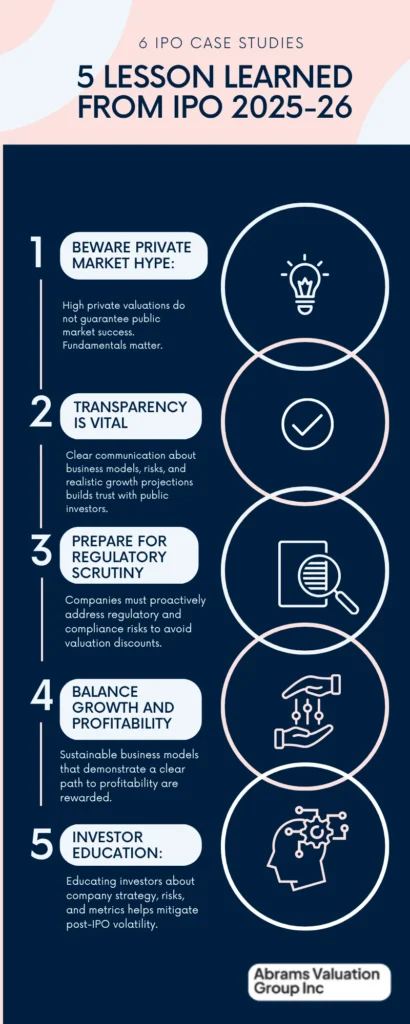
- Beware Private Market Hype: High private valuations do not guarantee public market success. Fundamentals matter.
- Transparency is Vital: Clear communication about business models, risks, and realistic growth projections builds trust with public investors.
- Prepare for Regulatory Scrutiny: Companies must proactively address regulatory and compliance risks to avoid valuation discounts.
- Balance Growth and Profitability: Sustainable business models that demonstrate a clear path to profitability are rewarded.
- Investor Education: Educating investors about company strategy, risks, and metrics helps mitigate post-IPO volatility.
Implications for Future IPOs
The experiences of these high-profile IPOs offer important takeaways for companies contemplating public listings:
- IPO Preparation: Companies should align internal expectations with market realities, focusing on fundamentals and transparent disclosures.
- Investor Due Diligence: Investors must approach growth narratives with skepticism and conduct thorough due diligence.
- Regulatory Landscape: Ongoing changes in global regulation may require companies to adapt strategies and disclosures.
- Market Structure: The role of retail investors and social media in IPO demand and post-IPO trading is likely to persist, requiring companies to engage with diverse investor bases.
Conclusion
The wave of IPOs in 2025–2026 highlighted both the opportunities and pitfalls of transitioning from private to public markets. While some companies exceeded expectations, others faced hard resets of valuation and strategy. The core lessons underscore the enduring importance of fundamentals, transparency, and adaptability in navigating the evolving IPO landscape.


