

Distressed Business Sale Playbook: A Business Valuation Expert’s Perspective
A distressed business sale is the sale of a company facing severe financial or operational challenges that threaten its viability, so the transaction must be valued and executed differently from a healthy business sale. For owners, management teams, creditors, buyers looking to acquire businesses, and the advisors guiding them, the goal is usually to preserve as much value as possible in a compressed period while reducing legal, financial, and operational risk.
When a business is labeled “distressed,” it may be dealing with imminent insolvency, unsustainable debt, critical cash flow shortages, or a bankruptcy proceeding. These distressed situations often force hard decisions about ownership, capital, outstanding obligations, and whether to sell the operating entity, transfer business assets to a new owner, or wind down the company’s assets in an orderly exit. Because customer relationships, present operations, and enterprise value can deteriorate quickly, waiting is often the biggest mistake.
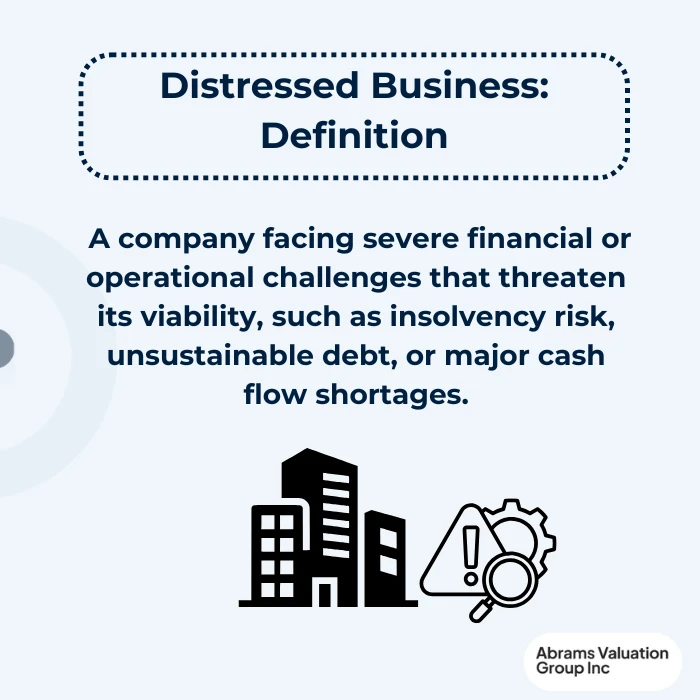
A business is generally considered distressed if it cannot meet obligations as they come due, has defaulted on loan covenants, is suffering accelerating losses, or is at risk of insolvency or bankruptcy. Common triggers include the loss of major customers, management disruption, adverse legal judgments, or market shifts that leave certain businesses or a struggling company with few workable options. Secured creditors, unsecured creditors, landlords, suppliers, employees, customers, and sometimes government agencies may all influence the outcome.
This article explains how to identify distressed business criteria, prepare a company for sale, verify security interests, value the business using going-concern and liquidation methods, structure and negotiate the transaction, close under tight timelines, and handle post-sale and tax issues. In transactions this complex and time-sensitive, knowing when to react timely, get the process started immediately, and find a suitable buyer can materially improve the result and help avoid liquidation as the worst option.
Preparing for a Distressed Business Sale
Assemble Up-to-Date Financial Statements
Comprehensive, current financial statements are essential. These should include recent balance sheets, income statements, cash flow statements, and aging reports for receivables and payables. A thorough financial review should also assess potential liabilities and the stability of present operations. Incomplete or outdated records can deter buyers and complicate valuation.
Identify Key Contracts and Assignable Assets
Determine which contracts (leases, customer agreements, supplier contracts) and assets (intellectual property, licenses) are assignable. Some may require third-party consent, which can slow or block a transaction. Scrutinize legal obligations, including pending lawsuits, regulatory compliance issues, and outstanding obligations, because they can delay a sale or transfer.
Model Short-Term Cash Runway
Estimate how long the business can operate before cash runs out. This informs urgency and provides a realistic window for transaction completion. The review should also identify the root causes of distress to determine whether problems are fixable before ownership changes hands.
Liquidation Value Assessment
Calculate Liquidation Value Asset-by-Asset
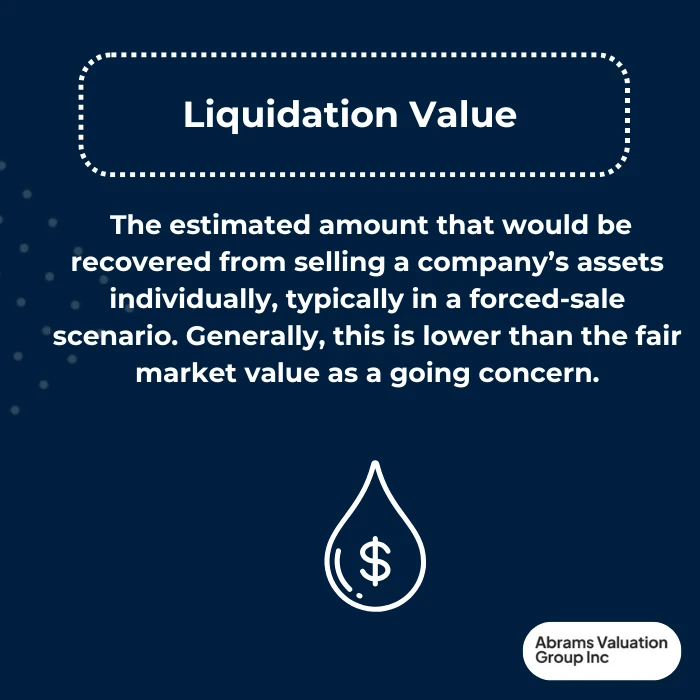
Asset-by-asset analysis is crucial. Each asset—inventory, equipment, receivables, IP—should be valued at its likely recovery value in a forced sale scenario, which is typically less than book value.
Obtain Appraisals for Major Tangible Assets
Professional appraisals for machinery, real estate, and large inventory lots provide independent, defensible values for negotiations and creditor discussions.
Compare Liquidation Value with Going-Concern Valuation
Contrast the “break-up” (liquidation) value with the going-concern value. The latter reflects what a buyer might pay for the business as a whole, considering its ability to generate cash flow if stabilized; fair valuation should also weigh whether operational improvements could raise enterprise value above a pure liquidation outcome. In distressed sales, liquidation value often sets a floor for negotiations
Performing Security Verification
- Order UCC and Lien Searches
- Conduct Uniform Commercial Code (UCC) and lien searches to identify all security interests, liens, and encumbrances on the business’s assets.
- Gather Copies of All Security Agreements
- Collect all agreements granting security interests, as these govern creditor rights and sale restrictions.
- Confirm Perfection Dates for Each Security Interest
- Check when each security interest was perfected (made enforceable against third parties). Earlier-perfected creditors have senior claims.
- Reconcile Collateral Lists to Physical Inventory
- Ensure the collateral described in agreements matches what exists physically and on the books.
- Request Payoff Statements from Secured Lenders
- Obtain up-to-date statements showing amounts owed to each secured creditor, including accrued interest and fees.
- Mark Verification Successful in Closing Checklist
- Once all security interests are confirmed and reconciled, document this in a closing checklist.
- Notify Buyer and Secured Lenders
- Communicate when security verification is complete to buyers and lenders—this is often a sale condition.
Sale Strategies and Risk
Identify Strategic and Financial Buyer Targets
Strategic buyers (competitors, suppliers, customers) may pay more for synergies, while financial buyers (investors, funds) focus on turnaround potential or asset value. Buyers looking to acquire businesses in distressed situations often source opportunities through brokers and industry networks. The best distressed acquisitions usually still have valuable underlying business characteristics, such as defensible operations or customer relationships.
Decide Between Asset Sale and Stock Sale Structures
Asset sales allow buyers to cherry-pick assets and avoid unwanted liabilities. Stock sales transfer the entire entity, including all liabilities—often less attractive in distress scenarios.
Set Negotiation Timeline and Minimum Acceptable Price
Establish a clear timeline and a minimum price, usually anchored to liquidation value plus any premium for speed or certainty. Distressed sales often run in a compressed period and a competitive bidding environment, so buyers must react quickly and line up capital fast. Financing may come from banks, private investors, or seller financing depending on risk and speed needs.
Fast Exits (Higher Risk)
Offer Quick Sale with Limited Representations
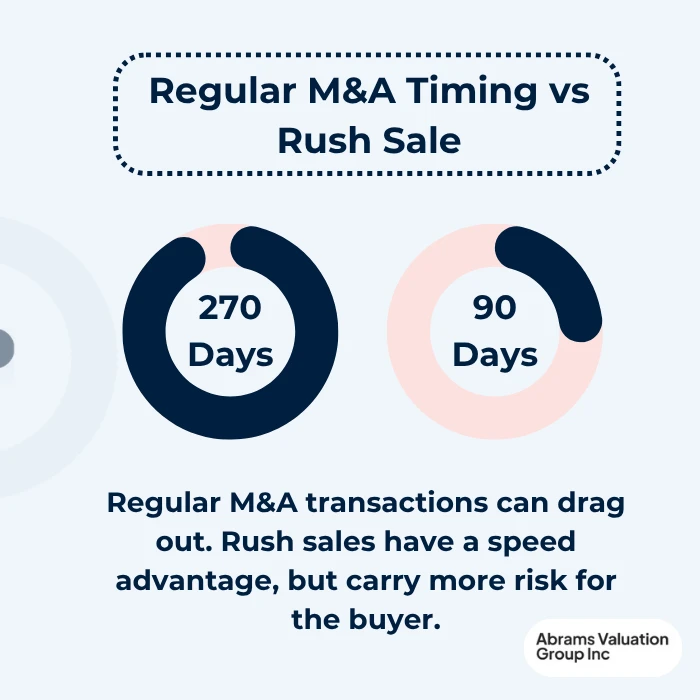
To attract interest, sellers may offer assets “as-is, where-is,” with few warranties. This expedites deals but increases buyer risk. In some cases, a quick sale of assets can close within 90 days when the process started immediately and the scope is tightly defined.
Disclose Higher Risk to Purchasers
Full disclosure minimizes post-sale legal exposure and helps a suitable buyer move quickly despite the higher risk.
Require Escrow to Cover Post-Closing Claims
Escrow accounts protect buyers from undisclosed liabilities that surface after closing.
Controlled Transfers
Structure Earnouts to Preserve Post-Closing Value
Earnouts—payments contingent on future performance—can bridge value gaps and align interests, especially when business prospects are unclear, helping preserve present operations during the transition to a new owner.
Negotiate Creditor Consents Before Transfer
Secured creditors may need to approve asset transfers. Some owners use a controlled transfer as an exit that shifts ownership while keeping the operating entity intact. Early, proactive negotiations minimize closing delays.
Court-Supervised Sales
Consult Insolvency Counsel
Insolvency counsel can advise whether a court-supervised bankruptcy proceeding (like a Chapter 11 Section 363 sale in the US, where Chapter 11 may allow restructuring while continuing operations before or during a sale) offers the best outcome, especially when creditor disputes loom. An Assignment for the Benefit of Creditors is a state-law alternative to bankruptcy that may be considered depending on the case.
Prepare Required Motions for Court Approval
If court supervision is chosen, prepare and file necessary motions to obtain sale approval and “free and clear” title for buyers.
Negotiation, Documentation, and Closing
Draft Asset Purchase Agreement Early
Early drafting of the purchase agreement streamlines the process. It should clearly define assets sold, liabilities assumed, representations, and closing conditions. It should also clearly address assumed liabilities and any outstanding obligations that could affect closing economics.
Prepare Seller Disclosure Schedules
Disclosure schedules detail exceptions to standard representations and are vital in distressed deals.
Coordinate Security Verification at Closing
Ensure all security interests are released or transferred as agreed at closing to avoid post-sale complications. Buyers should review working capital needs immediately after closing to help stabilize the company under new ownership.
Wind Down and Liquidation
Plan Wind Down Tasks with Firm Deadlines
Develop a checklist for remaining wind down tasks, such as inventory liquidation and facility closure. As a guide, public auction sales often take 60 to 180 days, Chapter 7 liquidation typically takes 120 to 180 days, and an Assignment for the Benefit of Creditors can take about 180 days.
Prioritize Creditor Distributions Per Legal Priority
Follow statutory priority for creditor payments—secured creditors first, followed by priority unsecured claims (e.g., payroll), then general unsecured creditors, in an orderly process when selling business assets or winding down the company’s assets.
Cancel or Assign Nonessential Contracts
Terminate or assign contracts no longer needed post-sale to minimize ongoing liabilities.
Post-Sale Actions and Reporting
File UCC Termination Statements Promptly
Remove security interests from public records to finalize asset transfers.
Reconcile Final Cash and Prepare Closing Statement
Account for all sale proceeds and disbursements, preparing a thorough closing statement for stakeholders.
Communicate Outcome to Employees and Key Customers
Transparent communication helps preserve goodwill and clarifies next steps for affected parties.
Practical Tips for Higher Risk Deals
Negotiate Indemnities for Contingent Liabilities
Seek indemnities from sellers for unresolved liabilities. Recognize, however, that their enforceability may be limited if sellers lack resources post-sale.
Obtain Representation-and-Warranty Insurance
When feasible, this insurance can protect buyers from certain post-closing risks, even if seller warranties are limited.
Tax Reporting and Implications
Distressed sales often result in asset values below book value, triggering potential losses for sellers. Buyers may benefit from a step-up in asset basis but should watch for limitation rules (e.g., IRC Section 382 in the US) restricting the use of acquired tax attributes. Both parties should:
- Consult tax advisors regarding the allocation of purchase price, treatment of gains/losses, and reporting requirements.
- Consider sales tax, transfer tax, and other transaction taxes that may apply.
- Ensure all tax filings reflect the distressed nature of the sale, particularly if debt is forgiven as part of the process, which can have income tax consequences.
Resources and Next Steps
Compile a comprehensive transaction checklist to track every step, from due diligence to post-closing tasks.
Engage restructuring and M&A advisors early—mergers and acquisitions can take more than 270 days to complete, so early engagement helps preserve options in distressed situations. These specialized advisors are uniquely positioned to find a suitable buyer for a struggling company before value deteriorates, while maximizing value, minimizing risk, and navigating legal complexities.
Conclusion
Selling a distressed business is a high-stakes, high-complexity process that requires careful planning, rapid execution, and thorough risk assessment. Valuation experts play a central role in determining fair value, structuring the transaction, and ensuring all parties understand the risks and rewards. With the right preparation, clear communication, and expert guidance, both buyers and sellers can achieve optimal outcomes in even the most challenging circumstances.


