

10 Ways Nonprofit Organizations Can Benefit from a Nonprofit Valuation Expert
Nonprofit organizations are often seen as mission-driven, but like their for-profit counterparts, they manage assets, conduct financial transactions, and face complex regulatory and operational challenges. At AVGI, as business valuation experts, we’ve observed that nonprofits have unique, often overlooked needs and opportunities. Here are 10 key ways a nonprofit organization can “profit” from engaging a business valuation professional information.
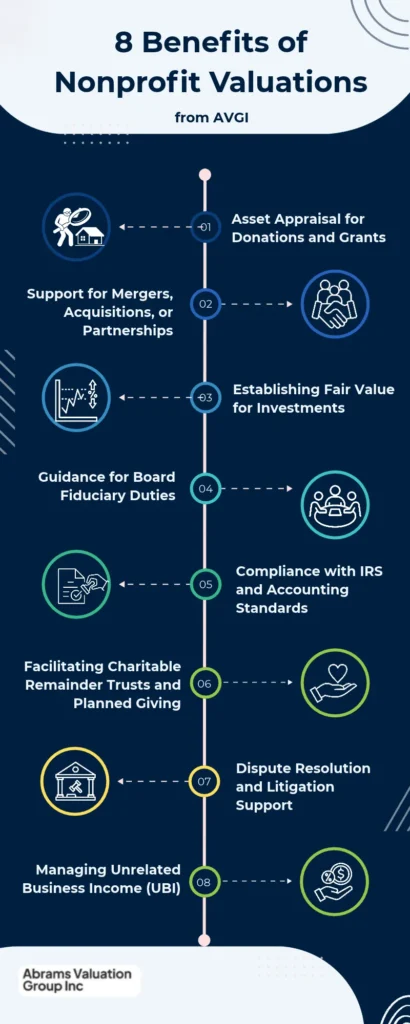
Asset Appraisal for Donations and Grants
Nonprofits frequently receive non-cash donations such as real estate, securities, or business interests. An expert valuation ensures these gift assets are accurately appraised for IRS compliance and internal records, maximizing the credibility of the organization’s financial statements.Support for Mergers, Acquisitions, or Partnerships
Nonprofit consolidation is on the rise. When considering a merger or acquisition, a valuation expert can objectively assess the value of the entity, its assets, and its impact, laying the groundwork for fair negotiations and successful outcomes.Establishing Fair Value for Investments
Nonprofits often hold investments in private companies, joint ventures, or alternative assets. A business valuation expert helps determine fair market value for financial reporting, risk management, and strategic planning purposes.Guidance for Board Fiduciary Duties
Board members are legally responsible for overseeing nonprofit assets. Professional valuations give boards reliable data to fulfill fiduciary duties, increase transparency, and support prudent management.Compliance with IRS and Accounting Standards
The IRS and accounting standards (such as FASB ASC 958) require accurate valuation of certain assets and liabilities. A valuation expert ensures your nonprofit complies, avoiding penalties and scrutiny.Facilitating Charitable Remainder Trusts and Planned Giving
Valuation plays a crucial role in structuring and reporting charitable remainder trusts (CRTs), gift annuities, and other planned giving vehicles. This helps donors maximize tax benefits while nonprofits secure future funding.Dispute Resolution and Litigation Support
Disputes may arise over the value of contributed assets, endowments, or partnership interests. Business valuation experts provide independent, defensible appraisals and, if needed, expert testimony.Strategic Planning and Performance Measurement
Understanding the value of operations and assets enables nonprofits to make informed strategic decisions, set realistic goals, and measure performance over time.Grant Applications and Fundraising
Grantors and donors increasingly seek transparency and accountability. A credible valuation supports major grant applications and fundraising campaigns by demonstrating stewardship and organizational stability.Managing Unrelated Business Income (UBI)
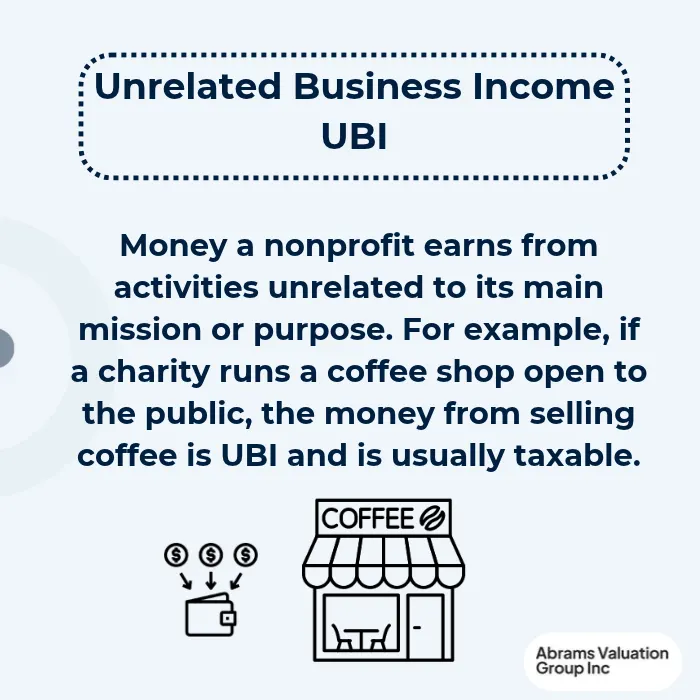
Nonprofits generating income from unrelated business activities must report and, in some cases, pay taxes on UBI. Unrelated Business Income (UBI) is money a nonprofit earns from activities unrelated to its main mission or purpose. For example, if a charity runs a coffee shop that’s open to the public, the money from selling coffee is UBI. Accurate valuations help ensure proper reporting, minimize tax liability, and support compliance.
Additional Important Considerations in Nonprofit Valuation
Understanding the full scope of nonprofit valuation involves recognizing the unique circumstances and services that differentiate nonprofits from for-profit entities. Nonprofit valuation methods include asset-based, income-based, market-based, cost-based, and strategic assessments, each offering different insights depending on the organization’s situation. The market-based valuation method, for example, compares a nonprofit to similar organizations based on key metrics like revenue, program effectiveness, and social return on investment (SROI), which measures the economic impact relative to operational costs.
Donor-restricted funds that cannot be used for general operations also matter, as they affect the organization’s financial flexibility and valuation. Liquidity and unrestricted cash reserves are critical to maintaining financial stability and responding to emergencies. Revenue diversification reduces operational vulnerability, while governance and compliance shape institutional trust and eligibility for grants.
Nonprofits do not have shareholders or distribute dividends, which is a fundamental difference from for-profit businesses. Instead, they must focus on organizational reputation and donor confidence, which significantly influence their ability to attract support and resources. Strong financial controls and collaboration with valuation experts can strengthen governance and funder relationships.
Nonprofit valuations are also crucial for asset management, planning, and compliance with IRS regulations. An independent appraisal can boost credibility with stakeholders and provide a solid foundation for strategic decision-making. Learning about these valuation aspects helps nonprofit leaders make informed choices that support long-term sustainability and impact.
Conclusion
Engaging a business valuation expert is not just for corporations or large transactions. Nonprofit organizations often face situations where an objective, professional valuation can protect assets, meet regulatory requirements, and build donor confidence. Attorneys, financial planners, and nonprofit leaders should consider the multifaceted benefits a valuation expert can provide to help their organizations thrive in an increasingly complex environment.


