

Can a Business Gift Money to an Individual? Gift Tax Insights
If you are a business owner, you might be wondering how gift giving affects your taxes. For instance, can a business gift money to an individual tax-free? Or is that subject to gift tax or other taxes? AVGI helps businesses navigate complex gift and estate tax scenarios by providing accurate and empirical business valuations that clarify their tax obligation. Let’s examine business gifting and its tax ramifications.

Introduction to Gift Tax
The gift tax is a federal tax imposed on money or property given without receiving full value in return, primarily applying to individuals rather than businesses. However, businesses can gift money or property to individuals, and such gifts may be subject to gift tax rules.
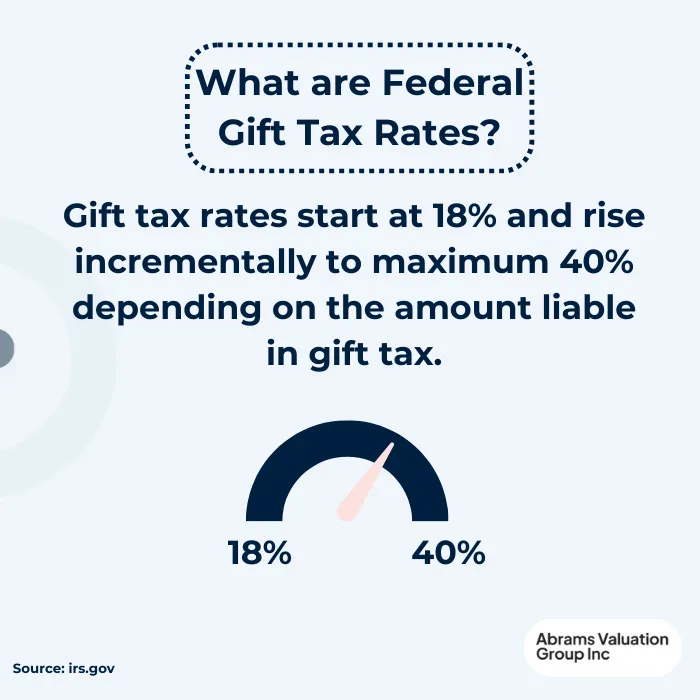
Understanding these rules is essential to avoid unexpected payments to the Internal Revenue Service (IRS) and to take advantage of available tax-free gifting options. The federal gift tax limit and annual exclusion amount determine how much can be gifted tax-free within a given tax year, with gifts exceeding these thresholds potentially requiring you to file a gift tax return and make gift tax payments. Gift tax rates range from 18% to 40%, applying to taxable gifts that surpass the lifetime gift tax exclusion. Proper knowledge of these regulations helps ensure compliance and effective tax planning.
Gift Tax Exclusions
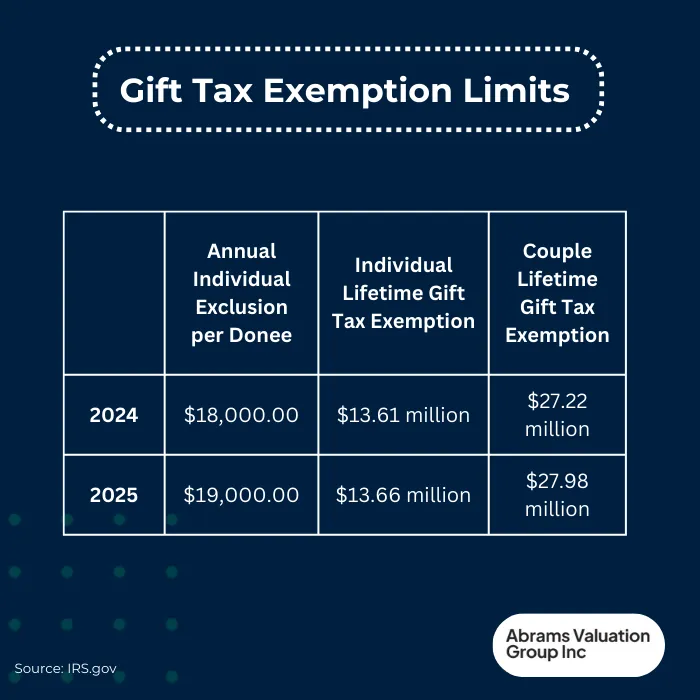
The annual gift tax exclusion is $18,000 per recipient in 2024, meaning gifts up to this amount are generally not subject to gift tax. Additionally, each person has a lifetime gift tax exclusion of $13.61 million, so gifts exceeding this cumulative limit may be subject to federal gift tax.
Certain gifts, such as those made directly to qualifying medical institutions for medical expenses or to educational institutions for tuition, are exempt from gift tax. Gifts to charitable organizations are also typically exempt and can provide income tax deductions. Understanding these exclusions is essential for effective tax planning and compliance with IRS gift tax rules.
Filing a Gift Tax Return
A gift tax return (Form 709) must be filed if the total value of gifts given to a single recipient exceeds the annual exclusion amount or if a gift tax is owed. The deadline for filing this return is typically April 15th of the year following the gift, aligning with the tax day for individual returns.
The IRS requires accurate reporting of taxable gifts, including the fair market value of each gift and the identity of the person receiving it, to properly track the use of the lifetime gift tax exclusion and to ensure compliance with gift tax purposes. Filing a gift tax return is essential to avoid penalties for non-compliance, but because gift tax returns can be complex, it is highly recommended to consult a tax professional for accurate preparation and filing.
Lifetime Gift Tax Exclusion
The lifetime gift tax exclusion represents the total amount an individual can give tax-free over their lifetime, with any gifts exceeding this limit becoming subject to gift tax. For 2024, this exclusion is set at $13.61 million per person, and married couples have the option to combine their exclusions to make larger tax-free gifts. Utilizing lifetime gifts can be an effective strategy to reduce the size of a taxable estate and potentially lower estate tax liability. However, it’s important to note that such gifts may also affect the surviving spouse’s exemption amount. A thorough understanding of the lifetime gift tax exclusion rules is essential for effective estate planning and tax strategy.
Tax-Free Gifting Options
Annual gifts up to $18,000 per recipient are generally tax-free, and married couples can take advantage of gift splitting to jointly gift up to $36,000 per recipient without incurring gift tax. Additionally, gifts made for qualifying medical expenses, educational expenses, and charitable donations may also be exempt from gift tax if specific IRS conditions are met. These tax-free gifting options provide individuals and businesses with effective strategies to transfer wealth while minimizing potential gift tax liability. However, navigating these rules can be complex, so it is essential to consult a tax professional to fully explore available tax-free gifting opportunities and ensure compliance with IRS regulations.
Who Pays the Gift Tax?
The person giving the gift, known as the donor, is typically responsible for paying any applicable gift tax, not the recipient. However, there are certain situations where the recipient may be liable for the gift tax, such as when the donor is deceased or otherwise unable to fulfill the tax obligation. Understanding who is responsible for paying gift tax is a critical aspect of tax planning and compliance. To accurately determine gift tax liability and navigate the complexities of gift tax regulations, consulting a qualified tax professional is highly recommended.
When it comes to businesses gifting money or property to an individual, the rules can be more nuanced. Generally, the federal gift tax applies to individuals rather than businesses. However, if a business owner or shareholder makes a gift of business property or money to an individual, this transfer may be subject to gift tax rules depending on the circumstances.
For example, if a business transfers assets such as cash, equipment, or shares of stock to an individual without receiving full value in return, the fair market value of the gift may be considered a taxable gift. In such cases, the business itself is not the donor for gift tax purposes; instead, the individual owner or shareholder who controls the business and authorizes the gift is typically treated as the donor and is responsible for paying any gift tax due.
It is also important to consider the nature of the business entity. For sole proprietorships, the owner is the individual donor. In partnerships, limited liability companies (LLCs), or corporations, the gift may be attributed to the individual partners, members, or shareholders depending on ownership interests and control.
Additionally, gifts made by a business to its employees or clients may be subject to different tax rules. For instance, business gifts given in the ordinary course of business are generally deductible by the business and not subject to gift tax, provided they meet IRS guidelines on business gift limits. However, large or unusual gifts that exceed these limits could trigger gift tax considerations.
In summary, when a business gifts money or property to an individual, it is crucial to identify who the actual donor is for gift tax purposes and to determine whether the gift exceeds applicable annual or lifetime gift tax exclusions. Proper documentation and valuation of such gifts are essential to comply with IRS regulations and avoid unexpected tax liabilities. Consulting with financial advisors and tax professionals can help businesses and individuals navigate these complex rules effectively.
How Gifts to Minors Are Taxed
Gifts to minors may be subject to gift tax, with the annual exclusion amount applying to such gifts. Certain types of gifts, like those made to 529 plans or custodial accounts, are governed by special tax rules and regulations. These gifting strategies can be effective tools for transferring wealth and minimizing gift tax liability. However, due to the complexity of IRS rules surrounding gifts to minors, it is crucial to consult a tax professional to ensure full compliance and to develop an effective estate planning and tax strategy.

Advantages of Making a Gift
Making a gift can offer several advantages, such as helping to reduce a taxable estate and minimizing estate tax liability. Gifts also provide a way to transfer wealth to future generations and may result in tax-free income for the recipients. However, there are potential disadvantages to consider, including the reduction of the donor’s lifetime gift tax exclusion and the possibility of triggering gift tax liability.
Given the complexities involved and the impact on both donors and recipients, it is essential to consult a tax professional to fully understand the advantages and disadvantages of making a gift and to ensure compliance with IRS rules.
Disadvantages of Making a Gift
Making a gift can have significant implications for both the donor and the recipient. For the donor, gifts may reduce their lifetime gift tax exclusion and potentially trigger gift tax liability. Recipients, on the other hand, might face tax consequences such as income tax or capital gains tax depending on the nature of the gift. However, gifts also offer benefits, including providing tax-free income to recipients and facilitating the transfer of wealth to future generations. Understanding these potential disadvantages and benefits is essential for effective estate planning and tax strategy, making it important to consult a tax professional to navigate the complexities involved.
Tax Basis Issue
The tax basis of a gift is generally the donor’s original basis, which can affect the recipient’s tax liability if they decide to sell or dispose of the gifted property. In contrast, if the property is inherited, the tax basis is stepped up to its fair market value at the time of the donor’s death. Understanding these distinctions in tax basis is crucial for effective estate planning and tax strategy. Given the complexities involved, consulting a tax professional is highly recommended to accurately determine the tax basis of a gift and to develop a plan that minimizes tax liabilities while ensuring compliance with IRS regulations.
Estate Planning Considerations
Estate planning requires careful consideration of gift tax rules and regulations to effectively minimize tax liability and facilitate the transfer of wealth to future generations. Working with a tax professional is essential to develop a comprehensive estate plan that aligns with current IRS guidelines and maximizes available exemptions and exclusions.
By understanding the complexities of gift tax and estate tax laws, individuals and businesses can make informed decisions that protect their assets and ensure compliance. For personalized guidance and a zero-obligation gift and estate tax valuation consultation, contact the experts at AVGI today to navigate your tax planning with confidence.


