

How Long Do You Have to Transfer Property After Death? & When to Seek an Estate Valuation
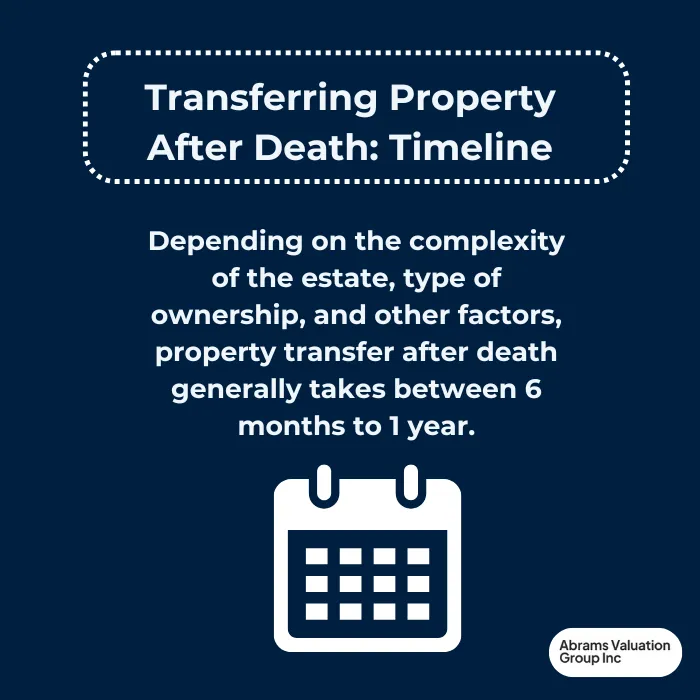
The transfer process involves transferring ownership of the deceased person’s property to the new owner or owners. The process can be complex and time-consuming, involving probate court and various legal documents. While there are many factors that can influence the speed of the transfer, the transfer process generally takes around 6 months to one year. AVGI discusses the topic of property transfer after death and how an estate tax valuation can make a big difference in a smooth and value-preserving transition of property ownership.
Property Ownership After Death
When an owner dies, the deceased person’s property, including real estate and personal property, must be transferred to the new owner or owners. Property ownership is transferred to the new owner or owners according to either the deceased person’s will or, if the deceased did not have a will, then the intestate succession laws. The type of property ownership, such as sole ownership versus co-owned properties, also affects the transfer process.
Whether or not the deceased had a will, the estate generally will have to go through a probate process to qualify the will, ensure there are no disputes, and ensure that the will is executed according to the deceased’s wishes.
Types of Property Ownership
The way that the property was legally owned makes a difference in the length of time and process to transfer ownership after death.
Sole Ownership
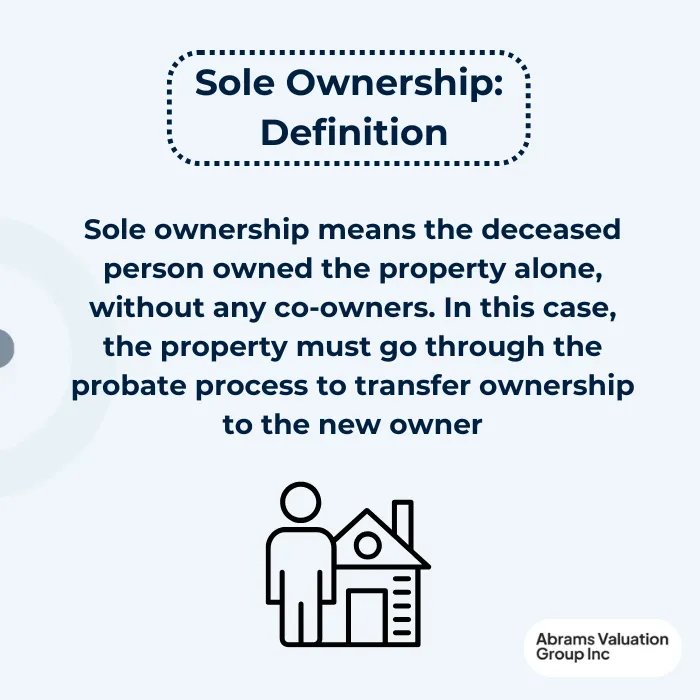
Sole ownership means the deceased person owned the property alone, without any co-owners. In this case, the property must go through the probate process to transfer ownership to the new owner or owners. The probate process can take several months to over a year, depending on the complexity of the estate.
Co-Owned Properties
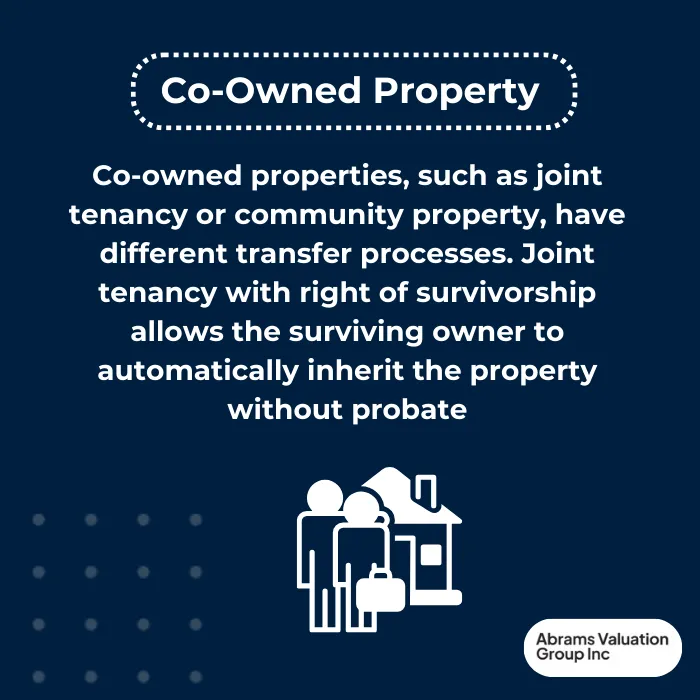
Co-owned properties, such as joint tenancy or community property, have different transfer processes. Joint tenancy with right of survivorship allows the surviving owner to automatically inherit the property without probate. This means that community property with right of survivorship will be able to be transferred to the surviving spouse or co-owner much more quickly.
The Probate Process
The probate process involves filing a petition with the county court to open the estate. The probate court will appoint an executor or administrator to manage the estate and transfer property ownership. The process can be time-consuming and costly, but it’s necessary to ensure the deceased person’s property is assigned according to their wishes.
Transferring Property Without a Will
If the deceased person did not leave a will, the property will be transferred according to intestate succession laws. The intestate succession laws vary by state, but generally, the property will be transferred to the deceased person’s closest relatives. Transferring property without a will can be more complex and time-consuming than with a will.
Using a Transfer-on-Death Deed
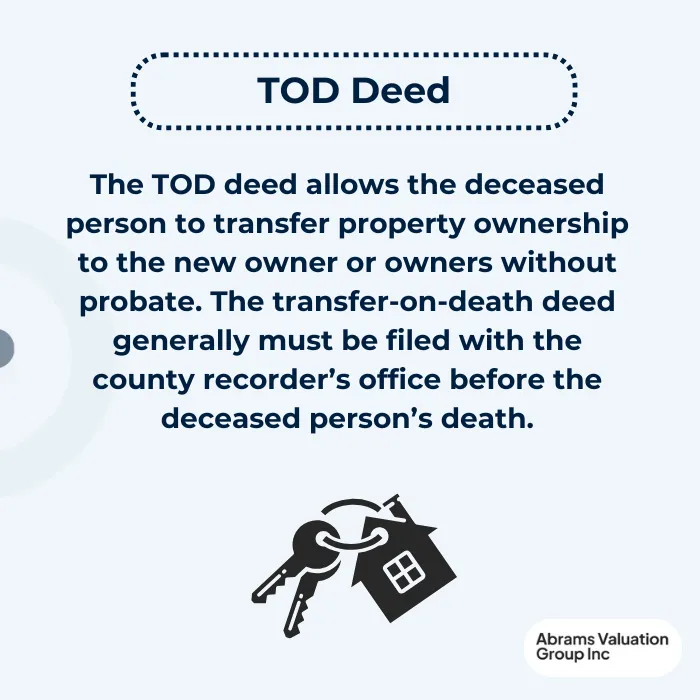
Many states allow a transfer-on-death deed in estate planning. The TOD deed allows the deceased person to transfer property ownership to the new owner or owners without probate. The transfer-on-death deed generally must be filed with the county recorder’s office before the deceased person’s death.
The transfer-on-death deed can be a convenient and cost-effective way to transfer property ownership, but is not the right choice for every estate. Not all states have this expedited option, and a living trust may be a better option for some estates, depending on the circumstances. AVGI encourages individuals to seek expert estate planning advice from qualified financial planners and legal counsel on the best strategy and documents to use in their estate planning and administration.
Lady Bird Deeds: What They Are and How They Differ from Transfer on Death Deeds
A Lady Bird Deed, also known as an enhanced life estate deed, is a special type of deed that allows property owners to transfer real estate to beneficiaries upon their death while retaining control over the property during their lifetime. This deed enables the owner to sell, mortgage, or change the property without the beneficiaries’ consent and without triggering probate after the owner’s death.
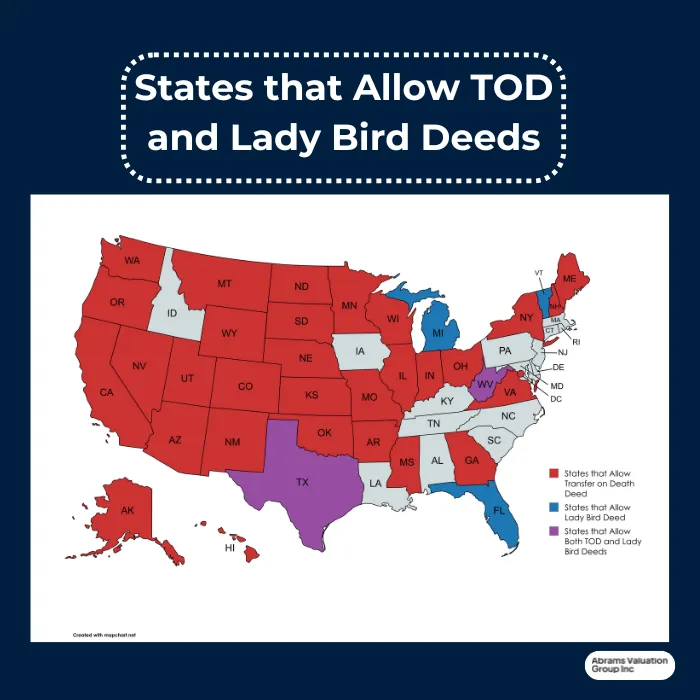
Lady Bird Deeds are currently recognized and used primarily in a handful of states, including Texas, Florida, Michigan, and a few others. The availability and specific rules governing Lady Bird Deeds may vary by state, so it is important to consult local laws or an estate planning attorney.
The key difference between Lady Bird Deeds and Transfer on Death (TOD) Deeds lies in the control retained by the property owner. While both allow the property to bypass probate and transfer directly to beneficiaries upon death, a Lady Bird Deed grants the owner enhanced rights to manage and dispose of the property during their lifetime without restrictions.
In contrast, a TOD Deed typically transfers ownership automatically upon death but may limit the owner’s ability to alter or encumber the property without revoking the deed.
Understanding these differences can help property owners choose the most suitable estate planning tool for transferring real property after death, ensuring a smooth transition while maintaining desired control during their lifetime.
Preparing for the Transfer Process
To prepare for the transfer process, it’s essential to gather all necessary documents, including the death certificate and property deeds. The executor or administrator must also notify all heirs and beneficiaries of the estate. Property taxes and other expenses must be paid to avoid penalties and fines.
The Importance of Expert Estate Valuation for High Net Worth Estates
For high net worth estates, obtaining an expert estate valuation is a critical step in preparing for the transfer of property after death. An accurate estate valuation is essential for determining the true value of estate assets, especially valuable assets like real estate, investments, and other significant holdings. This precise valuation plays a crucial role in calculating the estate’s tax obligations, ensuring that the estate pays the correct amount of estate taxes.
By having a professional valuation, executors and personal representatives can avoid costly errors and disputes that may arise during the probate process. An expert valuation can help streamline the probate process by providing clear, well-documented evidence of the estate’s worth, which can reduce delays and challenges from heirs or tax authorities. Moreover, accurately assessing the estate’s value can potentially save the estate a substantial amount of money by minimizing overpayment of estate taxes and avoiding penalties.
In summary, for estates with significant assets, investing in an expert estate valuation is a smart and necessary step that facilitates a smoother property transfer, reduces probate complications, and optimizes tax outcomes for the decedent’s estate and beneficiaries.
If you are dealing with a high-net-worth estate, contact AVGI today for a professional estate valuation consultation to ensure a precise assessment and a seamless transfer process.
Timeline for Transferring Property
The timeline for transferring property varies depending on a few factors:
The complexity of the estate
Whether or not there is a will
Type of property ownership
If there is a TOD or other deed
If there are estate and gift taxes due
Generally, the transfer process can take several months to over a year. It’s essential to work with a probate attorney to ensure the transfer process is completed efficiently and effectively.
Seeking Professional Advice & Estate Valuation
Transferring property after death can be complex and time-consuming, so it’s essential to seek professional advice from a probate attorney, especially in complex situations. A probate attorney can help navigate the transfer process and ensure the deceased person’s property is transferred according to their wishes.
Obtaining a professional valuation for estate and gift tax purposes can be a game-changer in preserving value in high-net-worth estates. An accurate assessment of the estate’s value can help determine the most accurate estate and gift tax obligation, reducing error margin and inflated tax bills that eat away at the value of the estate that is transferred to the next generation. Contact Abrams Valuation Group, Inc. experts today for a no-obligation consultation that could save millions of dollars for your estate.

