

What is Equity Dilution + 5 Strategies to Mitigate It
Understanding Equity Dilution
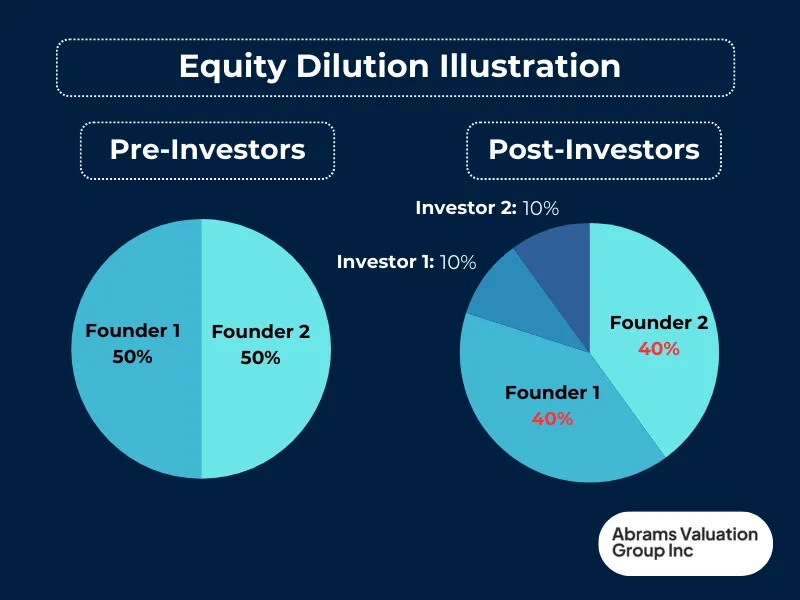
Equity dilution occurs when existing ownership stakes are reduced due to issuing new shares. Each time the company issues new shares, it decreases the ownership percentage for founders and current investors, making their stake in the company smaller than before. By issuing new shares, the company creates a larger “pie” so each slice is now a smaller percentage of the larger pie.
Why Does Equity Dilution Matter?
Equity dilution is a particularly relevant problem for startup founders, who are often looking to raise money from investors in exchange for company equity. Startup founders must understand the potential impact of stock dilution to plan effective funding rounds, investment, and ownership terms to minimize the negative effects of stock dilution on their company and remain attractive to potential investors.
Founder Dilution
Equity dilution can affect a founder’s control over important company decisions, such as appointing board members, influencing key votes, and participating in future fundraising rounds. The less ownership stake the founder is left with after dilution, the less say they have in making the final decisions in the company. Furthermore, if they are left with less than 50% ownership in the company, they have a minority interest in the business, which means their share in the company is automatically less valuable, as it can be discounted for lack of control (DLOC).
Dilution for Investors
Investors, particularly in the early stages of a startup, are wary of their investment getting overly diluted and losing value. Founders who demonstrate an understanding of equity dilution and have safety measures in place to protect early investors from over-dilution give investors confidence in their investments. Investors want to see equity dilution protection from the start of the funding process, and savvy startup owners will attract more investors by demonstrating both knowledge and foresight in this area.
Dilution for Employees
Once the company hires employees and issues stock options as an ESOP, participating employees will also be concerned about stock dilution. Employees want to ensure that dilution will not devalue their stock options when they choose to exercise them, and they will pay close attention to subsequent funding rounds and other material actions that can affect the value of their shares.

What Causes Equity Dilution?
Equity dilution can arise in a number of scenarios, anytime more stock or options are issued. Let’s examine a few common causes of equity dilution, particularly for startups.
Subsequent Fundraising Rounds
Going for another round of funding means issuing more equity to new investors in exchange for more capital for your startup. Trading more company equity for cash means diluting the ownership stakes of existing shareholders, founders, and investors.
The value of the stock may not decrease- it may actually increase as a result of the new funding and opportunities it presents. However, the dilution affects the ownership percentage, as each stakeholder now owns a smaller percentage of the company than previously.
Expanding the Employee Stock Option Pool
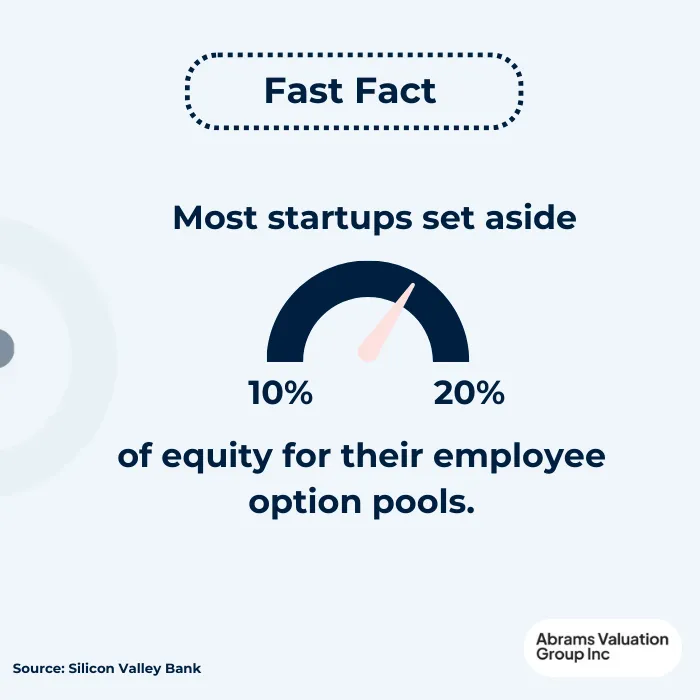
New investors often require startups to set aside an option pool- a certain number of shares earmarked for establishing a future ESOP and offering employees stock options. Adding to the option pool also dilutes existing ownership. The dilution impact depends on the timing: expanding the option pool before a funding round means only new investors’ shares are diluted. Expanding the option pool after the funding round means all investors, both old and new, are affected by the equity dilution.
An IPO or Secondary Stock Offering
During an IPO (Initial Public Offering), the company’s existing shares are listed on the public stock market for the first time to be publicly bought, sold, or traded. Sometimes companies issue additional shares following the IPO in a secondary stock offering, which dilutes company equity by increasing the total number of outstanding shares in the market.
All of these cases are common occurrences in the startup journey, so it is essential for the startup founder to understand the impact of equity dilution and have mitigation plans in place to protect their own ownership as well as that of their investors and employees.
Equity Dilution & SAFEs in Early Funding Rounds
SAFES (simple agreement for future equity) are financing tools to help early-stage startups raise capital. When issuing a SAFE, the startup founder promises investors shares in the future (usually at a discount). However, the actual ownership percentages are only calculated after the next startup company valuation, which postpones dilution.
Pre-money SAFE
All investor ownership percentages are only calculated after the next round of funding. In this type of SAFE, everyone’s ownership is diluted simultaneously, mitigating over dilution for the founders.
Post- money SAFE
Early investors set the ownership percentage at which they will invest in the company before other investors enter the picture. This gives investors more clarity in their investment, but is disadvantageous to the founder, as only the founder’s ownership stake is diluted.
Valuation Caps and Conversion Discounts
Adding a valuation cap to the SAFE protects investors from over-dilution, as it sets a maximum valuation at which the investor’s cash contributions turn into shares. If the company valuation is much higher at the next round of funding than the SAFE valuation cap, the founder will have to issue more shares (at a lower price-per-share, if there is a conversion discount) to the SAFE investors than the new investors. Since there is typically no valuation floor to protect the founders, this can significantly dilute the founder’s ownership percentage.
Typical Dilution Per Funding Round
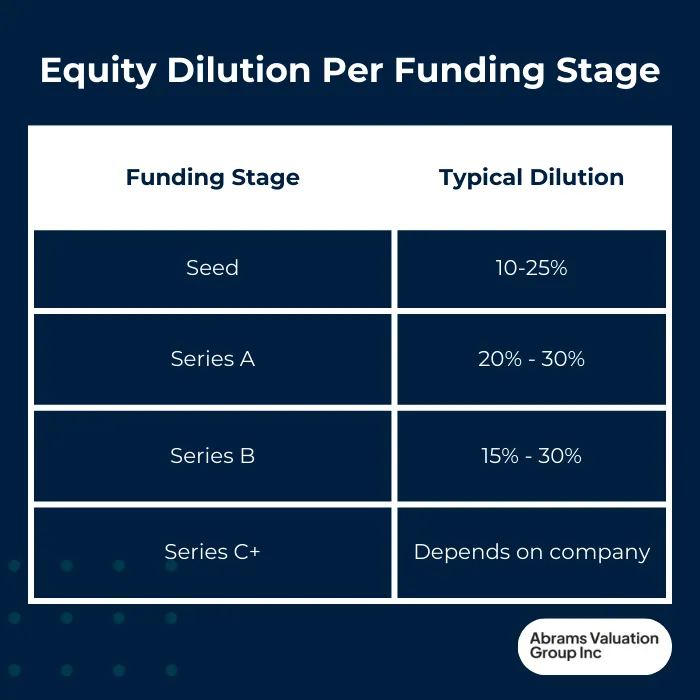
Some level of share dilution is unavoidable in each subsequent round of funding, as founders raise capital primarily in exchange for company equity. Below are typical dilution rates per startup funding round.
It’s crucial for founders to have strategies in place to effectively monitor and manage dilution to avoid unnecessary dilution.
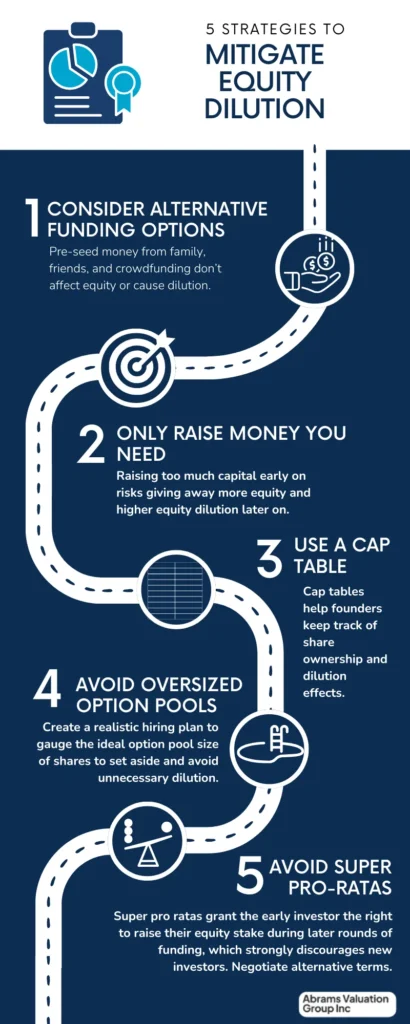
5 Strategies to Manage Equity Dilution
If startup founders are looking to raise capital in exchange for equity, there is some level of equity dilution that is unavoidable. However, there are also several strategies that founders can employ to mitigate equity dilution and avoid over dilution
1. Consider alternative financing options that don’t involve equity
Founders can consider alternative methods of raising startup funds that avoid touching company equity. This can include investing their own capital, loans from family and friends, or crowdfunding. The less capital that needs to be raised in exchange for equity, the less founder dilution will occur.
2. Only Raise Money You Need Now
Startup founders need to carefully weigh the amount of capital that is necessary to grow the business to the next stage. This is crucial to avoid raising too much capital too early in exchange for too much company ownership. Although it may be necessary to go into a bigger funding round at a lower valuation, founders should be mindful of dilution, especially if they plan on subsequent funding rounds in the future.
3. Use a Cap Table
Cap tables, or capitalization tables, help founders keep track of share ownership and dilution effects. As more funding rounds and investors enter the picture, keeping careful track of this data and modeling possible outcomes becomes increasingly important to mitigate over-dilution.
4. Avoid an Oversized Option Pool
In a priced funding round, new investors often urge founders to create and set aside a sizeable option pool of shares to allocate to future employee stock options before issuing the investors’ shares. Investors will push founders to create a larger initial option pool to avoid adding shares to the option pool and future dilution of their own shares. However, a larger-than-necessary option pool unnecessarily dilutes the existing shareholders’ stake, usually affecting the founders the most. Create a realistic hiring plan to gauge the ideal option pool size and avoid unnecessary dilution.
5. Negotiate Down Super Pro-Ratas
Some early investors will insist upon super pro-rata terms as a condition for investing in a startup. A super pro-rata agreement gives the investor the right to increase their ownership stake in a startup company in future funding rounds. This is in contrast to a standard pro-rata, which allows the early investor to lock in and maintain their initial ownership percentage. While this is an excellent advantage to protect the early investor from dilution, it is a serious disadvantage to the company as it is a considerable deterrent to later-stage investors. Try to negotiate alternative arrangements with an investor insisting upon a super pro-rata. In some instances, it may be better to walk away from an investor rather than engage in a super pro-rata agreement.
Modeling Future Equity Dilution
It’s essential for startup founders to understand the value impacts of key funding decisions on their company before entering a funding round and negotiations. Without a clear understanding of the dilution impact of different deal setups, terms and conditions, founders can drastically dilute company equity far more than intended to their detriment and that of their current and future investors. Model the impact of dilution before fundraising to understand the long-term ramifications of your decisions.
Consulting with a valuation expert can be extremely beneficial to startup founders for a number of reasons. An experienced business appraiser can not only help the startup reach an accurate company valuation, but also model the impact of different funding decisions on future equity dilution.
Many founders don’t understand that by not modeling different investment and equity scenarios, they are likely diluting their current shareholders’ stakes significantly down the line. A professional valuation expert to support the startup process can make the difference between wisely planned funding rounds and significant dilution. Abrams Valuation Group, Inc. brings startup founders and investors over 30 years of valuation experience they can rely upon for peace of mind. Contact AVGI valuation experts today for a startup consultation with zero commitment.
Mitigating Equity Dilution for Startups: In Conclusion
Equity dilution poses a critical challenge for startup founders, shareholders, and investors. Share dilution influences ownership stakes, control over the company, and future financial returns, so it’s essential to understand the implications of different funding strategies and decisions thoroughly to avoid over dilution. To navigate this complex issue and safeguard your startup’s interests, we encourage you to consult with the experts at AVGI. Together, we can help you develop strategies to minimize equity dilution and maximize your business’ growth potential.


