

The Ultimate Guide to 409A Valuations: What Are They, Who Are They For, & What Is the Process?
A 409A valuation is an independent assessment that determines the fair market value of a private company’s common stock. This valuation is crucial for setting the strike price of stock options and ensuring compliance with IRS regulations. Without it, companies risk substantial tax penalties and legal issues.
Key Takeaways
- A 409A valuation establishes the fair market value of private companies’ common stock, critical for tax compliance and fair stock option pricing.
- Regular updates, especially after significant business events, are essential for maintaining accurate valuations and adhering to IRS regulations.
- Choosing a certified and experienced valuation provider is crucial for compliance, with costs varying based on the complexity of the project.
The Purpose of a 409A Valuation
A 409A valuation is essential for private companies issuing equity or stock options, as it determines the fair market value of common stock. This valuation ensures that companies comply with IRS regulations and avoid potential tax penalties. Accurate strike prices for stock options established through 409A valuations protect shareholders and uphold the integrity of equity compensation plans.
Understanding the purpose of a 409A valuation is crucial for any private company planning on offering stock options. As it is integral for tax compliance, it safeguards against the significant financial repercussions of noncompliance, and fosters a transparent and compliant financial environment for companies.

What is a 409A Valuation?
A 409A valuation is an independent appraisal that determines the fair market value (FMV) of a company or startup compnay’s common stock. This valuation is governed by Section 409A of the Internal Revenue Code (IRC), which regulates tax-deferred compensation, particularly concerning stock options. The primary goal is to set a fair strike price for employee stock options that reflect the actual market value at the time of the grant.
Private companies issuing equity or options must obtain a 409A valuation to comply with IRS regulations. This practice not only protects shareholders from potential tax penalties but also ensures that the stock options’ strike prices are set fairly and accurately, aligning with the FMV at the time of the grant.
Determining FMV is vital as it directly impacts the strike price and helps avoid future tax complications.
Why is 409A Valuation Important?
Tax Penalties for Noncompliance
Failing to conduct a 409A valuation can lead to severe financial consequences for startups. For instance, stock options could be classified as taxable income, incurring substantial penalties. Errors in the 409A valuation process can also result in significant tax liabilities, making strict adherence to compliance guidelines imperative.
If a company does not have a valid 409A valuation for its stock options, the IRS may deem the options as having been granted “in the money” (i.e., with a strike price less than the fair market value). This can result in taxes owed by the employees when they exercise their options.
Employees might incur additional tax liabilities, such as being subject to immediate income tax and an additional 20% penalty tax on the amount realized when they exercise the option, along with potential interest on late payments.
Furthermore, the company would lose its safe harbor and expose itself to intense scrutiny from IRS audits, likely inviting further tax issues and penalties. Additionally, noncompliance would tarnish the company’s reliable reputation and may scare away employees and potential investors.
Regular 409A valuations are necessary to maintain compliance and minimize tax liabilities for employees exercising stock options. Conducting these valuations before issuing stock options for the first time aligns startups with Internal Revenue Code 409A regulations. This proactive approach helps avoid tax penalties and ensures deferred compensation plans are consistent with federal tax laws.
When to Get a 409A Valuation

Timing is everything when it comes to 409A valuations. These valuations are essential for companies issuing equity to protect shareholders from potential tax penalties. Specific trigger events and the validity period of these valuations dictate when a company should seek a new assessment. These factors ensure the company’s valuation remains accurate and compliant.
Companies need to be vigilant about the timing of their 409A valuations, particularly after significant business events or changes. This vigilance maintains the accuracy of stock valuations and ensures ongoing IRS compliance.
Trigger Events for 409A Valuations
Trigger events that necessitate a new 409A valuation include
- Preparing to issue stock options for the first time
- Fundraising rounds
- Significant changes in business conditions
- Expiration of previous 409A Valuation
For instance, new equity financings, acquisition offers, secondary sales of common stock, and substantial changes in financial outlook are all material events requiring an updated valuation.
Companies must promptly update their valuations following these significant events to maintain compliance and accuracy. Failing to do so can invalidate previously established 409A valuations, leading to potential tax penalties and compliance issues. Therefore, timely reassessment of the company’s value after such events is crucial.
Validity Period of 409A Valuations
The standard maximum validity period for a 409A valuation is 12 months or until a significant event occurs that alters the company’s value. Early-stage companies typically refresh their valuations annually to stay within safe harbor guidelines. However, companies nearing an IPO may require more frequent quarterly or monthly valuations as there is often more volatility regarding significant events as they approach an IPO.
Regular updates to 409A valuations are critical to reflect current market conditions and business developments. This practice ensures that the company’s valuation remains accurate and compliant with IRS regulations, safeguarding against potential tax penalties and legal issues.

Key Components of a 409A Valuation
Understanding the key components of a 409A valuation helps owners understand what affects their business’s value and why it is worth the amount the appraiser determined. A basic understanding of valuation methodologies, discounts for lack of marketability (DLOM), and the role of financial projections can help owners better understand their 409A Valuation. Each of these elements plays a critical role in determining the fair market value of a company’s stock.
Common Valuation Methodologies
The primary methodologies used in 409A valuations (as with most business valuations) are the market approach, income approach, and asset approaches. The market approach estimates a company’s value by comparing it with similar publicly traded firms. This benchmarking process takes into account forecasted growth and profitability, providing a comparative analysis.
The income approach determines a company’s value by evaluating its expected future cash flows. These cash flows are then adjusted for risk factors. Meanwhile, the asset approach calculates the net asset value, often used for startups that haven’t yet raised significant financing or generated revenue.
Each methodology has its strengths and limitations, and the choice of approach can significantly impact the valuation outcome. AVGI’s appraisers often perform the valuation assignment using multiple applicable approaches and then weight the results to reach the most accurate valuation. Learn more about the business valuation process in our layman-friendly guide.

Discount for Lack of Marketability (DLOM)
DLOM adjusts the fair market value of common stock to account for the lack of marketability. Since 409A valuations are for private companies, the shares typically do not have a public market, which can diminish their value. The DLOM quantifies this reduced value, often influenced by the anticipated timeline for a liquidity event.
The DLOM range for a two-year holding period is generally between 25% and 35%. This is typically observed in financial assessments. This adjustment accurately reflects market conditions and the inherent illiquidity of the shares. Get a better understanding of valuation discounts and premiums from our guide to valuation adjustments
Role of Financial Projections
Accurate financial projections are critical for establishing a fair valuation during a 409A valuation. Reasonable and strong projected financial growth can positively impact the company’s value and bring up strike prices. On the other hand, moderate or low growth projections can indicate limited future growth and negatively impact the value of strike prices.
For startups, the lack of financial history can complicate the valuation process. However, this can be mitigated through deep market research and robust financial forecasts. Realistic and well-researched projections help achieve a proper valuation, aligning with the company’s financial performance and business model.
Selecting a 409A Valuation Provider
Selecting the right 409A valuation provider is crucial for ensuring an accurate and compliant valuation. The choice of provider can significantly impact the credibility and defensibility of the valuation. This section will cover the criteria for choosing a provider and the associated costs.
Understanding what to look for in a valuation provider helps companies make informed decisions, ensuring thorough and compliant valuations with the internal revenue service regulations. This diligence avoids potential pitfalls and fairly assesses the company’s value.

Criteria for Choosing a Provider
A certified business valuation professional should conduct a 409A valuation to ensure compliance and accuracy. Look for a provider with experience in the sector and relevant work experience, including CFA or ASA certification.
Providers with diverse experience and strong audit defense backgrounds are beneficial for issuing credible valuation results. Independent valuations help avoid conflicts of interest and ensure adherence to regulations.
Abrams Valuation Group, Inc. (AVGI) is a reputable valuation firm with over 30 years of experience in business valuations.
How Much Does a 409A Valuation Cost?
Valuation costs can range from $2,500 to over $25,000, depending on the complexity and scope of the project. For very complex operating businesses, appraisals might cost over $1 million.
Considering these costs in the context of the benefits of a thorough and compliant valuation is essential. While the initial expense might seem high, the long-term benefits of avoiding tax penalties and ensuring accurate stock option pricing are invaluable.
The 409A Valuation Process
The 409A valuation process involves several crucial steps, from preparation to reviewing the final report. Understanding this process helps companies ensure that their valuations are accurate and compliant. This section will cover the preparatory steps, conducting the valuation, and reviewing the final report.
Breaking down the valuation process into manageable steps helps companies navigate complexities and ensures preparedness for each stage. Proper preparation is key to achieving a robust and defensible valuation.

Preparing for a 409A Valuation
Providing precise and current financial information is essential for ensuring the validity of a 409A valuation. One common mistake is using outdated financial data, which can compromise the accuracy of the valuation results.
Preparation requires a detailed understanding of the company’s recent financial history and projected performance. Companies must gather essential documents like capitalization tables and recent financial statements before initiating a 409A valuation. Timely and accurate financial reporting is crucial to avoiding incorrect valuations and potential legal issues.
Conducting the Valuation
A typical 409A valuation involves a sequence of activities, including data gathering, financial modeling, and management review before obtaining final approval. The complexity of the valuation increases as the company matures, requiring more detailed assessments of financial forecasts and market conditions.
Valuations become more complex with growth, necessitating a thorough understanding of the company’s financial performance and market conditions. This complexity highlights the importance of a meticulous and well-executed valuation process.
Reviewing the Valuation Report
After a 409A valuation, a comprehensive report is generated, containing detailed analysis and findings. Auditors often have valuation specialists recreate the analysis performed by the 409A valuation provider to ensure accuracy and compliance. This step is crucial as a problematic valuation can lead to restating financials and delays in processes such as IPOs.
Founders should be aware that using the same financial model for 409A valuations and VC pitches can be misleading due to differing objectives; VC pitches are aggressive and sales-oriented, while 409A valuations require accurate forecasts. A thorough review of the valuation report maintains compliance and avoids potential legal and financial issues.

409A Valuation vs. Post-Money Valuation
Understanding the differences between 409A valuations and post-money valuations is vital for private companies. A 409A valuation determines the market value of common stock primarily for tax reasons, whereas a post-money valuation assesses a company’s worth after receiving investment. This distinction is essential for setting employee stock options pricing and ensuring compliance with fair market value requirements.
While 409A valuations reflect the value of common shares, post-money valuations are typically based on preferred shares, which can lead to differing assessment outcomes. Common stock values tend to be higher in post-money valuations due to differing valuation metrics. Understanding these differences helps companies navigate equity compensation strategies effectively, including the implications for the private company’s common stock.
Differences in Methodology
The methodologies used in 409A valuations account for the unique rights of preferred stock shares, whereas post-money valuations treat all shares equally. This difference can significantly impact perceived company value, investor perceptions, and ultimately the funding process.
Employing the appropriate valuation methodology is crucial for both the company and its stakeholders. Founders must understand these distinctions to ensure their financial models align with the specific objectives of each valuation type. This understanding aids in making informed decisions and maintaining transparency in company valuations.

Implications for Equity Compensation
The 409A valuation determines the fair market value for stock options, directly impacting equity compensation strategies. Setting a lower strike price based on the 409A valuation can enhance the attractiveness of stock options for employees.
However, mismanaged 409A valuations can negatively affect negotiations during an acquisition and may alter transaction terms. Companies should consider their confidence in progress and market conditions when deciding strike prices in relation to past valuations. Careful consideration optimizes equity compensation and helps retain top talent.
Common Mistakes to Avoid
Avoiding common mistakes in the 409A valuation process is crucial for maintaining compliance and achieving accurate valuations. Companies often overlook the need to maintain accurate and up-to-date financial information, leading to significant tax penalties and compliance issues.
Regular updates and reviews of the 409A valuation process help mitigate risks associated with incorrect valuations. Staying vigilant and proactive helps companies avoid pitfalls and ensures robust and compliant valuations.
Inaccurate Financial Data
Inaccurate 409A valuations can lead to an extra tax bill and income inclusion for stock option holders. If a 409A valuation is not compliant with tax rules, recipients will lose eligibility for tax concessions.
Accurate and up-to-date financial data is crucial in ensuring compliance and avoiding penalties during the 409A valuation process. Providing accurate financial information safeguards against negative consequences and maintains stakeholder confidence. This diligence helps in achieving a fair and compliant valuation.
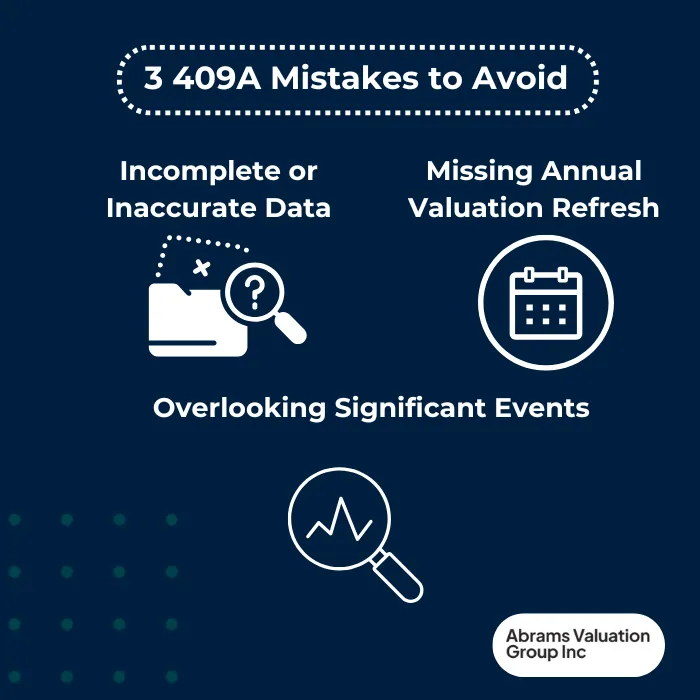
Overlooking Material Events
Material events that require updated 409A valuations include funding rounds, liquidity events, or other significant changes in the business. Failing to recognize these events can lead to inaccurate valuations and potential tax penalties.
Regularly updating valuations after material events ensures that the company’s valuation reflects current market conditions and business developments. Regularly updating valuations after material events maintains compliance and optimizes equity compensation strategies for employees.
How ESOPs Relate to 409A Valuations
Employee Stock Ownership Plans (ESOPs) closely relate to 409A valuations, as they require these valuations to determine the exercise price for employee stock options. Implementing an ESOP necessitates adherence to Section 409A regulations to ensure compliance and proper taxation.
Understanding the link between ESOPs and 409A valuations helps companies attract and retain talent through equity-based compensation. This alignment is crucial for maintaining a compliant and attractive compensation strategy. Read more about establishing an ESOP in our informative guide.
Importance of Independent ESOP Valuations
Independent ESOP valuations are essential for compliance with ERISA and Internal Revenue Code regulations. These valuations determine the fair market value of the company’s stock, which is crucial for establishing the company’s tax-deduction and tax obligation.
Independent ESOP valuations maintain compliance and provide accurate and fair equity compensation to employees. This practice enhances the credibility and attractiveness of the ESOP, benefiting both the company and its employees.
409A Valuations: In Conclusion
Understanding 409A valuations is vital for businesses planning to issue equity or options. The complexity of the 409A valuation process necessitates consulting with professionals to ensure compliance and accuracy. Conducting these valuations helps private companies determine the fair market value of their equity, avoiding significant tax penalties.
Regularly updating 409A valuations, especially after major company events, reflects the most accurate equity value. Engaging qualified third-party valuation providers enhances the impartiality of these valuations and helps secure safe harbor provisions. The valuation expert must use the right methodology to ensure an accurate and compliant assessment of the company’s equity value.
Regular updates to valuations reflect the most current market conditions, safeguarding against potential tax penalties and legal issues. This diligence ensures that companies are well-prepared to navigate the financial challenges ahead. Contact AVGI’s 409A valuation experts today to start the process.
FAQs about 409A Valuations
What is a 409A valuation?
A 409A valuation is important for startups because it helps prevent tax penalties associated with stock options, ensuring compliance with IRS regulations. This protects the company and its employees from unexpected financial consequences.
Why is a 409A valuation important for startups?
A 409A valuation is important for startups because it helps prevent tax penalties associated with stock options, ensuring compliance with IRS regulations. This protects the company and its employees from unexpected financial consequences.
When should a company get a 409A valuation?
A company should obtain a 409A valuation before issuing shares for the first time, following significant events like funding rounds, and at least once a year to ensure compliance and accurate share pricing.
What factors influence the cost of a 409A valuation?
The cost of a 409A valuation is influenced by factors such as the complexity of the business setup and the required scope of the valuation. Costs typically range from $2,500 to over $25,000. Reach out to AVGI for a zero-commitment valuation quote, and we’ll get back to you within one business day. Understanding general valuation pricing can help you budget effectively for the valuation process.
How do 409A valuations differ from post-money valuations?
409A valuations focus on the market value of common stock for tax purposes, whereas post-money valuations evaluate a company’s worth after investment, typically regarding preferred shares. Thus, they serve distinct purposes in the valuation process. It is important for companies to consult with a valuation professional if they are unsure about which type of valuation their company needs.


