

Understanding a Sale of Assets: Business Sale Series
There’s more than one way to sell a business. The most profitable way to sell will depend on many different factors, including the business’s assets, liabilities, leadership, product or service, financial performance, market share, competition, and the owner’s tax bracket. In this article, Abrams Valuation Group, Inc. dissects an asset sale to help savvy business owners better understand this type of sale and how to determine if it’s right for your business.
Introduction to Asset Sales
An asset sale occurs when a company transfers ownership of some or all business assets to another company. In an asset sale, the buyer purchases only assets, not the entire business, and assumes legal ownership of the transferred assets. This is in contrast to a stock or equity sale, where the company transfers the ownership of the legal business entity to another business. Read AVGI’s full breakdown of the differences between stock and asset sales here. A business will often select an asset sale to increase liquidity and reduce asset-related risks. Asset sales are also the sale type of choice in a business liquidation.
Asset sales involve the sale of individual assets, such as
- equipment
- real estate
- inventory
- intangible assets, including:
- Intellectual property
- patents and trade secrets


Understanding Asset Sales
Asset sales are an alternative to stock sales, allowing the buyer to acquire specific assets without assuming the liabilities of the entire business. The seller retains ownership of the business entity, while selling selected assets, such as accounts receivable, equipment, or entire subsidiaries. Contracts play a crucial role in asset sales, as they outline the terms and conditions under which the assets are transferred. Asset sales can be used to sell intangible assets, such as intellectual property, customer lists, or contracts. The sales price is based on the fair value of the assets sold.

Types of Assets
Asset sales can involve various types of assets, including capital assets, financial assets, and other assets.
Capital assets, such as real estate or equipment, are subject to depreciation and can result in capital gains or losses, which may be taxable.
Financial assets, such as accounts receivable, can be sold to generate cash and reduce risk.
Intangible assets, such as specific types of intellectual property, can be particularly valuable and attractive to buyers.
Tax Implications
Asset sales can have significant tax implications, including capital gains or losses, in addition to ordinary income tax consequences.
The tax basis of the assets sold can impact the tax consequences, and buyers may be able to step-up the tax basis of acquired assets.
Tax implications should be carefully considered when structuring an asset sale, especially if the assets are being sold by a corporation. If assets are sold by a corporation, then the sale is double-taxed, as both the corporation and shareholders are taxed. It is crucial to understand how the sale will be treated for tax purposes to ensure compliance with tax regulations. It is important to review all of the other sale structure options and relevant factors with a tax, valuation, or wealth planning professional to ensure that a sale of assets would indeed be the most profitable structure. Companies should seek professional advice to ensure that the sale of assets is structured to minimize taxes and maximize profitability.

Calculating Capital Gain
Calculating capital gain is a crucial step in determining the tax implications of an asset sale. A capital gain occurs when the sales price of an asset exceeds its tax basis. The tax basis is typically the original purchase price of the asset, plus any improvements or additions made to the asset, minus any depreciation or amortization claimed on the asset. To calculate the capital gain, subtract the tax basis from the sales price of the asset.
For example, if a company sells an asset for $100,000 and its tax basis is $50,000, the capital gain would be $50,000. The capital gain is then subject to taxation, and the tax rate depends on the type of asset sold and the length of time it was held. In general, capital gains are taxed at a lower rate than ordinary income, making asset sales a potentially tax-efficient way to raise capital. Read our in-depth article about capital gains tax here.
Asset Sale Process
The asset sale process typically involves valuation, negotiation, and legal documentation.
One of the key buyer benefits in an asset sale is the ability to acquire valuable assets without taking on the seller’s liabilities. The buyer and seller must agree on the sales price, which is based on the fair market value of the assets purchased. The sale is usually structured as a lump sum payment, but can also involve installment sales or other payment arrangements, depending on the negotiated sales terms in the contract. The buyer assumes ownership of the assets, and the seller retains no interest in the assets sold.
Equity Sale Considerations
An equity sale, also known as a stock sale, is a type of transaction where the ownership of a company is transferred from one party to another. In an equity sale, the buyer purchases the entire company, including all its assets, liabilities, and equity. This type of sale is often preferred by buyers who want to acquire a company’s entire operations, including its intellectual property, customer lists, and contracts.
However, equity sales can be more complex and time-consuming than asset sales, as they require the transfer of ownership of the entire company. The buyer assumes all the liabilities of the company, including any outstanding debts, lawsuits, or environmental liabilities. The seller receives the purchase price for their shares and retains no ownership or control over the company. It’s essential for both buyers and sellers to carefully consider the tax implications of an equity sale and seek professional advice to ensure a smooth transaction.
Recording the Sale
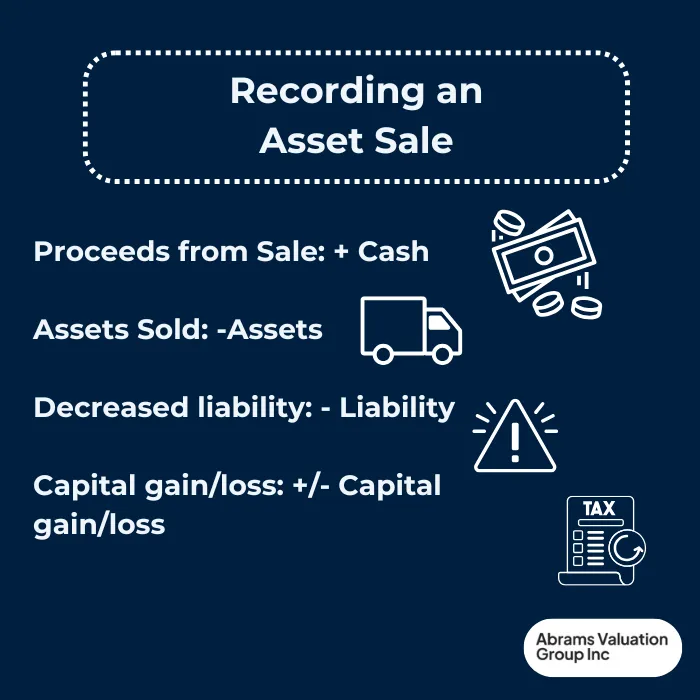
The sale must be properly recorded in the company’s financial statements, including the recognition of gain or loss. The proceeds received from the sale are recorded as cash, and the assets sold, along with any assumed liabilities, are removed from the balance sheet. The gain or loss is calculated based on the difference between the sales price and the tax basis of the assets sold. The sale is reported on the company’s tax return, and any tax consequences, including those related to assumed liability, are recognized.
Considerations and Next Steps
Companies should carefully consider the implications of an asset sale, especially when many assets are involved, including the tax consequences and impact on net income. Buyers should conduct due diligence to ensure the assets are valued correctly and the sale is structured to minimize risk. Each individual asset should be evaluated for its value and potential impact on the overall transaction. Sellers should consider the benefits of an asset sale, including increased liquidity and reduced risk. Companies should seek professional advice to ensure the sale is properly structured and documented.
Conclusion
An asset sale can be a valuable tool for companies looking to generate cash, reduce risk, and restructure their business. AVGI urges both buyers and sellers to consult with relevant experts regarding the tax implications, asset valuations, and legal documentation of the entire asset sales process. This ensures that the sale is structured legally, fairly, and profitably for all parties. Companies should carefully evaluate the benefits and risks of an asset sale and seek professional advice to ensure a successful outcome. Contact AVGI today for accurate asset valuation and business sale assistance.


