

Independent Valuation: What’s the Business Benefit?
A business valuation empirically determines the economic value of a whole company, shares of the company, or its assets. Placing a price tag on the business (or part of it) is an essential step for business transactions, investment strategies, and accurate tax reporting. The valuation should be performed by a qualified business valuation professional to get the most precise value. In this article, Abrams Valuation Group, Inc. explores how businesses can benefit from an independent valuation.
Importance of Independent Valuation
Independent third-party valuation services objectively assess a company’s worth from an arms-length perspective, ensuring accuracy and impartiality. The valuation professional considers many factors in determining the business’s value, including cash flow, industry experience, competitive market conditions, and growth opportunities, to name a few. Let’s examine several scenarios in which an independent valuation is particularly vital.
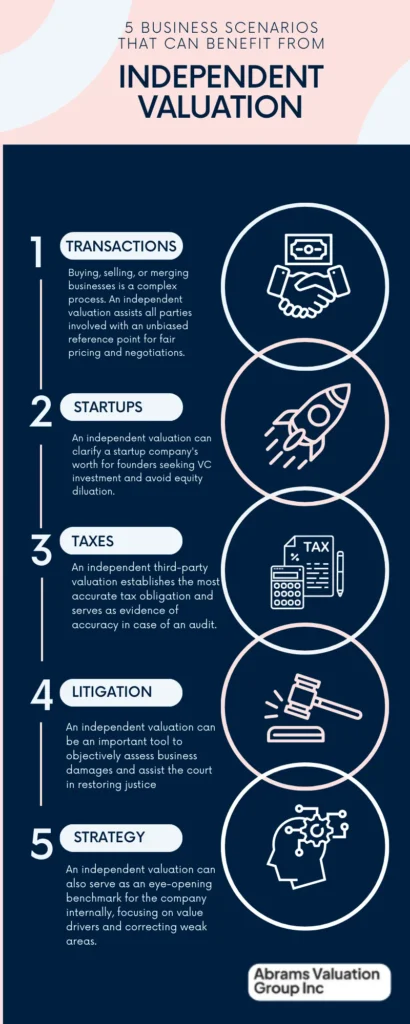
Independent Valuation for Transactions
Buying, selling, or merging businesses is a complex process that requires experienced professionals to help the process move smoothly. An independent valuation assists all parties involved with an unbiased reference point. This helps the seller set a reasonable initial asking price and assists the buyer in negotiating a fair final price. The valuation may also help determine the best way to structure the transaction, whether as a sale of assets or equity sale; or whether to sell as an S Corp or C Corp. Due to the valuator’s impartial position, all parties can rest assured that the valuation is fair, objective, and serves to help the transaction process unfold seamlessly.
Third-party valuation services also help businesses ensure proper oversight of fiduciary duties, demonstrating that the merger or acquisition, etc. was performed in good council. This is crucial if the minority shareholders sue for shareholder oppression, as the independent valuation serves as proof of fulfilling fiduciary obligations.
Independent Valuation for Investment Opportunities
Obtaining an independent valuation can help investors make informed decisions before heavily investing in a company. A valuation can objectively assess the company’s current value as well as project value growth expectations for the company based on deep market research and company analysis. This can help investors identify an excellent investment opportunity or avoid a bad investment.
On the other side, an independent valuation can clarify a startup company’s worth for founders seeking VC and Angel investment. An impartial assessment of the company’s value in its early stages helps founders confidently negotiate higher levels of funding. This is what prompted Qandlestick startup founder and COO Ryan Kuikan to reach out to AVGI for an independent valuation. With unbiased proof of his company’s value, Ryan was able to secure much more funding than her originally anticipated. Qandlestick, LLC was eventually acquired by Fernhill Corporation.
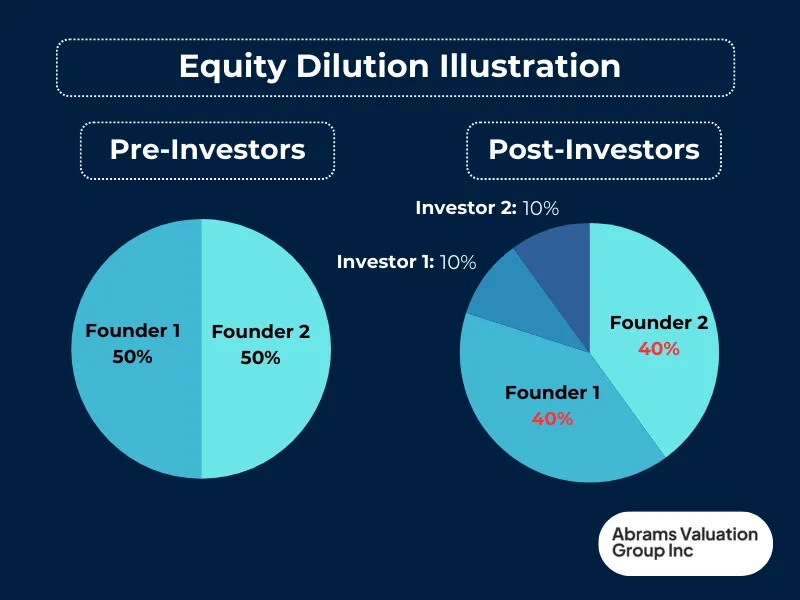
Furthermore, an independent valuation can provide valuable insights to startup founders as to the right amount of equity to trade for investment at each stage in the company’s growth. Giving away too much equity results in equity dilution, a common slippery slope for founders. Independent valuations support smart business decisions, enabling companies to optimize their operations, manage debt, and attract investors. A business appraiser can help founders navigate these complex topics successfully to preserve and increase value while obtaining funding.
Independent Valuation for Tax Purposes
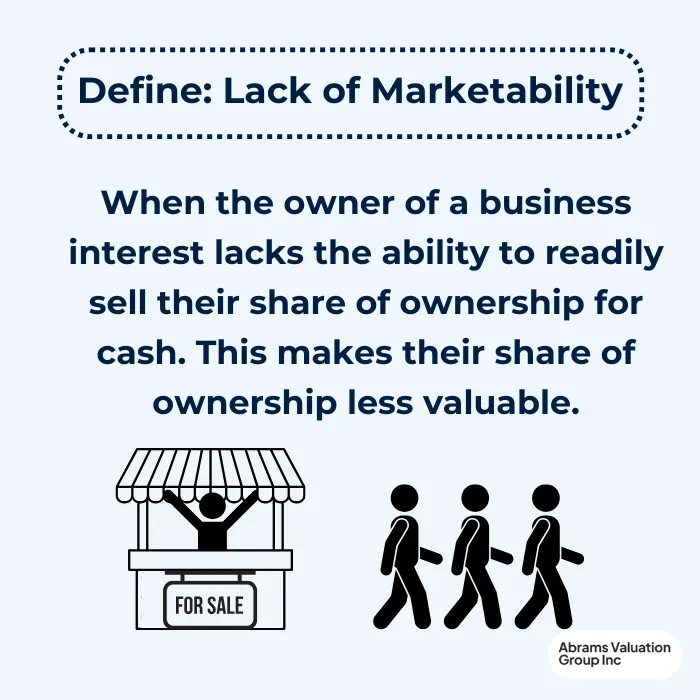
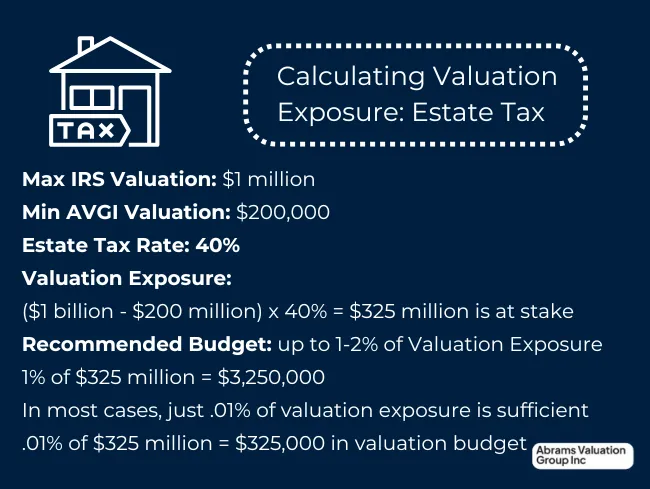
Valuations play a significant role in accurately reporting business value for tax purposes, most commonly income, estate, and gift tax purposes. When dealing with the IRS, it is important to be accurate, and an independent third-party valuation serves as evidence of accuracy in case of an audit. Often, the IRS auditor assigns a higher value to a business, when there are several indications that the value should be discounted for lack of marketability (DLOM), lack of control (DLOC), shrinking market share, or significant rising competition. Business appraisers consider a myriad of factors including industry experience, credit spreads, competitive market, and economic conditions.
All of those factors combined may indicate a lower value with lower tax obligations. Especially when dealing with high tax rates, such as the 40% estate tax, it is highly advisable to obtain independent valuation services to substantiate your tax position.
Independent Valuation for Litigation
In litigation scenarios, an independent valuation can be an important tool to objectively assess business damages and assist the court in restoring justice. The judge and jury often look to the valuation as an impartial reference point to assess each side’s claims. The valuation can further assist in litigation when the appraiser acts as an expert witness, explaining the valuation and its implications in the case to judge and jury. AVGI appraisers have served as expert witnesses in multiple litigations over 30+ years and have seen how an expert witness can make a huge difference in the outcome of a case.
Third-Party Valuation for Internal Growth Strategy
An independent valuation can also serve as an eye-opening benchmark for the company internally. An appraiser looks for value drivers as well as weaknesses that undermine company value. Pointing these strengths and weaknesses out from an unbiased and fresh perspective can assist business owners in rethinking internal growth strategies, focus R&D efforts, streamline operations, or other ways to increase value and fortify weak areas.

Independent Valuation Services
Valuation services include business valuation, asset valuation, and portfolio company valuation, sometimes catering to specific industries, such as real estate and finance. Within valuations, there ae also different levels of service, namely valuation calculations and appraisals. Read more about how to determine the level of service you need according to your valuation exposure here. Independent valuation firms like AVGI provide expertise in valuing business shares and complex intangible assets, including intellectual property, preferred stock, and unique patents and licenses.
Valuation services support financial reporting, tax compliance, and investment decisions, ensuring that companies make informed choices about their investments and transactions. Valuation professionals employ various valuation methods, including the income approach, market approach, and asset approach, to determine a company’s value. Business valuation firms often work with private equity firms, hedge funds, and venture capital companies to provide valuation services, as well as business owners, startup founders, individual taxpayers, and private investors.
The Valuation Process
The valuation process involves a thorough analysis of a company’s financial statements, industry trends, and market conditions. Valuation professionals consider various factors, including cash flows, growth opportunities, and risk, to determine a company’s value. The valuation process typically involves due diligence, data analysis, and valuation modeling to arrive at a fair market value assessment. At AVGI, we regularly use regression analysis to weight the data properly and arrive at an accurate valuation. Read our in-depth article on how AVGI values businesses. The valuation process is critical for companies to understand their value and make informed decisions about investments, transactions, and growth opportunities.

Specialized Valuation Topics
Specialized valuation topics include valuation of intangible assets, such as intellectual property and goodwill. Due to their intangible and often unique nature, they can be difficult to value precisely, requiring a lot of research and analysis. Sometimes, the valuation professionals must be knowledgeable about industry-specific valuation issues, such as valuation of real estate or finance companies. Often, however, valuation experience is superior to industry-specific knowledge, as the relevant industry details can be obtained easily while experience is harder to come up with.
Finding a Valuation Provider
Finding a valuation provider requires careful consideration of factors like expertise, experience, and reputation. Although there are several types of professionals who can perform a business valuation, the company should assess its valuation needs and the professional’s credentials before deciding on a service provider. Most importantly, companies must ensure that their valuation provider is independent, impartial, and free from conflicts of interest. This lends the valuation objectivity and credibility, which all parties will benefit from.
Valuation Advisory: Cost of Valuation
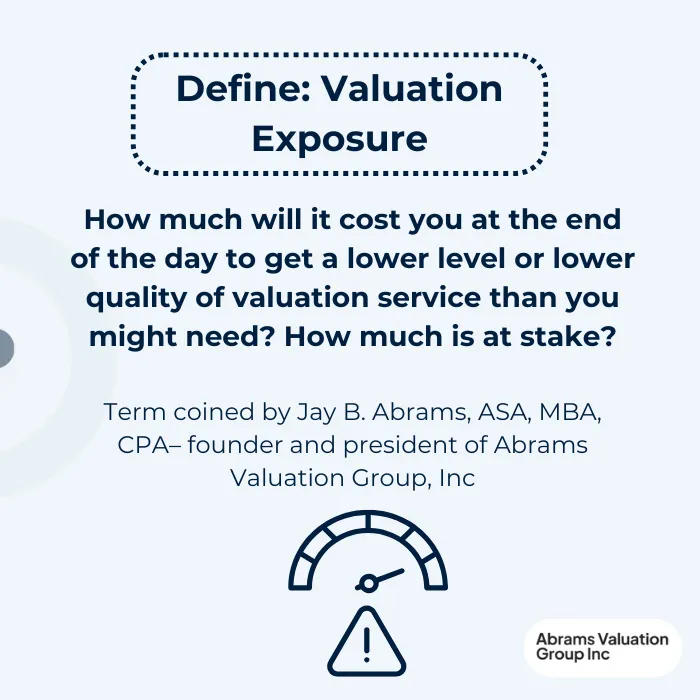
Valuation advisory services provide expertise and guidance on critical valuation issues, including the valuation process, cost of valuation and risk assessment or valuation exposure. This can help guide the business owner or party seeking the valuation as to what level of valuation services they truly need and how much it is worthwhile for them to invest in a high-quality independent valuation.
The higher the risk of tax penalties, audits, or fallout from losing in litigation, the more it makes sense to spend at least a fraction of that on a preventative and objective business valuation. On the other hand, small businesses with relatively uncomplicated financial pictures may not need to overly invest in a high-level appraisal- a simple valuation calculation from a CPA may suffice. Companies should consider their needs when reaching out for valuation advisory services. At AVGI, our appraisers are experienced in matching our skillset with our clients needs. If we’re not the right fit, we’ll be happy to refer you to a different service provider.
Getting an Independent Valuation: In Conclusion
An independent valuation offers several important benefits for businesses by providing an objective assessment of their worth. This price tag is essential for facilitating transactions, attracting investments, and ensuring compliance with tax regulations. By engaging qualified valuation professionals, businesses can make informed decisions that mitigate risks and support growth objectives. Whether you are considering a merger or acquisition, seeking investment opportunities, or aiming to accurately report your business’s value for tax purposes, the importance of an unbiased valuation cannot be understated. To explore how an independent valuation can benefit your business, contact Abrams Valuation Group, Inc. today for expert assistance tailored to your needs.


