

Checklist: 7 Documents You Need to Start the Business Valuation Process (+ Where to Find Them)
For many business owners, the need for a business valuation can be overwhelming. Once you realize a valuation is necessary, the looming mountain of business valuation documents, financial information, and other factors can feel like an information overload. While you might really need the valuation to sell your business, secure a loan, bring in investors, or plan for the future, knowing exactly where to start can feel confusing and daunting.
That’s why AVGI created this streamlined checklist. Instead of leaving you to sift through endless paperwork or guess at what’s required, this guide lays out exactly which documents you need, why each one matters, where to find them (even for previous years), and how essential each is to the valuation process. By following this checklist, you’ll feel more organized and prepared, making your business valuation faster, smoother, and more accurate.
Financial Statements
Financial Statements include documents like:
- Balance sheets (last 3–5 years and most current period)
- Income statements (last 3–5 years and most current period)
- Cash flow statements (last 3–5 years and most current period)
Why These Are Important:
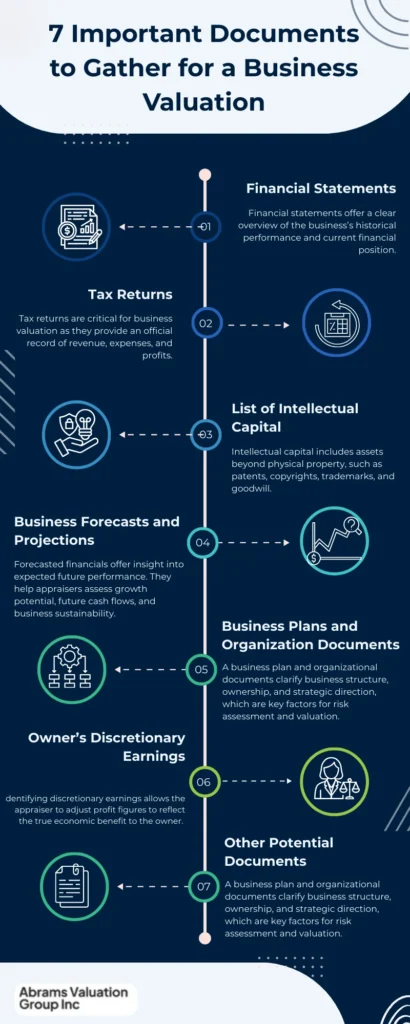
Financial statements offer a clear overview of the business’s historical performance and current financial position. They are essential for assessing revenue trends, profitability, assets, liabilities, and cash flow, all of which are critical for accurate valuation.
Where to Find Them:
Your accountant or bookkeeper typically prepares these documents. If you use accounting software such as QuickBooks or Xero, you can generate the necessary reports. For older records, check archived files or consult your accountant.
Priority Level: 5 (Essential)
The valuation cannot be completed without them.
Tax Returns
- Business tax returns (last 2–3 years)
- Personal tax returns (if business is a pass-through entity)
Why This Is Important:
Tax returns are critical for business valuation as they provide an official record of revenue, expenses, and profits. Verified by tax authorities, they confirm the accuracy of financial statements, highlight discrepancies, and offer a consistent basis for multi-year comparison. These documents give appraisers a reliable foundation to assess financial reality and risk.
Where to Find Them:
Your accountant typically prepares and files tax returns. Copies are often available in your accountant’s files, your business records, or digital archives if you use tax software such as TurboTax or H&R Block. If a specific year’s return is missing, request a transcript or copy from the IRS. Allow extra time for older records.
Priority Level: 5 (Essential)
Tax returns are indispensable for business valuation. They are necessary to verify financial details and support accurate, credible appraisals.
List of Intellectual Capital

Intellectual capital includes intangible assets beyond physical property, such as patents, copyrights, trademarks, and goodwill.
Why This Is Important:
Intellectual capital can add significant intangible value to a business. These assets often differentiate the business in the market and may have substantial financial worth.
Where to Find Them:
Review legal records, intellectual property filings, and registration certificates. Consult your attorney and check records at the U.S. Patent and Trademark Office or Copyright Office. Check previous appraisals or purchase agreements to see if goodwill or other intangible assets have already been documented.
Priority Level: 3 (Important)
This document adds crucial information, especially for businesses with significant intangible assets.
Business Forecasts and Projections
These include documents like:
- Projected balance sheets
- Projected income statements
Why These Are Important:
Forecasted financials offer insight into expected future performance. They help appraisers assess growth potential, future cash flows, and business sustainability.
Where to Find Them:
These documents are often created for business planning or funding and may be found in annual budgets, pitch decks, or strategic plans. If they are not available, collaborate with your management team or accountant to prepare them.
Priority Level: 3 (Important)
These documents substantially improve the understanding of future prospects.
Business Plans and Organization Documents
This includes documents like:
- Business plan
- Articles of incorporation/organization
- Bylaws
Why These Are Important:
A business plan and organizational documents clarify business structure, ownership, and strategic direction, which are key factors for risk assessment and valuation.
Where to Find Them:
Check your corporate records, state filing office, or consult your attorney. The business plan may be stored in your files, on your computer, or with your business advisor.
Priority Level: 3 (Important)
These documents provide important context for appraisers.
Owner’s Discretionary Earnings
This includes information about
- Owner’s discretionary earnings
- Details of any personal expenses run through the business
- Information on the owner’s salary
Why This Is Important:
Identifying discretionary earnings allows the appraiser to adjust profit figures to reflect the true economic benefit to the owner. This helps normalize cash flow and enables fair comparison between businesses.
Where to Find Them:
Review expense records and general ledger entries, and consult your accountant for a list of personal expenses and benefits paid through the business.
Priority Level: 4 (Very Important)
These details are critical for accurate cash flow analysis, but the valuation can proceed with estimates if necessary.

Other Potential Documents
Any other documents related to the business, including documents like:
- Photos of the facility and equipment
- Copies of recent equipment appraisals
- Documentation of legal issues, financial situation, or ownership information that may affect value
- Copy of current lease agreement or most recent real estate appraisal, if applicable
- Details of any prior transactions
Why These Are Important:
These documents provide supporting context, including asset condition, legal or lease issues, and transaction history. They help appraisers refine their assessment and identify risks or opportunities.
Where to Find Them:
Collect photos, appraisals, legal documents, lease agreements, and transaction records from your business files, attorneys, or property managers.
Priority Level: 1–2 (Useful)
These documents are helpful for context and detail, but are not essential to complete the core valuation.
Gathering Your Business Valuation Documents: In Conclusion
Preparing for a business valuation doesn’t have to be overwhelming. By focusing on the essential documents outlined in this checklist—financial statements, tax returns, intellectual capital, forecasts, organizational documents, owner’s discretionary earnings, and other supporting records—you’ll be well-equipped for a smooth and accurate valuation process. Each document serves a unique role in helping appraisers understand your business’s true value, now and in the future.
If you have questions or want expert guidance through the valuation process, contact AVGI today. Our experienced team can help you gather the right documents, clarify requirements, and ensure you get the most accurate, insightful valuation possible. Reach out to AVGI for your valuation needs and take the next step with confidence.


