
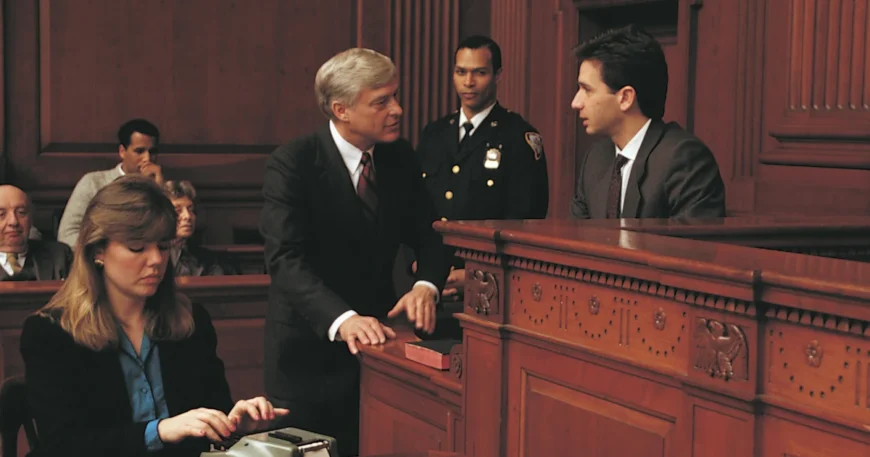
Cross-Examining the Expert: Key Questions to Ask a Business Valuator on the Stand
Introduction
In litigation, the business valuation expert often plays a pivotal role. Whether in shareholder disputes, divorce proceedings, or economic damages claims, the credibility and rigor of a valuation can determine case outcomes. Yet, for many attorneys, financial planners, and business owners, the intricacies of a business valuation report can be daunting—especially when dissecting an opposing expert’s work. As AVGI business valuation experts, we offer a strategic roadmap to cross-examining business valuation experts, identifying red flags, and asking questions that can reveal weaknesses in an opposing expert’s report.
Understanding the Expert’s Methodology: The Foundation for Effective Cross-Examination
Valuation is not formulaic; it is guided by professional judgment within accepted methodologies. A thorough cross-examination begins with understanding which valuation approaches (Income, Market, or Asset-based) were used and why. Key questions include:
- Which valuation approaches did you consider, and why did you select (or exclude) each method?
- How did you determine your projections or assumptions about future earnings and growth?
- Did you consider alternative scenarios or sensitivity analyses? If not, why?
Red Flag: Over-reliance on a single method without justification, or dismissing other approaches with weak reasoning.
Probing Assumptions and Inputs: Where Valuations Live or Die
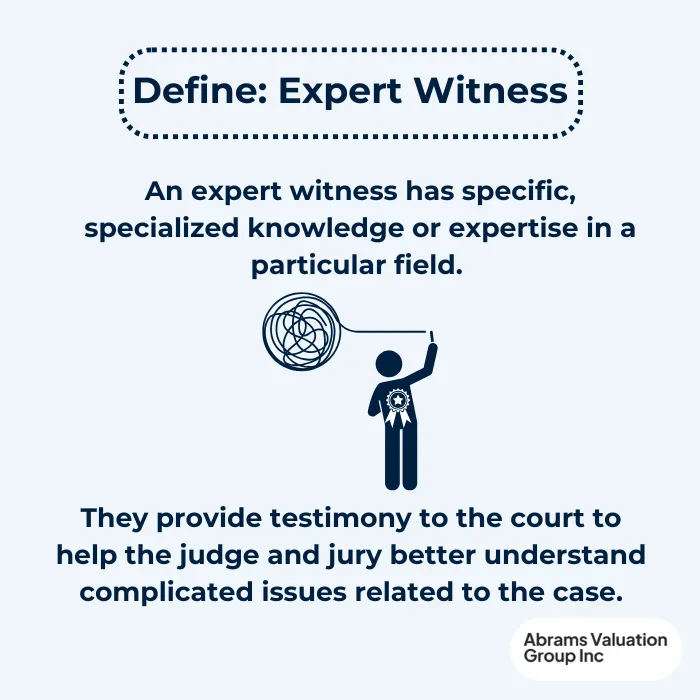
Assumptions about revenue growth, margins, discount rates, and comparable companies can have an outsized impact on value. In most jurisdictions, when you cross-examine a witness, the scope of inquiry is generally limited to the subject matter raised on direct examination and matters affecting credibility. Under the Federal Rules and other courts’ law on scope, counsel should note what was covered on direct before expanding the inquiry, which helps maintain control and keeps the examination practical.
Attorneys should scrutinize each input, using leading and short questions, each containing one fact, to secure clear answers and useful admissions rather than broad statements. A thorough cross-examination begins in practice during discovery: the cross-examiner should prepare by reviewing the witness’s testimony to identify relevant areas for examination, the points to be addressed, and the techniques best suited to test each assumption. The examiner’s job is to test testimony so the judge or jury can better assess reliability and memory.
- What data sources did you use for your assumptions? Are they industry-standard or unique to this case?
- How did you select your discount or capitalization rates? What is the support for your risk premium or company-specific risk adjustment?
- Can you walk us through your process for choosing comparable companies or transactions?
Red Flag: Inputs that are inconsistent with historical performance, industry benchmarks, or lack credible support.
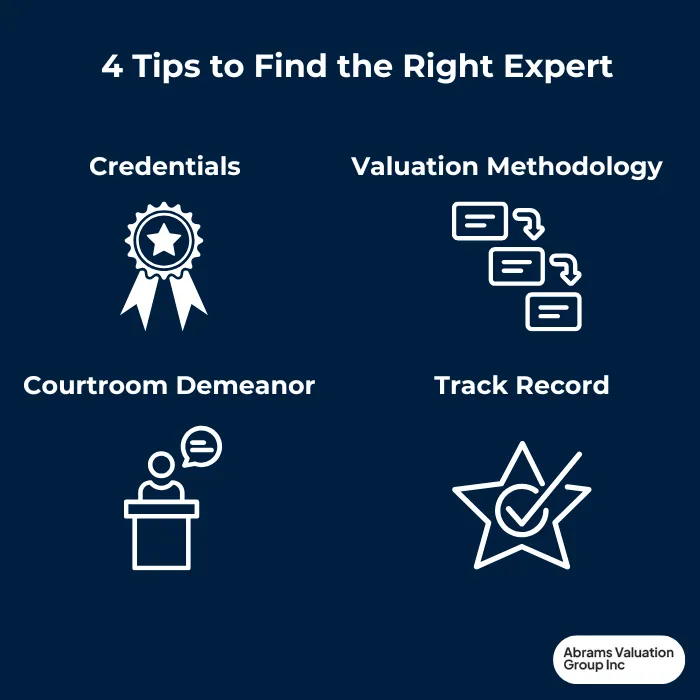
Analyzing the Report for Consistency and Transparency
A robust valuation report should be internally consistent, transparent, and logical. In practice, leading questions are commonly allowed on cross-examination and help maintain control of the witness. The questions asked should be short questions built around one fact at a time to secure clear answers and useful admissions. When cross-examining:
- Are your calculations and adjustments documented and reproducible?
- Did you make any discretionary adjustments to financials? What was the rationale?
- Are there any inconsistencies between your report and supporting documentation?
To impeach effectively, focus on identifying the key prior statements or data points that can be compared to the report, and use a concrete example if a number changed without support. Keep the pace deliberate; a well-timed pause or silence can underscore the point and help test whether the truth of the financial assumptions holds up. Ask only about matters already discussed on direct unless broader inquiry is permitted, and object if new material is improperly raised.
Red Flag: Lack of documentation, vague explanations for adjustments, or discrepancies between exhibits and conclusions.
Challenging Independence and Potential Bias
Valuation experts must maintain independence, but subtle bias can creep in. Inconsistencies between the report, prior statements, and topics already discussed or raised can help impeach the expert, especially when a lawyer compares earlier positions with later adjustments. For example, if the numbers change after new documents appear, the point is not the argument for its own sake but whether the calculations reflect the truth. Key questions:
- How were you selected or retained, and by whom, including the plaintiff, defendant, or opposing party?
- What information did you receive from the client, the other side, or their advisors before you testify?
- Did you have any communication with counsel, opposing counsel, or defense counsel regarding valuation assumptions or approaches, and did you object or raise an objection if those discussions went beyond materials used with your own witnesses?
Red Flag: Evidence that the expert relied heavily on information provided by one party without corroboration, or tailored assumptions to benefit the client.
Testing for Reasonableness and Real-World Sense Using Leading Questions
Ultimately, a valuation must make sense in the context of the real world; when a witness appears to testify for the opposing party, counsel should treat bias questions as central to effective cross-examination, because they shape the story a factfinder will hear.
Before getting to the numbers, ask whether the witness’s communications with opposing counsel or the other side’s lawyer reflect party alignment, whether labeled plaintiff or defendant only as examples, and how that may present the person’s perspective to jurors in any hearing where the judge is weighing scope and credibility.
- How does your conclusion compare to recent transactions in the industry?
- Would a hypothetical buyer and seller reasonably agree to this price? Why or why not?
- Have you considered the impact of current economic conditions?
Timely objections and object decisions matter if questioning strays beyond proper limits, and in criminal cases, the right to confront and cross-examine witnesses is a core protection tied to justice.
Red Flag: Values that are significantly higher or lower than market transactions, or conclusions that defy economic logic.
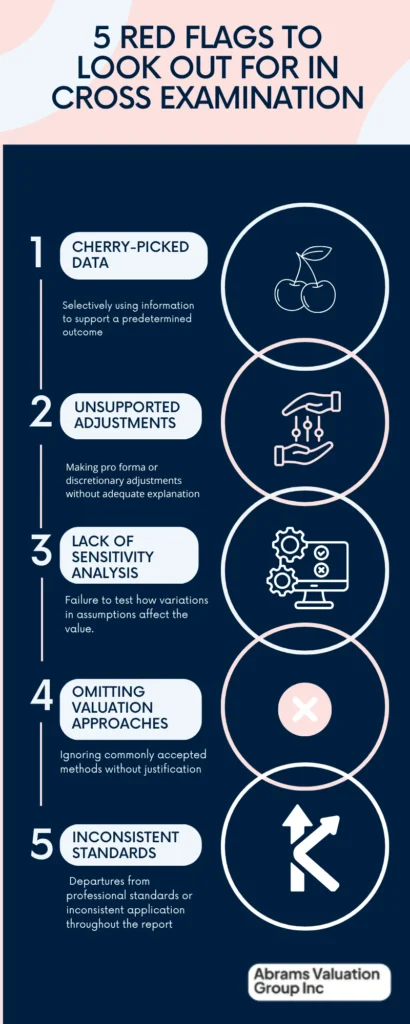
Key Red Flags in Opposing Expert Reports for Opposing Counsel
- Cherry-picked Data: Selectively using information to support a predetermined outcome; on cross-examination, present a coherent story that makes economic sense to jurors and, where helpful, focus them on how a real-world buyer or seller would view the valuation.
- Unsupported Adjustments: Making pro forma or discretionary adjustments without adequate explanation; maintain composure and professionalism before the judge or at a hearing to preserve credibility while challenging the expert.
- Lack of Sensitivity Analysis: Failure to test how variations in assumptions affect the value.
- Omitting Valuation Approaches: Ignoring commonly accepted methods without justification.
- Inconsistent Application of Standards: Departures from professional standards or inconsistent application throughout the report, with objections used to limit questioning that strays beyond the subjects opened on direct.
Conclusion
Cross-examining a business valuation expert requires a blend of financial literacy and strategic questioning shaped by the theory you want to carry into the closing argument. By focusing on methodology, scrutinizing assumptions, probing for consistency, and testing for independence and reasonableness, attorneys can expose weaknesses and inconsistencies in opposing expert reports—even if valuation is not their primary field. Effective questioning should also test the witness’s credibility without straying beyond proper limits, since some states, like California, restrict cross-examination to matters within the scope of direct examination.
- Red flag: Questions outside the direct exam scope can backfire, especially in California.
- Red flag: The judge has discretion over scope and related evidentiary rulings.
The right questions can reveal whether the “expert” opinion truly withstands scrutiny—or is just an advocacy piece in disguise.


