
Direct Listing vs IPO (Traditional): Impacts on Company Valuation
A Thought Leadership Perspective by AVGI Business Valuation Experts
The route a company chooses to enter the public markets—be it via a traditional Initial Public Offering (IPO) or a direct listing—has far-reaching implications beyond mere access to capital. For business valuation experts, these methods influence not just the valuation at the time of listing but also the company’s long-term market perception, capital strategy, and stakeholder confidence. This article explores the comparative impacts of direct listings and traditional IPOs on company valuation, offering insights relevant to valuation professionals, executives, and investors alike.
Background: Mechanisms of Public Market Entry and the Direct Listing Process
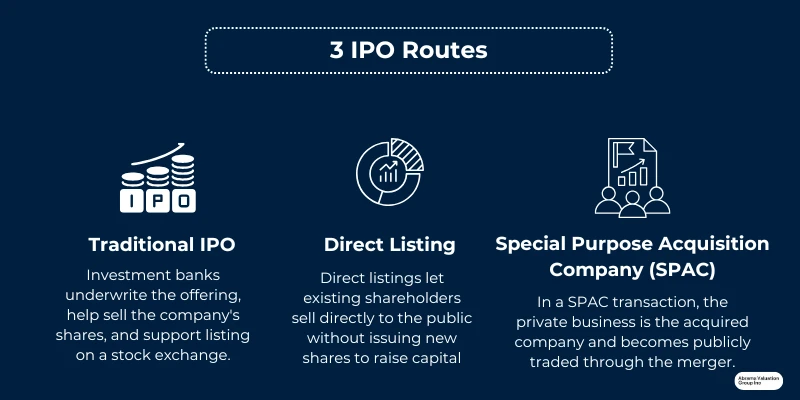
In a traditional IPO, the private company issues new shares to raise new capital. The process involves underwriters, pre-listing roadshows, and a fixed offer price, with investment banks typically acting as underwriters. In this IPO route, underwriters play a pivotal role in price discovery and initial share allocation.
In contrast, a direct listing bypasses underwriters and allows existing shareholders to sell existing shares directly to the public. No new shares are issued, so no new capital is typically raised, and pricing is determined more dynamically by market forces on the first day of trading. Before either route becomes publicly traded, both require a registration statement with the Securities and Exchange Commission and audited financial statements. Each method presents unique implications for valuation inputs and outcomes.
Key Differences Between Direct Listings and Initial Public Offering (IPO)
The most apparent distinction is cost: in a direct listing, companies do not have to pay IPO fees or underwriting fees, while the underwriters charge roughly 3% to 7% of funds raised in a traditional IPO. No underwriters are involved in a direct listing, unlike the traditional IPO process. The absence of underwriters also shifts price discovery to the market, increasing transparency but potentially also volatility.
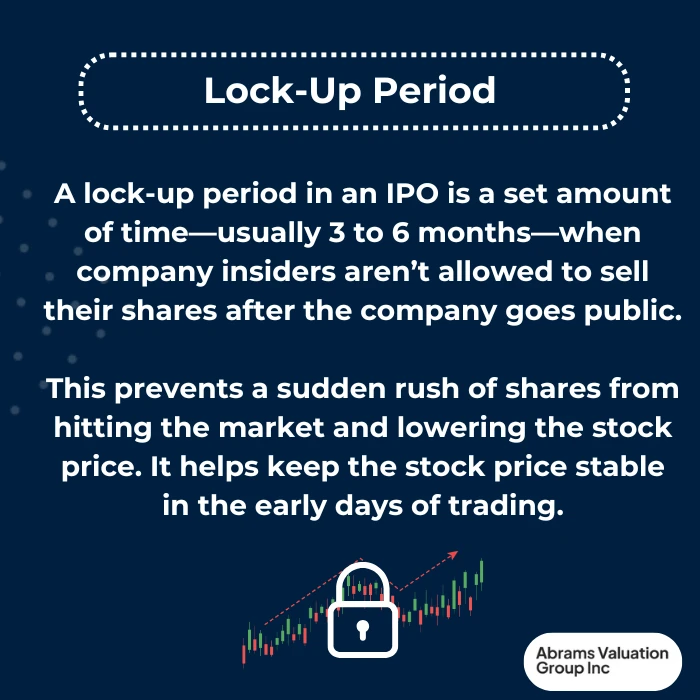
Regulatory requirements, timing, and the resulting investor base also vary. IPOs often involve a lockup period that commonly lasts 90 to 180 days and can restrict early investors or company insiders who want to sell shares, while direct listings offer immediate liquidity to existing shareholders. These factors shape both the initial and ongoing valuation landscape.

Direct Impact of Investor Demand on Company Valuation
Valuation professionals rely on multiple methodologies—market-based, income-based, and asset-based approaches—to assess newly public companies. The chosen entry method directly influences these models:
- Price Discovery: IPOs may be underpriced to ensure successful placement, which can leave money on the table. In the IPO process, the initial offer price is usually determined through book-building to gauge investor appetite and secure institutional investor backing before trading begins. Direct listings, by contrast, allow immediate market-driven pricing, and the opening share price is set by market supply and market demand once public trading starts, rather than by a preset offering price, which may reflect true demand but can also introduce greater price swings.
- Transparency & Sentiment: Direct listings are often perceived as more transparent, yet the lack of underwriter support can amplify volatility. They depend more heavily on investor demand and organic investor participation, making them better suited to companies with strong brand recognition and a strong market presence. Market sentiment can thereby play an outsized role in early trading days.
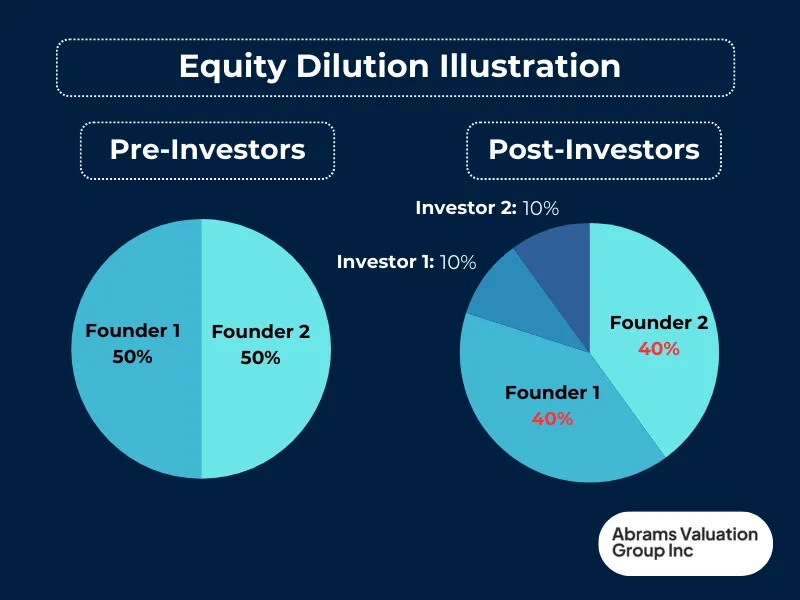
- Dilution & Supply: IPOs typically dilute existing shareholders by issuing new shares; direct listings do not, maintaining shareholder equity but possibly constraining capital raised.
- Lock-up Periods: The absence of lock-ups in direct listings can lead to a larger immediate supply of shares, which can affect initial price performance. They can also provide liquidity and more equal access to pricing for insiders and retail investors when the company’s shares first enter public trading on an exchange.
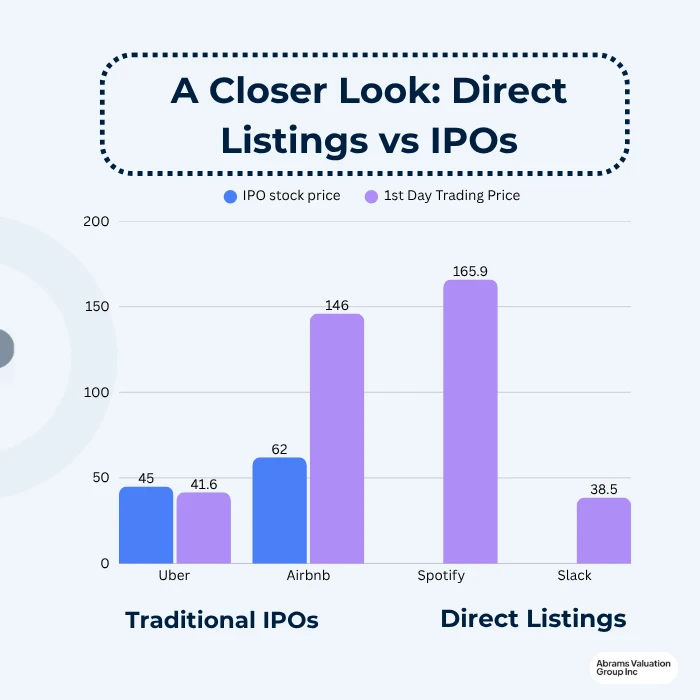
To illustrate these dynamics, consider the contrasting experiences of Airbnb and Uber (traditional IPOs) versus Spotify and Slack (direct listings):
Airbnb’s 2020 IPO saw the company’s shares priced at $68 each, yet the stock opened at $146 on its first day of trading—a more than 100% jump. This reflected significant underpricing, a common critique of the IPO process, as well as strong investor demand. Uber’s 2019 IPO, on the other hand, was marked by volatility and a first-day closing price below its offering price, underscoring the challenges of pricing amid market uncertainty and negative sentiment. Both companies were subject to traditional lock-up periods, staged share releases, and heavy underwriter involvement, all of which influenced their valuation trajectories and subsequent price stability.
In contrast, Spotify’s 2018 direct listing involved no new capital raised and relied entirely on the market to set the opening price. The company provided broad financial disclosure and guidance ahead of its listing to foster transparency. Spotify’s shares opened at $165.90, closely aligning with private market indications. Volatility was present but did not result in the dramatic underpricing seen in some IPOs.
Slack’s 2019 direct listing followed a similar model, with shares opening at $38.50, also near its private market reference price. Both direct listings enabled immediate liquidity for existing shareholders and avoided the dilution and lock-up restrictions typical of IPOs. While this approach offered greater transparency and market-driven pricing, it also exposed the companies to real-time swings in sentiment and required robust communication to manage investor expectations.
These case studies underscore how the chosen listing method can materially affect first-day pricing, volatility, and long-term valuation performance, providing critical lessons for valuation professionals and company leadership alike.
Indirect Effects and Considerations
Beyond immediate pricing, the method of public debut signals important messages to the market. Traditional IPOs may be seen as a vote of confidence from major underwriters, attracting broader analyst coverage and media attention as part of a broader public listing that turns the business into one of the publicly traded companies subject to ongoing market scrutiny.
Direct listings, conversely, can indicate confidence in the company’s intrinsic value and strong support from existing investors. Post-listing performance and the ability to raise capital in the future are also affected, with direct listings sometimes viewed as limiting immediate capital-raising opportunities but offering greater pricing authenticity. Ultimately, the choice should align with the company’s financial goals, ownership structure, and whether it needs new capital to support growth initiatives. For companies undergoing the direct listing process, taking a company public requires enough internal resources in place beforehand because there is no fresh influx of investor funds at listing.
Valuation Challenges and Opportunities
Valuation experts face both challenges and opportunities depending on the chosen listing method, and companies weighing ipo and a direct listing must also assess market conditions and broader market dynamics alongside valuation concerns. The relative lack of underwriter support and structured pricing in direct listings can complicate data collection and increase the risk of mispricing.
At the same time, the transparency and lack of dilution can simplify modeling and stakeholder discussions. Managing expectations and strategic decision-making becomes critical—especially as companies weigh the trade-offs between cost, control, and capital needs, a choice that also shapes positioning in the capital markets. That includes deciding whether priorities center on new capital raising for expansion or on enabling existing shareholders to access liquidity without dilution.
Recommendations for Valuation Experts
When advising companies on valuation in the context of public market entry, experts should:
- Carefully analyze the market depth and likely investor base under each scenario, including how much investor interest may need to be built through underwriting support in an IPO versus market-driven demand in a direct listing.
- Adjust valuation models to account for differences in dilution, price discovery mechanisms, and expected volatility, including whether the company’s stock will be priced through an underwriter-led process or through open-market trading on a stock exchange such as the New York Stock Exchange.
- Clearly communicate the implications of the listing strategy to stakeholders, emphasizing both quantitative and qualitative impacts, and reflect ongoing regulatory obligations once the company becomes publicly traded on a public exchange.
Conclusion
The choice between a direct listing and a traditional IPO is more than a financial or regulatory decision—it is a strategic inflection point that shapes a company’s market identity and valuation narrative. Understanding the nuanced impacts of each method enables valuation professionals to provide more accurate, actionable guidance. As the landscape evolves, staying attuned to best practices and market trends will be essential for all stakeholders considering public market entry.
Contact AVGI today for professional business valuation consulting through the IPO process.


