

The Essential Guide to Estate Valuation
Understanding Estate Valuation
Estate valuation is the process of determining the value of an individual’s or family’s assets, including real estate, stocks, business interests, and personal property. These values will be crucial for tax planning, estate planning, and ensuring the fair distribution of an estate’s assets. Upon the estate owner’s death, an accurate estate valuation will be necessary to determine estate tax obligations and inheritance tax for heirs, if applicable.
Estates often comprise a complex assortment of tangible and intangible assets, making accurate estate valuation a task best delegated to a professional. This is particularly true if the estate is large and could draw unwanted scrutiny from the IRS. AVGI performs numerous estate valuations each year based on over 30 years of valuation experience. In this article, we will break down the essentials of estate valuation to inform and prepare estate owners, executors, and heirs with important and relevant information about the process.
Determining the Value of an Estate
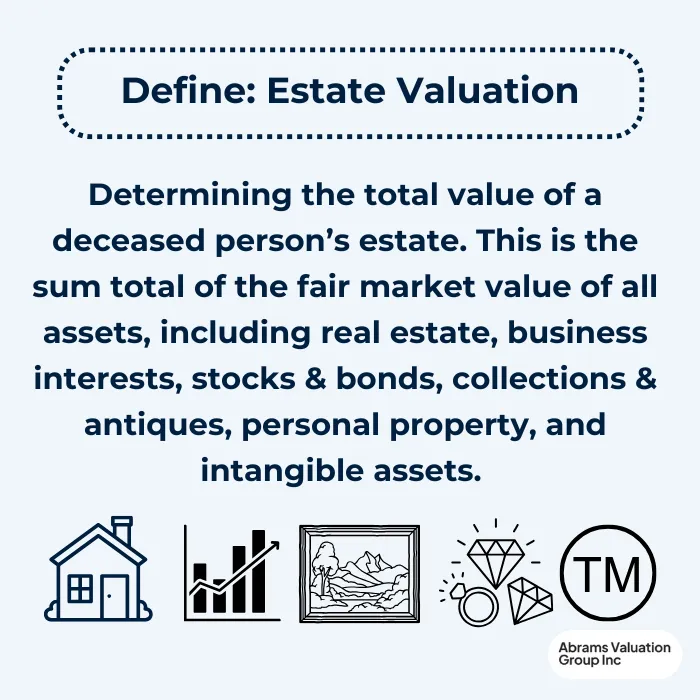
Estate valuation begins with determining the fair market value of each asset. The FMV is the price a buyer would pay for an asset in an open market. The value of an estate is determined by adding up the value of all assets, including real estate, stocks, bonds, business interests, and personal property.
It is necessary to accurately determine the value of an estate to identify the taxable estate and the precise estate tax obligation. AVGI strongly recommends engaging a valuation professional to perform an estate valuation, as accuracy is everything when it comes to estate tax. An empirical valuation can significantly reduce errors born from amateur valuation guesswork and translate practically into millions of dollars saved in estate tax dues. Furthermore, hiring a valuation expert vastly reduces the risk margin of audit on estate tax returns and ensures that the estate has a defensible valuation in case of an audit.
Estate Tax Considerations
Estate tax is a federal tax on transferring an individual’s assets after their death. Some states impose an additional state-level estate tax, while others impose an inheritance tax on heirs. Maryland is the only state that imposes a state inheritance and estate tax.
Federal Estate Tax Rates & Exemptions
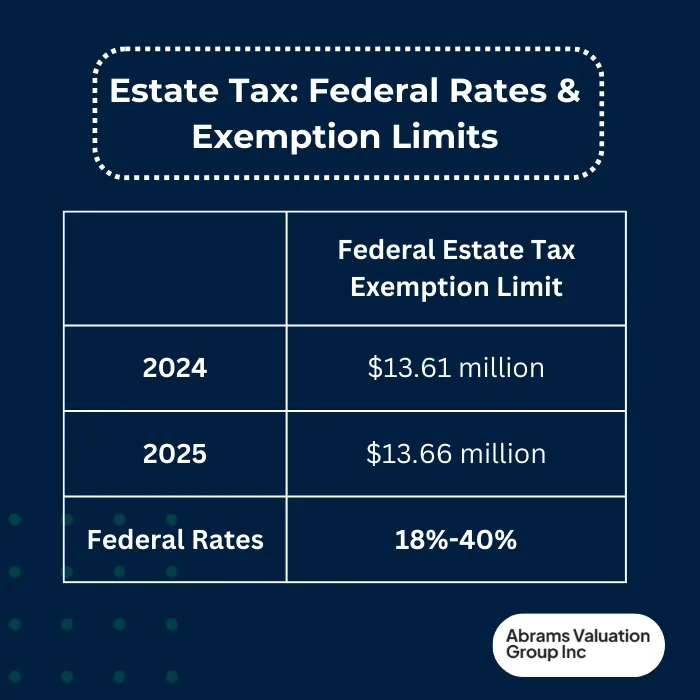
The amount of estate tax due is calculated based on the value of the taxable estate. That is the value of the estate minus any deductions and exemptions. For the 2024 tax year, the federal estate tax exemption is $13.61 million. For the 2025 tax year, the exemption amount rises to $13.66 million. Only estates with a combined value in excess of the exemption amount need to file a federal estate and gift tax return. The federal estate tax rate ranges from 18%-40%, depending on the size and value of the estate. Only the amount over the exemption threshold is subject to the federal estate tax.
State Estate Tax Rates & Exemptions
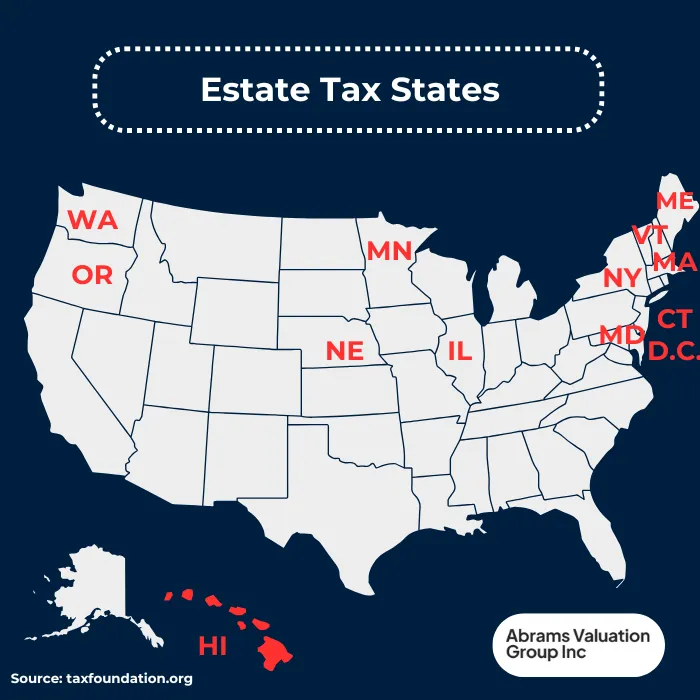
12 states plus Washington D.C. levy a state-level estate tax in addition to the federal estate tax. The state estate tax exemptions are also much lower than the federal exemption. However, due to different available exemptions, it is possible to significantly reduce or entirely avoid estate tax.
Below are the states with estate taxes:
Estate Tax Deductions
Deductions can significantly reduce or entirely exempt the taxable estate from paying estate tax. Some of these deduction include the following:
- unlimited marital deduction for assets bequeathed to the surviving spouse
- charitable donation deductions
- qualified annual gifting made during the decedent’s lifetime
- life insurance policy direct payouts to beneficiaries
- assets bequeathed to trusts (often, but not in all cases- consult with an estate planning attorney)
- debts and fees in executing the estate
How Gift Tax Impacts Estate Tax
Any gifts made during the lifetime of the decedent that exceeded the annual gift tax exemption in the year the gift was given are liable in gift tax. Those gift taxes are due along with the estate tax and filed simultaneously in the Federal Estate & Gift Tax Return.
Valuation Methods and Approaches
There are three main approaches to valuing assets, namely the income approach, market approach, and asset approach. Generally, AVGI experts value estates using all three approaches and then weigh the results, producing an exceedingly accurate and empirical valuation. However, depending on the makeup of the estate’s assets, one or more approaches may not be applicable. Ultimately, the valuation method choice depends on the asset type and the valuation purpose. As such, AVGI experts select the valuation approach(es) that lends itself to the most accurate results. Read more about valuation methods and the valuation process here.
Estates often include real estate, among other tangible assets. The estate tax is levied on the FMV of the property at the time of the decedent’s death (as opposed to the FMV at the time of purchase), so it is crucial to get an accurate real estate appraisal. While real estate agents can provide an estimate of the property’s value, a formal appraisal by a licensed appraiser is often legally required and highly recommended for accuracy.
Simplifying the Probate Process
Estate valuation can help simplify the probate process by providing a clear and accurate picture of the estate’s assets and liabilities. The thorough approach to identifying assets in an estate valuation can also help identify any debts owed by the estate and ensure that they are paid. A precise valuation can reduce the risk of disputes and challenges during the probate process, simplifying and streamlining the process overall.
Common Challenges in Estate Valuation
There are three common challenges that estate executors struggle with in determining the value of an estate.
Determining the fair market value of unique or hard-to-value assets.
Ensuring all assets are identified and valued, including intangible assets such as intellectual property
Selecting the date of death or alternate valuation date (6 months post-death) for the best outcome.
AVGI specializes in valuing intangible and hard-to-value assets, and have been instrumental in saving clients millions of dollars on their estate tax bills, like this client whom we helped save $200 million in gift taxes.

Best Practices for Estate Valuation
Keep accurate and detailed records of all assets and their values. This can include receipts for purchases of expensive items, including antiques, artwork, jewelry, etc.
An estate valuation made for estate planning purposes (during the lifetime of the estate owner) needs regular updating to reflect changes in market conditions and the value of assets. Do not rely on an outdated estate valuation for estate tax purposes, as market changes in the interim can translate into significant savings or increased tax obligations.
Estate valuation should follow Internal Revenue Service (IRS) guidelines and regulations.
Engage a professional appraiser like AVGI to ensure an accurate estate valuation that clearly establishes the estate tax obligation while maximizing benefits for the beneficiaries.
An estate planning attorney can help ensure the estate valuation is accurate and defensible in case of an audit or a court case.
In Conclusion: Estate Valution for Effective Estate & Tax Planning
Understanding the basics of estate valuation is essential for effective estate and tax planning. Accurately determining the fair market value of all assets can ensure compliance with tax obligations while maximizing benefits for heirs.
Given the complexity of estate valuation, particularly in larger estates, it is highly advisable to engage professional help to mitigate risks and improve accuracy. If you are navigating the intricacies of estate valuation and desire expert guidance, contact AVGI today for a consultation. Our experienced team is dedicated to providing precise and reliable estate valuations tailored to your needs.


