

Succession Planning: Preserving Business Value Through Thoughtful Transitions
Succession planning is a proactive strategy for identifying and developing future leaders at all levels of an organization to ensure business continuity when key individuals depart. For business owners, attorneys, and financial planners, succession planning is not just about preparing for the next CEO; it’s a comprehensive process that protects organizational value, smooths transitions, and readies the business for mergers, exits, or generational handovers.
Succession Planning Purpose and Business Continuity
A robust succession plan is the backbone of business continuity. Its objectives are threefold: to preserve enterprise value, ensure minimal disruption during leadership transitions, and maintain stakeholder confidence. Business continuity targets include uninterrupted operations, retention of critical talent, and safeguarding institutional knowledge. Setting a clear transition time horizon—whether five, ten, or twenty years—aligns planning efforts with expected change, allowing for systematic preparation.
Why Effective Succession Planning Matters for Business Leaders
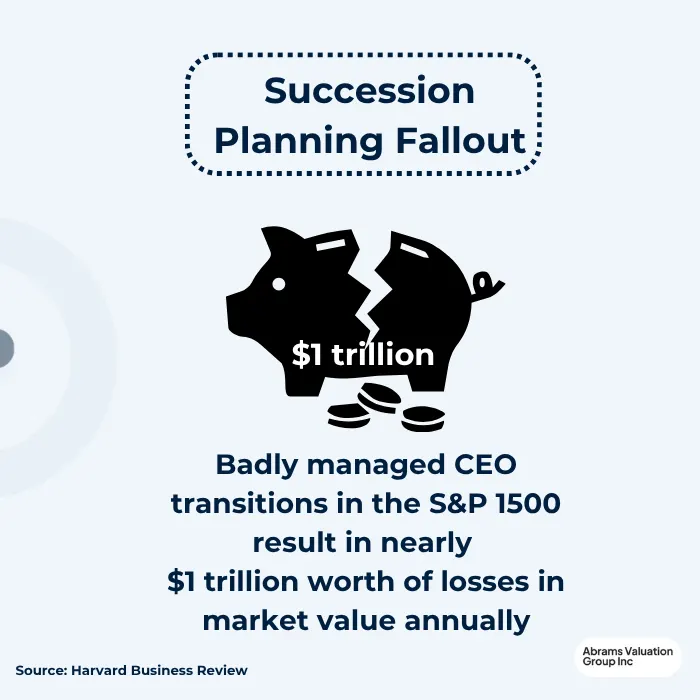
The risks of unplanned leadership loss are significant: operational chaos, lost productivity, missed opportunities, and erosion of stakeholder trust. Studies show that abrupt leadership vacuums can cost companies up to 10% of annual revenue and set back productivity for years. Succession planning reassures boards and investors, signaling a disciplined approach to risk and value preservation.
Ownership and Governance of the Planning Process
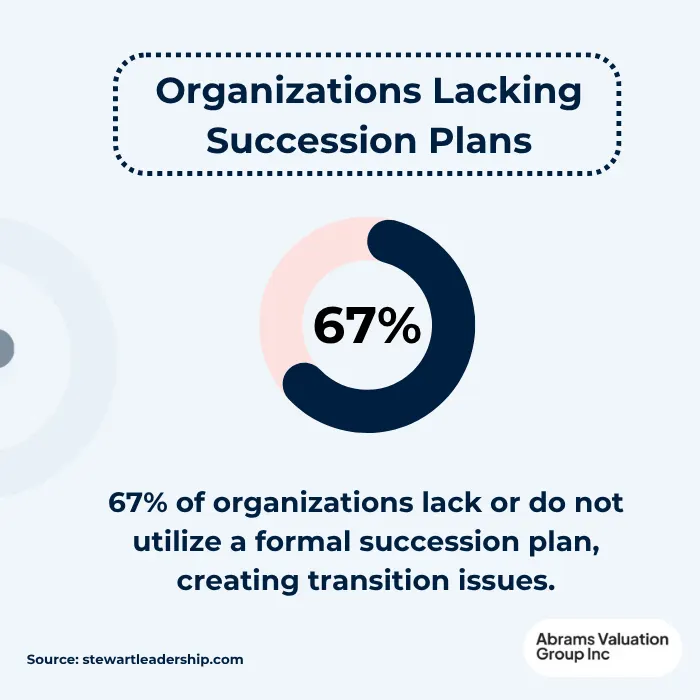
A successful succession initiative needs strong ownership. Assigning an executive sponsor—often the CEO or board chair—anchors the process and supports leadership continuity; only 47% of companies have a formal CEO succession plan. Human Resources should lead talent management as a strategic approach to developing human capital, but creating a cross-functional succession committee ensures broad buy-in for the succession planning process, clarifies leadership roles, and keeps a plan in place when a key leader exits. Governance meetings should be scheduled quarterly to review progress, update plans, and hold stakeholders accountable as part of a proactive process and ongoing succession planning efforts. In many organizations, 67% lack or do not utilize a formal succession plan, which is why prioritizing succession planning with a formal succession plan matters.
Identify Critical Roles and Key Positions
Start with a formal succession plan that uses a proactive process for identifying positions critical to your business’s success, especially leadership roles. Rate each by its operational and strategic impact, and assess any exposure created by dependence on a key employee, a key leader, or a critical person for immediate attention. Roles with outsized influence on strategy, revenue, or compliance deserve special focus in the succession planning process. Identifying key positions often takes 12 to 36 months, so start early and keep a plan in place.
Map Necessary Skills for Critical Positions
Each key role requires a clear understanding of the technical and soft skills required for success. Develop detailed competency profiles for every critical position, covering technical requirements as well as soft skills such as conflict resolution and emotional intelligence, and benchmark them against industry standards to identify skill gaps and development needs for future roles and business goals.
Identify High Potential Talent and Potential Candidates
Shortlist potential successors for each critical role from internal talent and high- potential employees using objective performance data. Be transparent with potential leaders about advancement paths and readiness expectations for leadership positions. Ensure every shortlist includes diverse candidates to broaden your leadership pipeline and reduce bias, since visible advancement paths support talent retention and employees are more likely to stay when they can see how they can grow.
Assess Readiness and Create Development Paths
Use a standardized scale to assess each candidate’s readiness for promotion as part of an ongoing process. Map out individualized development plans, assign mentors or coaches through mentorship programs that provide guidance to candidates preparing for future roles, and set clear milestones and timelines for achieving readiness. Investing in employee growth and mentorship increases loyalty and supports talent retention.
Develop and Groom Future Leaders
Design stretch assignments, cross-functional rotations, and targeted leadership programs to prepare potential leaders to step into future leadership roles, not just fill vacancies; rotations across departments also give participants a holistic view of the company’s operations. Executive coaching for top prospects, along with attending conferences, further sharpens skills and readiness to move the business forward while aligning development with the company’s culture and supporting long-term success.
Knowledge Transfer to Protect Business Continuity
Codify institutional knowledge for each critical role so knowledge capture also supports a sudden departure of a key employee or an experienced leader in a critical role. Overlap outgoing and incoming leaders so knowledge and relationships are transferred. Maintain up-to-date maps of vendor and stakeholder relationships, and run simulation drills to ensure preparedness for sudden leadership gaps.
Contingency and Replacement Planning for Critical Positions
Prepare short-term replacement rosters for emergencies, define escalation protocols, and train interim leaders for temporary assignments, prioritizing internal talent before turning to external candidates. This ensures operational continuity even in the face of unexpected departures. Stronger succession planning also reduces the cost and disruption of hiring external candidates during emergencies.
Measuring Outcomes to Ensure Effective Succession Planning
Define clear KPIs—such as internal promotion rates and fill times—to regularly review the effectiveness of succession planning efforts against business goals. Report these metrics regularly to leadership so they support informed decisions about bench strength, readiness, and talent retention, and audit the succession plan annually to refine and improve it. Because succession planning often takes about 12 to 36 months, regularly review progress and remember that organizations without succession plans face higher talent turnover costs, while investing in employee growth increases loyalty and retention.
Involving Business Leaders and the Next Generation
Hold career-planning sessions with high-potential candidates to align their goals with leadership positions and future roles, involve current leaders in mentoring to provide guidance while maintaining transparency about readiness and opportunities, and host stakeholder meetings to align the next generation. This fosters a culture of development and smooths generational transitions.
Generative Leadership CEO Mindsets Influencing Succession Planning
Succession planning outcomes are profoundly shaped by the leadership mindsets of CEOs. According to a study published in the Academy of Management Review, four generative leadership mindsets directly influence how succession planning is approached and executed. These mindsets shape strategic decision-making, talent development, and organizational continuity:
The Impact of Generative Leadership on Warren Buffett’s Succession Success
Joshi and her coauthors highlight that the critical factor in succession planning lies in the outgoing CEO’s psychological mindset rather than in structural elements such as timelines and organizational charts. Drawing from Erik Erikson’s concept of generativity—the drive to invest in and empower the next generation—they identify how this mindset influences succession outcomes.
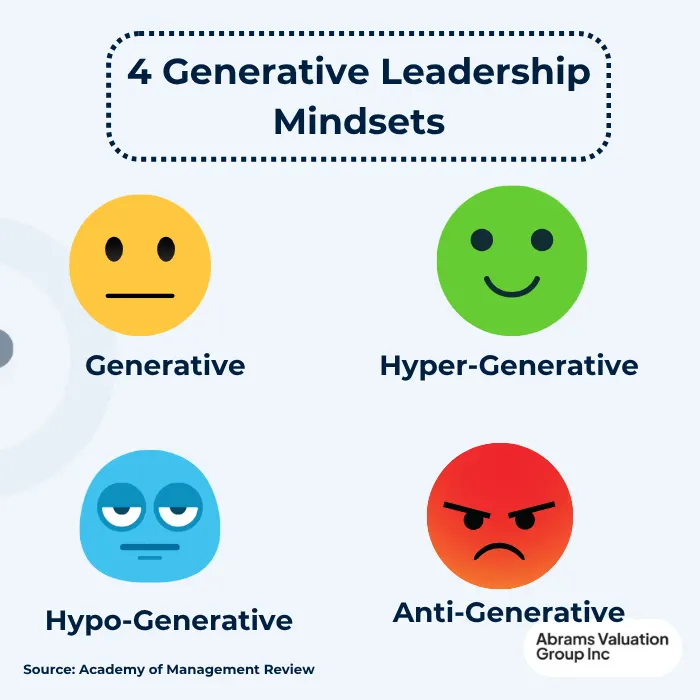
In the context of CEO succession, generativity manifests as a leader’s commitment to developing future leadership and their need to control the succession process and outcome. Joshi categorizes CEO succession into four archetypes based on these traits:
Generative: CEOs who actively invest in leadership development and are willing to let go, fostering a smooth and empowering transition.
Hyper-generative: Leaders who are deeply invested but reluctant to relinquish control, often preferring to select a direct heir-apparent.
Hypo-generative: CEOs with low investment and low control, treating succession as an afterthought and risking unprepared transitions.
Anti-generative: Those who exert high control but show little investment, often obstructing succession efforts and creating significant challenges.
Joshi suggests that Warren Buffett exhibited a hyper-generative mindset, handpicking his successor and staying closely involved in the transition, to the company’s benefit. Understanding these generative leadership mindsets provides valuable insight into how leaders like Warren Buffett have shaped successful succession processes by balancing investment in future leaders with appropriate control over the transition. Integrating these generative leadership mindsets into succession planning enhances the quality and effectiveness of leadership development initiatives, ensuring a robust pipeline of capable leaders ready to sustain organizational success.
Implementation Roadmap and Quick Actions
Kick off with a pilot succession plan for a high-priority role as part of a broader strategic approach and proactive process. Communicate plan basics to all stakeholders, train managers on workflows and tools, and schedule regular progress checkpoints in the first year so implementation checkpoints keep succession planning efforts aligned with business goals and leadership continuity.
Templates and Checklists for a Succession Plan
Role Competency Template: A framework for defining the core competencies required for each critical role.
Individual Development Plan Template: A tool for mapping out the development journey of high-potential candidates, including readiness for future roles and the technical and soft skills they need to build.
Succession Review Meeting Checklist: Ensures governance meetings regularly review succession planning efforts and leadership continuity.
Conclusion
Effective succession planning is a strategic imperative for value preservation, risk mitigation, and long-term business success. By following a disciplined framework, leveraging technology, and prioritizing leadership development, businesses can navigate transitions confidently—ensuring continuity, maximizing enterprise value, and empowering the next generation of leaders.

