

Expectation Damages: Calculating Compensatory Relief in Contract Law—Insights from AVGI Veteran Expert Witnesses
Expectation damages lie at the heart of contract law’s promise: to place the injured party in the position they would have occupied had the contract been fully performed. It’s important for business owners facing contract disputes to understand how damages are calculated, what reasonable expectations there are for damage recovery, and what truly moves the needle in the courtroom. Understanding this topic well can spell the difference between a nominal recovery and meaningful compensation. Drawing on decades of experience in the expert witness stand, AVGI offers an inside perspective on expectation damages, their legal underpinnings, and actionable strategies for building a compelling claim.
Understanding Expectation Damages
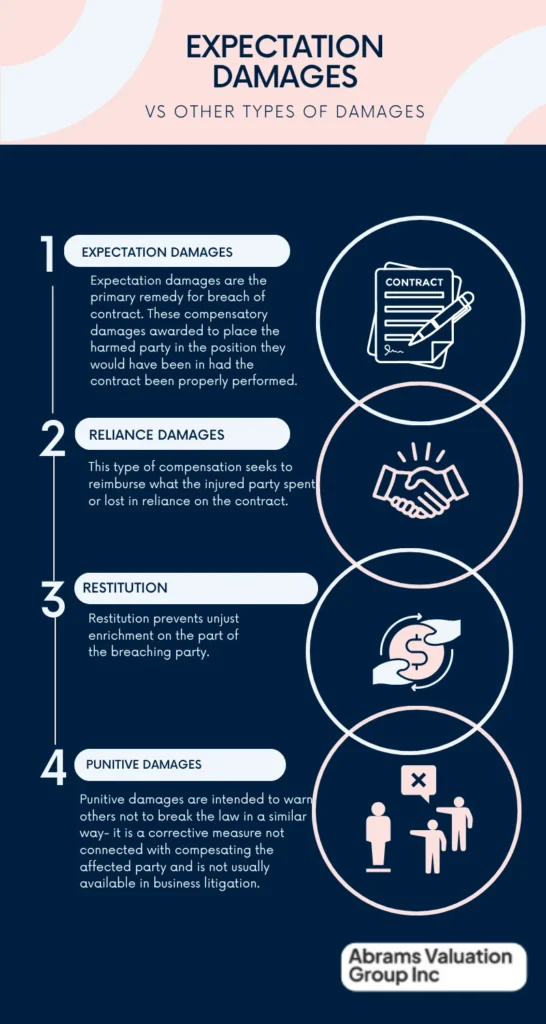
Expectation damages are the primary remedy for breach of contract. Expectation damages are distinct from reliance damages (which reimburse what the injured party spent in reliance on the contract) and restitution (which prevents unjust enrichment); expectation damages focus on the “benefit of the bargain.” Under the general rule in contract law, expectation damages are a form of compensatory damages awarded to place the harmed party in the position they would have been in had the contract been properly performed. These damages are also referred to as compensatory damages and are designed to compensate for expectation loss—the loss of the expected benefit of the contract—rather than reliance loss.
The guiding principle of restitutio in integrum- restoration to the original condition- holds that the courts seek to ensure that the innocent party is restored to the position they would have occupied had the contract been fully performed. This means making the non-breaching party whole—not by punishing the breacher, but by compensating for the value lost, including foreseeable consequential and incidental losses.
Introduction to Contract Law
Contract law forms the backbone of modern business and personal transactions, providing a framework for parties to create binding agreements and outlining each party’s rights and obligations. When one party breaches the contract—meaning they fail to fulfill their contractual obligations—the other party, known as the injured or non-breaching party, may suffer financial losses or other setbacks. In such cases, contract law offers remedies to ensure fairness and prevent unjust enrichment.
One of the most important remedies in contract law is the award of expectation damages. These are designed to place the injured party in the same position they would have been in if the contract had been fulfilled. Rather than punishing the breaching party, expectation damages aim to compensate the non-breaching party for lost profits, wasted expenditures, and other costs incurred as a direct result of the breach. This monetary compensation aims to reflect the value of the promised performance, including any foreseeable consequential damages arising from a breach.
Calculating expectation damages involves several key factors, such as the contract price, current market value, and any costs saved by the breaching party due to nonperformance. The injured party is also expected to take reasonable steps to mitigate damages, ensuring that compensation does not exceed what is necessary to prevent unjust enrichment. In situations where special circumstances exist—such as unique losses or reliance on specific outcomes—the court may consider awarding special damages, but only if the breaching party knew or should have known about these circumstances at the time the contract was formed.
To successfully claim expectation damages, the court must first establish that a valid contract existed and that a breach has occurred. The injured party must then demonstrate, with reasonable certainty, that the breach resulted in actual losses and that the damages claimed are both reasonable and foreseeable. In some cases, the court may determine that specific performance—requiring the breaching party to fulfill their contractual obligations—is the most appropriate remedy, especially when monetary compensation would not adequately address the loss.
Understanding the principles of contract law and expectation damages is essential for businesses and individuals alike. By knowing their rights and responsibilities, parties can better navigate contractual disputes, take reasonable steps to mitigate damages, and seek appropriate remedies when a breach of contract threatens their interests. The following sections will explore expectation damages in greater detail, including calculation methods, limitations, and the impact of special circumstances on recoverable damages.
Legal Foundations and Key Cases
Several landmark cases shape the contours of expectation damages:
- Robinson v. Harman established the principle that damages should place the injured party in the position of full performance.
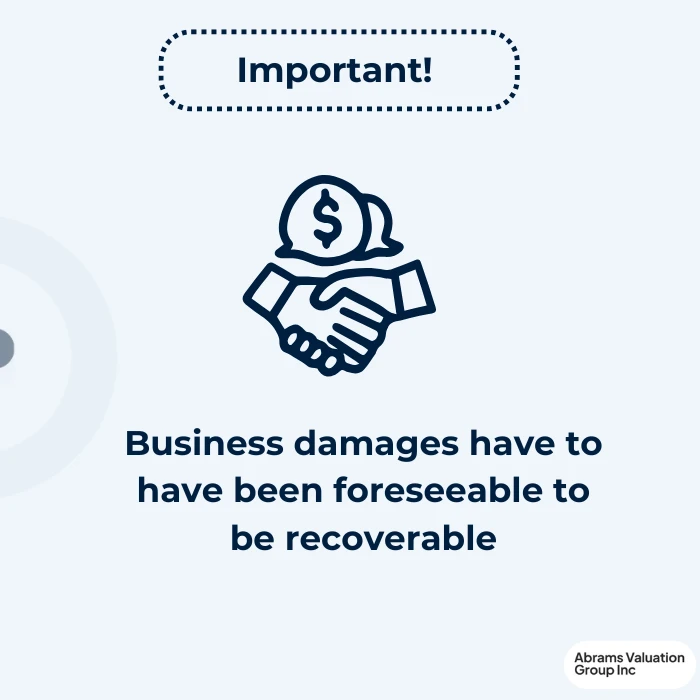
- Hadley v. Baxendale set the boundary for consequential damages: only losses foreseeable at the time of contracting are recoverable. In this case, the court ruled on the distinction between general damages, which arise naturally from a breach, and special damages, which are unique to the injured party’s circumstances and limited under the Hadley rule. The mill owner sought damages for lost profits due to the delayed delivery of a crankshaft, illustrating how courts determine which damages are recoverable.
- Ruxley Electronics v. Forsyth and related cases remind us that courts are reluctant to award “cost-of-cure” damages when the cost far exceeds the actual diminution in value.
Courts award expectation damages to place the injured party in the position they would have been in had the contract been performed, calculating damages as established in these landmark cases.
Courts universally compare the promised performance against actual performance, considering whether the claimed losses are genuinely attributable to the breach.
Awarding Expectation Damages: What the Injured Party Can Recover
Expectation damages are awarded as monetary compensation—the default remedy in contract law. Their purpose is compensatory, not punitive. The damaged party is entitled to expectation damages only if those damages can be calculated to a reasonable certainty. If expectation damages cannot be calculated with reasonable certainty, the court may instead award nominal damages to recognize the breach. In rare circumstances where money cannot fully compensate for the loss, specific performance (forcing the breacher to fulfill their promise) may be ordered. Damages are always reduced by any benefits received or costs saved by the injured party as a result of the breach.
The Calculation: Moving Beyond Theory
From an expert witness’s perspective, calculating damages, specifically expectation damages, is both an art and a science. The classic formula is:
Value of Promised Performance– Costs Saved or Avoided Because of Breach + Foreseeable Incidental and Consequential Damages– Payments Received and Savings from Nonperformance
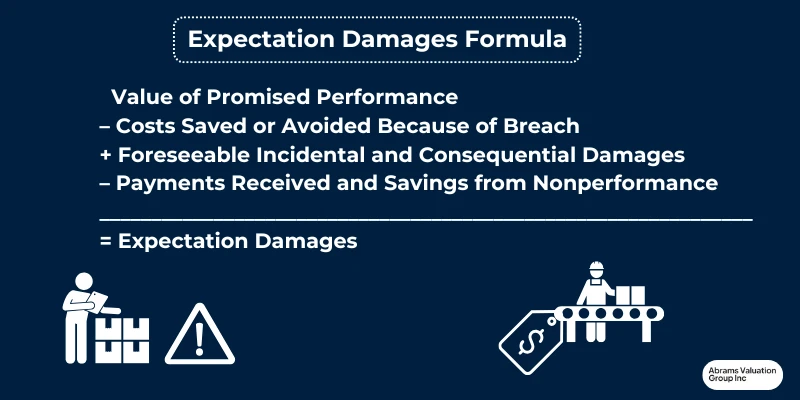
Expectation damages are calculated as the difference between the value of what was promised and what was actually received, plus any consequential and incidental expenses. Expectation loss represents the benefit of the bargain and is the focus of expectation damages.
In commercial contexts, expectation damages typically focus on lost profits and business opportunities, especially in contracts for the sale of goods. For established businesses, lost profits are not considered speculative because they can be estimated from gross profits or past performance.
Direct damages reflect the immediate difference in value between the market price and the contract price. Incidental damages include costs associated with dealing with the breach, such as finding a replacement seller.
Key points:
- Lost profits are only recoverable if they can be established with reasonable certainty and are causally linked to the breach.
- Incidental and consequential damages must have been foreseeable at the time the contract was formed.
- Payments already received, insurance payouts, and any savings resulting from the breach must be deducted from the claim.
Applying the Numbers: Market Price, Contract Price, and “Juicer” Scenarios
- Market-price example: If goods are undelivered and the seller breaches, the buyer may seek substitute goods (cover) and recover expectation damages equal to the difference between the market value at the time of breach and the contract price. For example, in the Sunshine and Squeeze Me case, expectation damages were calculated by subtracting the contract price of the oranges from the market price at the time of breach.
- Contract-price example: If the buyer covers by purchasing substitute goods elsewhere after a seller breach, damages are the contract price minus what was actually paid for the alternative.
- Comparable juicer scenario: If no substitute juicer is available, lost profits may be claimed as foreseeable consequential damages—especially if the seller was aware of the buyer’s intended use.
Special damages—unique, nonstandard losses—are only recoverable if the breaching party was made aware of the special circumstances at the time the contract was signed.
Consequential vs. General Damages: Drawing the Line
- General damages flow directly from the breach (e.g., non-delivery of goods).
- Consequential damages are secondary losses (e.g., loss of business due to non-delivery) that must have been foreseeable to be recoverable.
- Successful claims require clear distinction and supporting evidence; courts avoid double recovery for the same loss.
The Duty to Mitigate and Other Limitations
Courts expect injured parties to take reasonable steps to minimize losses—failure to do so will reduce recoverable damages. The innocent party must act reasonably to mitigate damages and cannot recover losses that could have been avoided. Any collateral benefits (e.g., insurance payouts or windfall gains) are credited against the claim. Importantly, speculative or unforeseeable losses are not recoverable, and punitive damages are almost never available in breach-of-contract cases.
Remedies, Alternatives, and Overlapping Theories
While compensatory expectation damages are the default remedy for breaches of contract, alternative remedies also exist:
- Reliance damages may be claimed instead if lost profits are too speculative. Reliance loss refers to wasted expenditure incurred in reliance on the contract, and reliance damages are designed to restore the injured party to their pre-contract position.
- Restitution prevents unjust enrichment but does not duplicate expectation recovery.
- Negotiating damages is rare; it is awarded when the defendant’s breach was calculated to extract bargaining leverage.
Building a Persuasive Claim: The Expert Witness Perspective
Business owners should know that successful expectation damage claims hinge on robust, contemporaneous documentation:
- Contract price terms
- Invoices and payment records
- Projected revenues and profit calculations
Expert testimony is often required to quantify lost profits and consequential damages, translating abstract legal principles into concrete dollar amounts. Reasonable certainty—not mere speculation—is the benchmark. With over 30 years of delivering expert witness testimony, AVGI has seen how the right expert witness can make all the difference in how a case is ruled. Clarity, confidence, precise and defensible damage calculations, and calm and collected expert witness testimony
Key Takeaways and Strategic Guidance
- The purpose of expectation damages is to compensate for lost contractual value, not to punish the breaching party.
- Recoverability depends on causation, foreseeability, reasonable certainty, and mitigation.
- Consequential and general damages must be clearly distinguished and supported by solid evidence.
- Contemporaneous documentation and expert analysis are essential to move the needle in court or settlement discussions.
In sum, while the black-letter law of expectation damages is well-established, the real-world art lies in meticulous evidence gathering, strategic framing of losses, and expert quantification. By focusing on these levers, business owners can maximize their recovery and protect their interests when contracts go awry.
If your business is facing a contract dispute or you need professional support with expectation-damage calculation and expert witness testimony, contact AVGI today. Our experienced team stands ready to provide the clarity, credibility, and strategic insight your case demands.


