

Divorce Startup Valuations: Special Considerations and Common Pitfalls
By AVGI Business Valuation Experts
A divorce startup is a startup company treated as a marital asset in divorce proceedings, and valuing it is rarely straightforward. Divorce proceedings are often emotionally and financially complex, but when a startup is part of the marital estate, the stakes and intricacies escalate significantly.
For startup founders and other business owners, divorce attorneys, financial planners, and valuation experts, the key issues usually go beyond a simple appraisal to questions about sweat equity, founder roles, unvested shares, intellectual property, dilution from funding rounds, marketability discounts, commingled property, and practical settlement strategy. Getting those points right can materially affect the division of assets, reduce disputes, and support a more equitable outcome.
The Complexities of Divorce Startup Valuation
Startups differ fundamentally from mature businesses. Their value is often tied not just to present assets or revenues, but to future potential, intellectual property, and the unique contributions of founders. When early-stage companies become subjects of marital dissolution, several special considerations and common pitfalls can dramatically affect the final settlement.
1. Sweat Equity
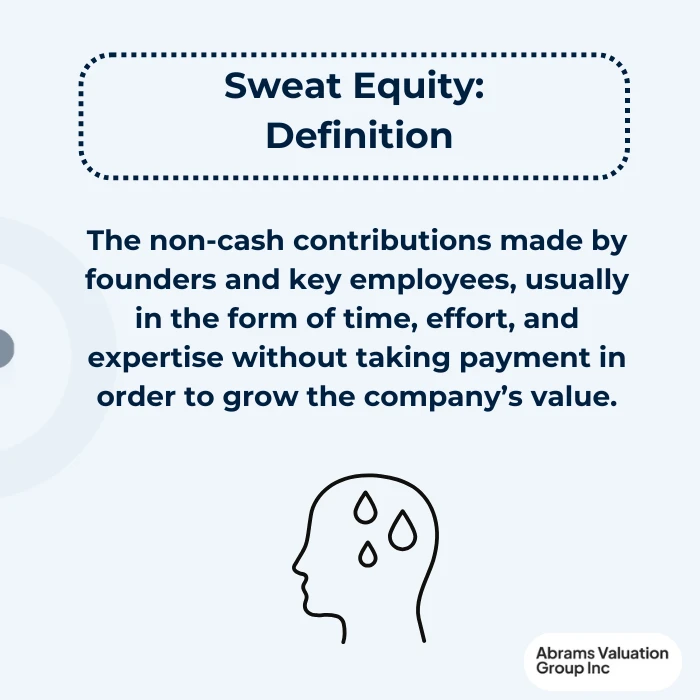
Definition: Sweat equity refers to the non-cash contributions made by founders and key employees—typically in the form of time, effort, and expertise—instead of or in addition to capital investment.
Why It Matters: In divorce, determining the value of sweat equity is tricky. Unlike cash investments, it’s not easily quantified, yet it can represent a significant portion of a startup’s value, especially in the early stages. If one spouse has been the primary driver behind the business, their sweat equity may be viewed differently from a passive shareholder’s interest.
Impact on Divorce: Courts may struggle to assign value to sweat equity, leading to disputes. If not properly accounted for, a non-founder spouse might receive a disproportionate share of the startup’s value, or the founder-spouse might be unfairly penalized for their efforts.
2. Founder Roles and Contributions
Definition: The specific roles founders play—CEO, CTO, lead developer, etc.—and their individual contributions to the business’s success.
Why It Matters: The value of a founder’s role can be highly variable and difficult to separate from the business itself. In divorce cases, it’s essential to distinguish between the company’s intrinsic value and the value attributable to the ongoing efforts of a specific spouse. That gets even harder if the founder-spouse has a co-founder or other key partner, since personal contribution and company value can overlap.
Impact on Divorce: If the founder-spouse’s continued involvement is critical to the company’s success, the value of the business as a marital asset may be lower if that spouse is leaving.
3. Unvested Shares and Equity Compensation
Definition: Unvested shares are equity grants that have not yet fully vested according to a predetermined schedule, often used to incentivize founders or employees.
Why It Matters: Unvested shares are a common feature in startups, and their treatment in divorce can be contentious. Are they marital property? If so, at what value?
Impact on Divorce: The timing and vesting schedule of shares can significantly affect the division of assets. Courts must decide whether to include unvested shares in the marital estate and how to value them, taking into account future performance and risk.
4. Intellectual Property (IP)
Definition: Patents, trademarks, copyrights, trade secrets, and proprietary technology or processes owned by the startup.
Why It Matters: IP can constitute a large part of a startup’s value, but its valuation is inherently speculative and may depend on future market success; its value may also shift with market conditions.
Impact on Divorce: Disputes often arise over the valuation methods used for IP and whether it should be considered separate or marital property.
5. Dilution and Future Funding Rounds
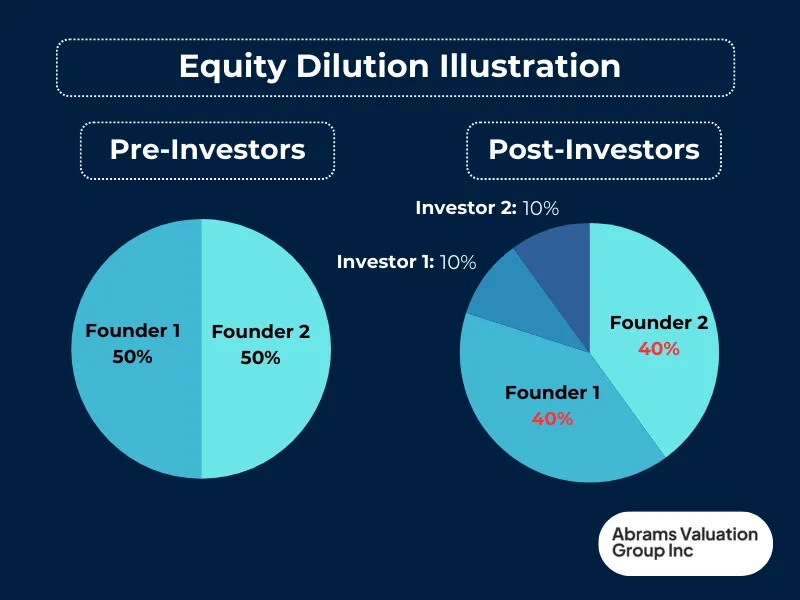
Definition: The reduction in ownership percentage as a result of new investment rounds.
Why It Matters: Startups frequently raise capital, diluting existing shareholders’ ownership stakes. The current value of a spouse’s interest could be significantly reduced by future funding rounds. Those rounds can also change the growth assumptions used in the valuation.
Impact on Divorce: Settlements based on current ownership percentages may not reflect the true long-term value to each spouse, especially if major dilution is likely.
6. Marketability and Liquidity Discounts
Definition: Adjustments to value to reflect the difficulty of selling a minority interest in a private startup.
Why It Matters: Startup shares are notoriously illiquid, and it may be years before an exit event (e.g., acquisition or IPO) occurs.
Impact on Divorce: Courts and experts must consider appropriate discounts for lack of marketability and control, which can significantly affect the value assigned to the startup in the marital estate. They often focus on fair market value and practical sale constraints when applying these discounts.

7. Commingling and Separate vs. Marital Property
Definition: The mixing of separate (premarital or inherited) assets with marital assets.
Why It Matters: If startup shares were acquired before marriage or through inheritance, but were later commingled (e.g., through joint funding or labor), their status as marital property can become blurred.
Impact on Divorce: Determining what portion of the startup is subject to division can be hotly contested and requires careful tracing of ownership and contributions. Disputes often intensify when family money, joint efforts, or children-related financial planning are intertwined with the business interest.
Divorce Process Startup Solutions and Best Practices
Divorce startup valuation presents special challenges, but a thoughtful approach can mitigate conflict and preserve value for all parties. A divorce startup is designed to simplify the divorce process, and most providers focus on uncontested or lightly contested cases. Here are key recommendations:
1. Engage Qualified Valuation Experts Early
Work with professionals experienced in startup valuation and familiar with divorce law, since, depending on the case, parties may hire an attorney or lawyer for full representation or use tiered models that provide customized services and expert guidance on demand. They can interpret complex cap tables, equity structures, and founder agreements to arrive at supportable values. That kind of support helps clients navigate complex ownership and valuation questions.
2. Use Multiple Valuation Methods
Employ a combination of income, market, and asset-based approaches, adjusting for the realities of early-stage businesses. Discounted Cash Flow (DCF), option pricing, and market multiples may all play a role. Unlike traditional valuation methods alone, legal-tech divorce platforms increasingly rely on AI Divorce Navigator-style tools and proprietary AI engines to analyze disagreements, prepare materials, and support mediation.
3. Carefully Review Vesting Schedules and Equity Agreements
Analyze all stock option and equity grant documents to determine what is truly marital property and how value should be apportioned. Many online tools prepare documents through guided questionnaires and automated questionnaires that populate court forms, and many platforms also provide guided DIY document preparation through digital interfaces. Some platforms, including hello divorce, also verify court acceptance of filings before submission.
4. Consider Buy-Outs or Structured Settlements
If illiquidity is a concern, consider creative solutions such as buyouts over time, contingent awards based on future liquidity events, or holding assets in trust until a sale or IPO, and when parties need help reaching terms, virtual mediation can reduce the risk of drawn-out court battles without the emotional trauma of physical confrontations. When kids are involved, some platforms also support co-parenting through centralized parenting communication to reduce conflict.
5. Document All Contributions and Sources of Funds
Maintain clear records of who contributed what—both capital and labor—to the startup, to help clarify marital vs. separate interests. In the broader world of divorce startups, some services let a person choose help at any point and combine legal support with emotional support through specialists.
6. Account for Dilution and Risk
Factor in likely dilution from future funding rounds, which also matters when structuring deals because future ownership changes can divide value differently than current percentages suggest, and apply realistic discounts for lack of marketability and control.
7. Seek Legal and Tax Guidance
Startup equity can have complex tax implications in divorce, so parties should speak with legal and tax counsel early, especially when startup assets may trigger complex family law and litigation issues. Work with legal and tax advisors to ensure compliance and optimize outcomes.
Conclusion
Valuing divorce startups is a nuanced process, filled with unique challenges and high stakes. By understanding the special considerations and common pitfalls—and by working with experienced valuation experts—business owners, attorneys, and financial planners can achieve fairer, more predictable outcomes in even the most complex marital dissolutions.


