
Understanding SAFEs and Convertible Notes
SAFEs and convertible notes are both types of convertible security funding instruments that early-stage startup companies use to attract investors. These notes offer more flexibility and an expedited funding process for startup owners and investors than traditional financing options, like bank loans. However, convertible securities come with their own set of risks and challenges. AVGI delves into the SAFE vs convertible note debate to examine the pros and cons of each and other funding alternatives. AVGI sheds 30+ years of valuation insight on this topic to help startup founders and investors understand their financing options, the risks involved, and the information to make well-informed decisions.
What is a Convertible Note?
A convertible note is a debt instrument that venture capital firms or other early investors will use to invest in an early-stage startup company. These notes are both a form of debt and equity, so they have a maturity date and accrue interest. The note can be converted into company equity at a later date, based on the terms laid out in the note. Read AVGI’s in-depth article on “What is a Convertible Note” for more detailed insights.
What is a SAFE Note?
A SAFE (Simple Agreement for Future Equity) note is a type of convertible security that grants investors the right to purchase equity in a company at a later date. This standardized agreement was developed by YCombinator, a startup acceleration company, to help early-stage companies raise capital faster and more flexibly than traditional funding methods. Unlike traditional convertible notes, they are not debt instruments, so they do not accrue interest or have a specific maturity date.
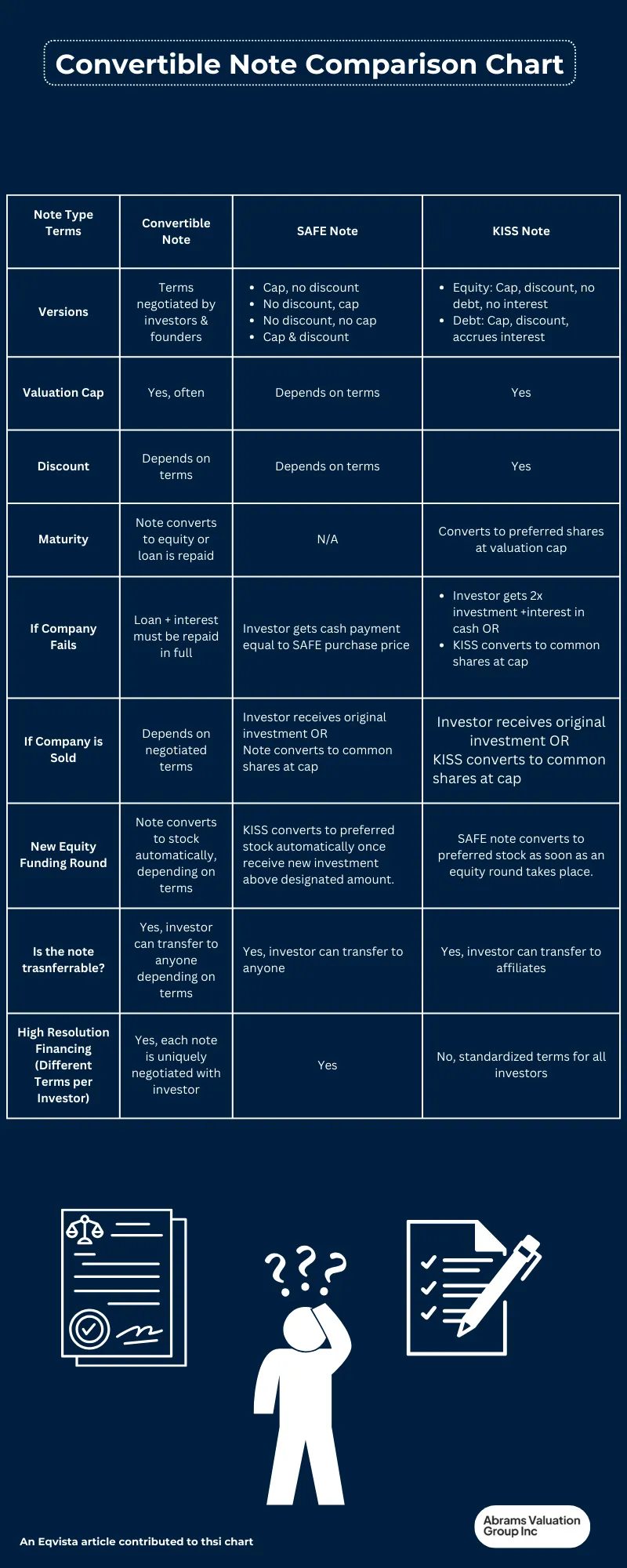
Key Differences: SAFE vs Convertible Note
Valuation Cap
Convertible notes usually include a valuation cap, which sets a maximum valuation at which the note can convert into equity. SAFE notes may also include a valuation cap, but not always. A valuation cap generally favors investors since they can receive more company equity at a lower price per share- even if the company receives a much higher valuation. Not all SAFE notes contain a valuation cap as part of the terms, which can benefit the startup founders.
Investor Protection
Convertible notes provide more investor protection than SAFEs as they accrue interest and have a specific maturity date, like a traditional loan. The note either converts to equity by the maturity date or the loan must be repaid. This enables the investor to recoup their investment money even if the company is not as profitable as anticipated. These protections give investors peace of mind when investing in a startup company.
Flexibility and Uncertainty
SAFE notes offer more flexibility to startups with no maturity date or interest accrual. They do not work like a loan; they simply guarantee the investor the option of converting the note into company equity at a future time. SAFE notes can be more uncertain for investors as they do not have a clear exit strategy. On the other hand, they speed up the funding process for investors willing to take the risk, which can be very profitable for the investor. Convertible notes provide more certainty for investors as they have a clear repayment schedule and accrue interest.
How They Work
Convertible Notes
Convertible notes are issued by a startup to an investor in exchange for capital. The note accrues interest and has a maturity date, at which point it can be converted into equity or repaid as a loan. The equity conversion occurs at the valuation cap or conversion discount, as specified in the note’s terms. Conversion generally happens by a subsequent funding round or the startup company reaching certain milestones.
SAFE Notes
SAFE notes are issued by a startup to an investor in exchange for capital. The note does not accrue interest and does not have a maturity date, but it grants the noteholder the right to exchange the note for company equity at a later time, usually before the next funding round.
Choosing the Right Financing Option
When to Use a SAFE Note
As with any important financial decision, AVGI encourages startup founders to seek professional advice from a lawyer, tax professional, or valuation consultant. That being said, as a rule of thumb, SAFE notes are suitable for early-stage companies that must quickly raise a small amount of capital. They are the ideal choice for companies that don’t want to issue equity immediately or accrue debt. SAFE notes are often used by startups that are still early in the development stage.
When to Use a Convertible Note
Convertible notes are generally more suitable for startups looking to raise a larger amount of capital and are great for companies that want to delay getting a company valuation. Convertible notes are often used by startups looking for a bridge round to tide them over before pursuing a future priced round. Covertible notes may also be a powerful attraction to investors in the very early stages of a startup if the company is looking for significant investment sums. The greater investor protections are a big attraction, but startup founders have to use convertible notes wisely to avoid extreme equity dilution.
KISS Notes: An Alternative Financing Option
KISS notes (Keep it Simple Security) are another alternative to traditional convertible notes, developed by 500 Startups. This document is available for free and can be downloaded from the internet. The standardized language and clear terms set forth aim to simplify, expedite, and reduce costs of the startup funding process.
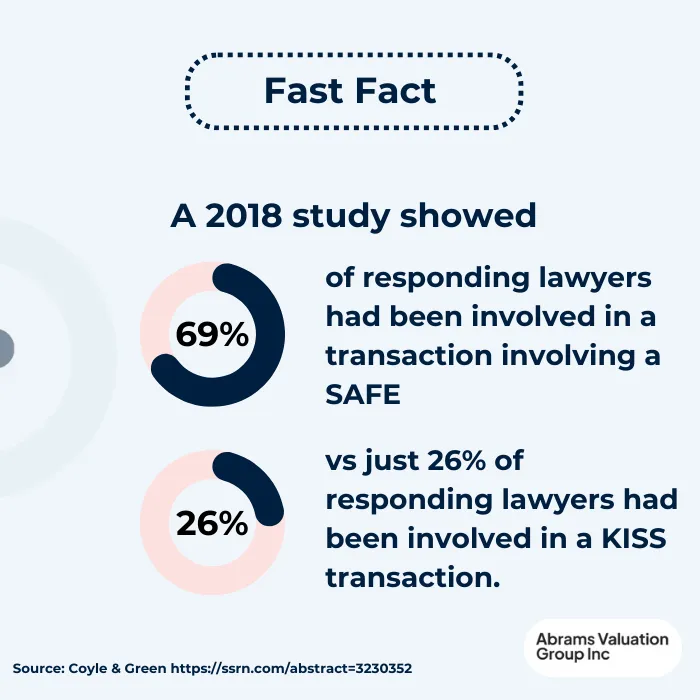
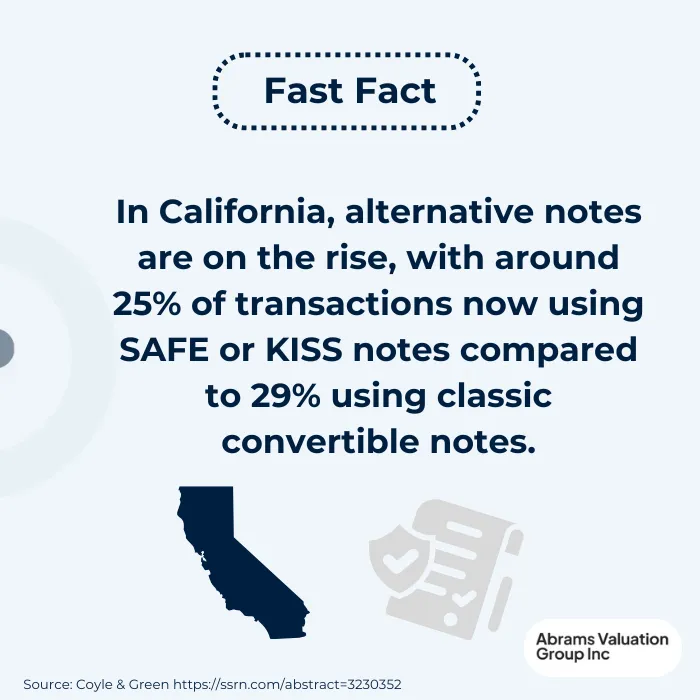
Although relatively new to the startup scene, KISS notes are gaining popularity. A 2018 research paper already documented rising use of KISS notes compared to tradtitional convertible notes.
Tax Implications
Tax Treatment of SAFE, KISS, and Convertible Notes
SAFE and KISS notes do not accrue interest are not considered debt instruments. On the other hand, convertible notes are considered debt instruments and accrue interest, which is tax-deductible for the startup company.
The tax implications of SAFE and convertible notes can vary depending on the jurisdiction and the specific terms of the note, so it is highly advisable to speak to a tax professional who is well-versed in startups.
Impact on Valuation
How Convertible Notes Affect Valuation
Convertible notes can affect the valuation of a company as they can dilute the ownership of existing shareholders once the notes convert into shares. The valuation cap in a convertible note can also impact the valuation of the company, as it sets a limit at which the company’s value will be diluted.
The different types of notes available can delay the effects of equity dilution by delaying the need for company valuation. However, equity dilution remains the number one valuation concern when issuing convertible equity instruments to investors. The terms and conditions of these notes should be discussed in detail with a valuation professional before issuing them to investors.
Investor Perspective
Returns and Risks
Convertible note investors typically expect a higher return on investment due to the accrual of interest. SAFE note investors typically expect a lower return on investment as they do not accrue interest, although the terms can be negotiated to the investor’s advantage with more flexibility than KISS notes. The risk profile of convertible and SAFE notes can vary depending on the specific terms of the note and the company’s financial situation. With the right structuring, a SAFE note can provide excellent ROI for the investor.
Legal and Administrative Complexity
Regulatory Compliance
Both SAFE and convertible notes must comply with relevant securities laws and regulations, which often vary by jurisdiction. It is essential to comply with all relevant regulations and consult a legal professional knowledgable in advising startups to ensure full compliance and avoid penalties.
In Conclusion: Choosing the Right Financing Option for Your Startup
Ultimately, the choice between a SAFE note, a convertible note, or other type of note depends on the specific needs and goals of your startup and investors. It is essential to consider the pros and cons of each equity financing option and consult with a lawyer to ensure compliance with all relevant regulations. Furthermore, consulting with valuation experts can help your startup make an informed decision when choosing the right type of convertible note for funding. Give us a call today to leverage AVGI’s 30+ years of valuation experience for your startup. By choosing the right financing option, you can raise the capital you need to grow your business while minimizing the risks for your company and investors and maximizing the returns.


