

The Ultimate Guide to Selling a Business
Looking to sell your business and want to make the right moves for a profitable exit? This definitive guide on selling a business cuts through the uncertainty, offering clear, actionable steps to prepare your business for sale, find the right buyers, and negotiate terms that benefit your bottom line. Step confidently into the sales process with AVGI’s expert advice ahead.
Key Takeaways
- Preparing to sell a business requires careful planning, including understanding its value, timing the market correctly, and creating a comprehensive exit strategy tailored to the owner’s and business’s unique circumstances.
- Obtaining a professional business valuation is critical, factoring in financial performance, brand equity, and tangible and intangible assets to set a credible asking price, while necessary documentation and legal compliance are paramount for a smooth sale process.
- Effective marketing and negotiation strategies are essential for attracting qualified buyers and closing the deal with favorable terms, supported by the guidance of M&A experts, and are complemented by strategic financial planning to minimize tax impacts and manage post-sale wealth.
Laying the Groundwork for a Successful Business Sale
Selling a business is more than a financial decision. It’s a life-changing event that can be driven by various factors, such as retirement or a shift in interests. Therefore, it’s not a decision to be taken lightly. Careful planning, thorough evaluation, and strategic timing are key to a successful business sale.
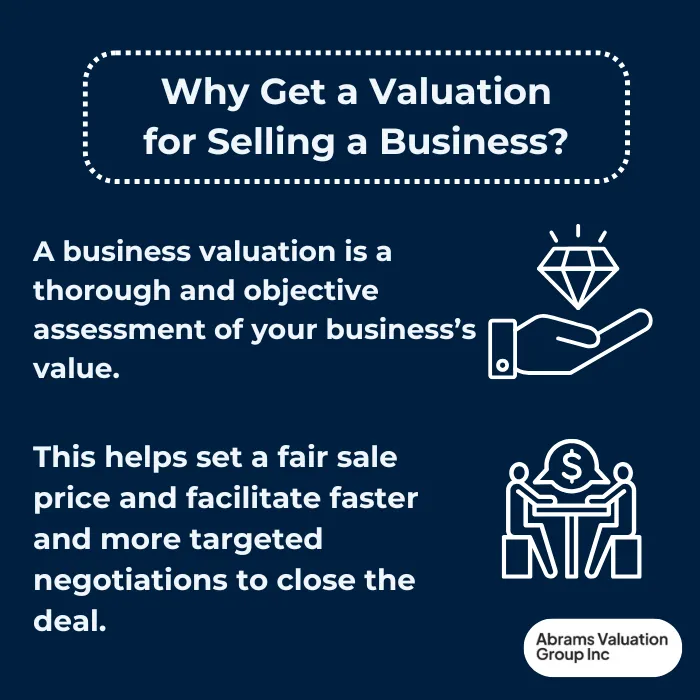
One of the critical steps in selling a business is getting a business valuation. This step provides a clear benchmark of what you can expect to profit and establishes a fair sale price for potential buyers. Another key step is understanding your business’s strengths and weaknesses, your ideal buyer profile, potential costs and benefits, and the availability of buyers.
A major factor that can significantly impact the outcome of a business sale is timing. Aligning your sale with favorable market conditions and the peak performance of your business can lead to optimal sales outcomes. Consulting with an accountant early on can provide a clear picture of your business’s financial shape and attractiveness, helping you decide when it’s the best time to sell.
Crafting Your Exit Strategy
An exit strategy is not just an endgame; it’s an integral part of your overall business plan. There are several exit strategies to consider in selling your business: mergers and acquisitions, selling to a partner or employee, and selling to an ESOP or a third-party buyer. Each has advantages and challenges, so the choice largely depends on your business goals and circumstances.
If you’re running a family-owned business, transferring ownership to the next generation is another option, though it comes with its own set of complexities.
Importance of Timing in the Sales Process
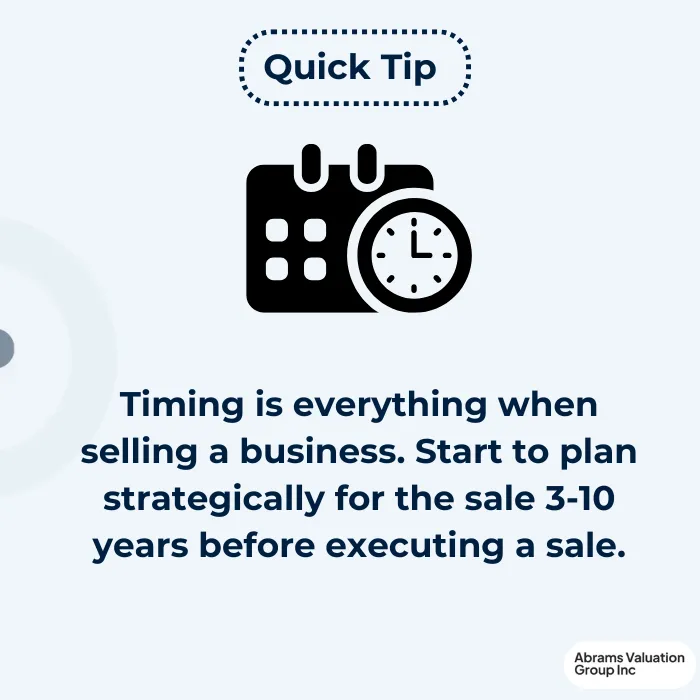
A well-timed exit can significantly affect the success of a business sale. Several factors determine the best time to sell your business. These include market conditions such as interest rates, the overall economic climate, and private equity interest in your industry. Your personal situation, including upcoming life events like an impending retirement, also plays a crucial role.
Bear in mind that the sales process for a business can span anywhere from four to ten months and potentially stretch into a couple of years. As such, initiating the preliminary stages of your exit strategy well in advance is advisable. Ideally, this should be done a minimum of 3 years and a maximum of 10 years before your desired exit date to ensure optimal outcomes.
Getting a Business Valuation in Preparation for Sale
Now that we’ve discussed the groundwork and timing of a business sale let’s turn our attention to business valuation. Knowing the true worth of your business is crucial before you put it up for sale. The valuation is not just about the numbers on your balance sheet; it includes various factors such as financial performance, brand equity, goodwill, and tangible and intangible assets.
An accurate business valuation is fundamental to establishing a credible asking price that attracts buyers. It’s best to seek advice from experienced business appraisers to ensure all interrelated factors affecting your business’s value are accounted for. A professional valuation firm can provide you with a comprehensive valuation, identifying and accounting for all value drivers and helping you set the most accurate and fair sell price for your business. Alternatively, you can use a business valuation calculator as a starting point to estimate your business’s worth.
Role of Professional Valuation Firms
Professional valuation firms play a pivotal role in providing accurate valuations crucial for business transactions. They consider both tangible and intangible assets, market position and competition, as well as many other factors, providing a comprehensive picture of your business’s worth.
Firms like Abrams Valuation Group, Inc. (AVGI) specialize in calculating a precise value for small businesses during the transaction process, offering their expertise to help you navigate this complex phase of the sales process.
Essential Documentation for a Smooth Transaction
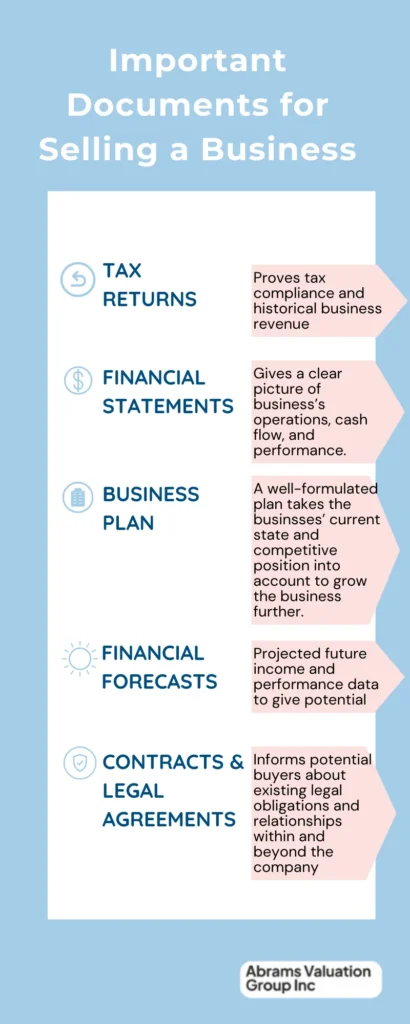
Having the right paperwork is just as vital in a business sale as setting the right price. Essential documents for a business sale include:
- Financial statements
- Tax returns
- A well-crafted business plan (the small business administration has excellent resources for drawing up a business plan if you haven’t yet.)
- Financial forecasts
- Contracts and legal agreements
Confidentiality is paramount during the selling process, as potential buyers may get to know the inner workings of your business intimately. Non-Disclosure Agreements (NDAs) ensure potential buyers maintain confidentiality throughout.
Organizing and sharing these documents efficiently is crucial for a smooth transaction. Data-sharing software can facilitate this process by allowing vetted professionals to request and synchronize files in a secure environment.
Organizing Financial Records
A critical step in preparing for a business sale is to have comprehensive financial records. Prospective buyers want to see detailed financial statements, tax returns, and other vital financial documents. Keeping your financial information up-to-date increases investor confidence and ensures that your company’s financials and records are in order, facilitating a smoother preparation process for the sale.
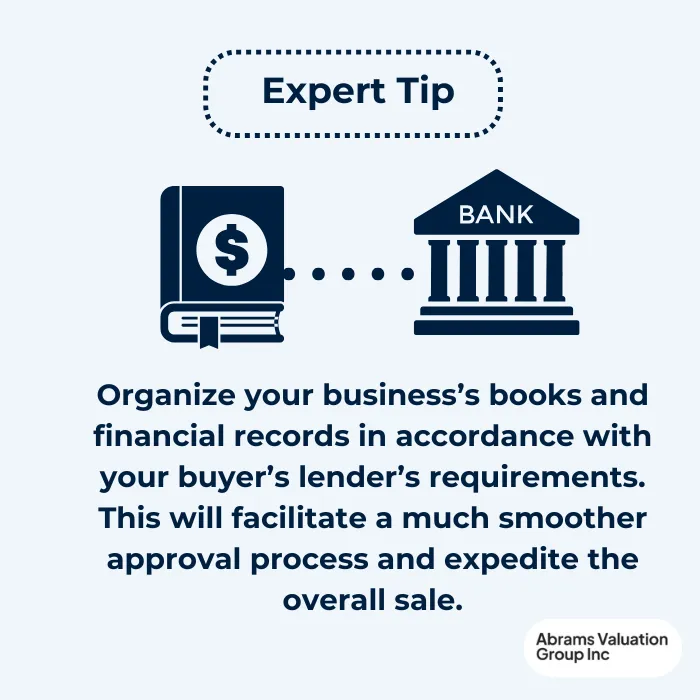
It’s also worth noting that conforming your business’s books and records to meet a buyer’s lender’s requirements can facilitate faster financing approval and a smoother business selling process. Therefore, it’s crucial to start organizing your financial records early and thoroughly to arrive at the sale prepared rather than flustered.
Legal Documents and Contracts
In addition to financial records, you’ll need to prepare a comprehensive set of legal documents. These include:
- Business licenses
- Contracts with suppliers and customers
- Leases
- Licenses
- Employment contracts
- These should be prepared and compliant with legal standards to present to potential buyers.
The legal structure of your business influences the type of purchase agreement, either stock or asset, which is fundamental to the sale. Lawyers play an essential role in ensuring the completeness and accuracy of these documents, tailoring them to the specifics of the business sale, and navigating any complexities to safeguard your interests, including the creation of a sales contract.
Partnering with M&A Experts

Selling a business is not a solo venture. Having the right team on your side can make a world of difference in securing the best deal. Partnering with Mergers and Acquisitions (M&A) advisors can help you navigate the complexities of the process and highlight your business’s value. These professionals bring a wealth of knowledge and expertise to the table, guiding you through each step of the selling process.
Assembling a team of experts is an important step; your team may include
- a business transaction lawyer
- your accountant
- a business valuation expert
- a business broker or M&A advisor
- a real estate appraiser (if applicable)
An expert and professional team ensures that all aspects of the sale are managed professionally and efficiently.
Selecting the Right Advisor
Selecting the right advisor is a critical step. An advisor like a business broker or an M&A specialist can be highly beneficial, especially when you do not have a buyer already lined up. It’s important to do your research and look for the following qualities.
- Proven track record of successfully closing deals
- Happy past clients
- Highly available and easy to contact, which is crucial as things constantly arise throughout the sales process
- Flexible team player who works well with the other members of your team
- Access to a wide network of business contacts. This can be very helpful in finding relevant potential buyers for the business.
- Industry experience is a plus, not a must.
The Advisory Process
The advisory process involves integrating the preparation for the sale into your business’s strategic planning process. This could begin up to 3 years in advance to streamline the transaction and ensure you achieve the best possible outcome.
Marketing Your Business to Attract Qualified Buyers
Once you’ve laid the groundwork, it’s time to present your business to the world. But how do you attract the right buyers? Effective marketing strategies and confidentiality measures like nondisclosure agreements can help you reach out to potential buyers without compromising sensitive business information.
Understanding your industry and setting a realistic sale price is crucial. To do this, thorough market research is necessary to understand industry trends and inform your negotiation strategies. Whether you choose to market your business on your own or use a reputable online platform, creating a compelling listing is key to attracting potential buyers.
Identifying the Ideal Buyer Profile

Before you start reaching out to potential buyers, it’s important to have a clear idea of what your ideal buyer looks like. Creating a target buyer/investor list is beneficial for optimizing the number of qualified bids and identifying those with the necessary industry experience.
Business brokers and M&A advisory firms play a vital role in screening potential buyers. They ensure their seriousness and financial capability, thereby facilitating connections with the right prospects. Also, consider various avenues for finding the right buyer, such as selling to a competitor, bringing in an overseas investor, or transferring ownership to an employee within the company.
Effective Sales Collateral
Effective sales collateral is more than just a fancy brochure. It’s about presenting a value proposition that clearly communicates to prospective buyers why they should consider buying your business. A Confidential Information Memorandum (CIM) is a comprehensive report that covers various aspects of your business, providing crucial details that potential buyers would want to know.
Incorporating forward-looking projections and key performance indicators (KPIs) in your financial records assures potential buyers of your business’s growth potential and underlying value. This approach not only attracts more buyers but also helps you stand out from the crowd in a highly competitive market.
Navigating Negotiations and Closing the Deal
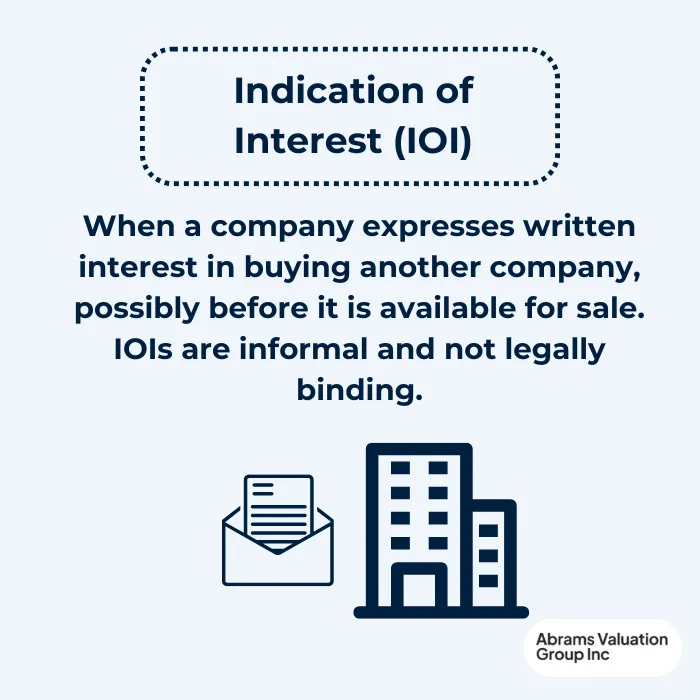
You’ve laid the groundwork, valued your business, assembled your documents, found potential buyers, and now it’s time to navigate the negotiations and close the deal. This is where your preparation starts to pay off. Initial contact with potential buyers often involves an Indication of Interest (IOI), which includes details like:
- the proposed purchase price
- deal structure
- transition requirements
- estimated time to close the transaction
Negotiating with buyers is pivotal for securing the best possible price and fair terms for the business sale. Clear objectives, a well-prepared mindset, and the ability to compromise when necessary can make this process smoother and more productive.
The Art of Negotiation
The art of negotiation is all about strategy and understanding. Leveraging key negotiation anchors like a loyal customer base or strong market position can sway sales negotiations in your favor. Anticipating and addressing potential buyer concerns before negotiations can help you tailor your strategies and avoid deal impediments.
M&A advisors can guide you on strategic negotiation, informed by market interest and buyer investment potential, to help you achieve a better sale price.
Legalities and Transfer Ownership
Once you’ve negotiated the terms, it’s time to handle the legalities and transfer ownership. A purchase agreement is crucial as it outlines all terms of the transaction and the responsibilities of each party, preventing uncertainties and disputes in the transfer of ownership.
Before finalizing the sale, it’s essential to address the buyer’s financing, verify the accuracy of financial statements, make employment agreements, and ensure the transfer of business licenses is authorized.
Tax Implications and Financial Considerations

Selling a business has significant tax implications and financial considerations. Generally, the implications depend on your entity’s legal structure and the type of sale, such as an asset or stock sale. Effective planning and consulting with a tax expert well in advance of the sale are crucial to minimizing the tax impact on sale proceeds.
Different sale considerations and tax consequences, including capital gains tax, state income tax rates, and the double taxation of C Corporations, can impact the net proceeds from the sale. Therefore, understanding these considerations can help you plan better and ensure you maximize your profits from the sale.
Understanding Capital Gains and Liabilities
Capital gains tax from a business sale is one of the leading tax considerations when selling a business. A business sale generally triggers a long-term capital gain, subject to federal capital gains taxes. The type of sale, whether asset or stock, can also have different tax implications. For instance, asset sales can benefit buyers due to tax deductions, while stock sales may avoid double taxation for C Corporation sellers.
Strategic planning can help manage potential tax considerations post-sale. Whether it’s by relocating or revising estate plans, you can minimize your tax impact and maximize your sale proceeds. An expert business valuation can also accurately calculate your tax obligation on the outcome of selling your business and help ensure that you are not overpaying taxes on the profits.

Post-Sale Wealth Management
Once you’ve sold your business, what do you do with the money? Having a solid plan for the proceeds from selling the business is crucial to avoid overspending and subsequent financial difficulty. Investing in a diversified portfolio is essential for retirement and estate planning as the money can grow long-term to mitigate risks and maximize returns.
Setting up a retirement account can also be a smart move. It allows for the tax-free growth of money, benefiting your financial security in retirement. Therefore, post-sale wealth management is an area you should definitely discuss with your financial advisor or tax professional.
Selling your business: In Conclusion
Selling a business is a significant decision that requires careful planning and strategic execution. From crafting a well-thought-out exit strategy to identifying potential buyers and navigating negotiations, each step is critical to the successful sale of a business. Partnering with M&A experts, getting a proper business valuation, and preparing essential documentation can all streamline the process and help you secure the best deal.
This article has equipped you with the basic knowledge necessary to sell your business. Selling your business is no small task, but with the proper planning, professional support, and a clear understanding of your business model and the process, you can secure a deal that meets your expectations and opens up new possibilities for the future. So gear up, take a deep breath, and embark on this exciting journey with confidence and enthusiasm. Want some expert guidance at your side along the way? Our AVGI M&A advisors are waiting for your call.

Frequently Asked Questions
What is the importance of having an exit strategy when selling a business?
Having an exit strategy when selling a business is crucial as it outlines how you plan to exit, whether through mergers and acquisitions, selling to a partner or employees, or an outright sale. It’s a crucial part of your overall business plan.
Why do I need a business valuation before selling my business?
You need a business valuation before selling your business to set a fair sale price and understand your profit expectations based on factors like financial performance, brand equity, and assets.
How can I attract the right buyers for my business?
To attract the right buyers for your business, focus on using effective marketing strategies and create a compelling business listing. Identifying your ideal buyer profile will guide your efforts toward reaching the right audience for your business.
How can M&A experts assist in selling my business?
M&A experts can assist in selling your business by navigating the complexities of the sale process, highlighting the value of your business, and securing the best deal through their knowledge and expertise. They will guide you through each step of the selling process.
What are the tax implications and financial considerations when selling a business?
Capital gains tax on a business sale is the leading tax consideration when contemplating selling your business. It’s crucial to consider the tax implications based on the entity’s legal structure and the type of sale, as this can impact the net proceeds. Consulting with tax and business valuation experts to structure an effective tax plan for your situation can help minimize the tax impact on the sale proceeds.

