

Achieve Stress-Free Compliance with Expert Tax Audit Representation
The term “tax audit” strikes a chord of fear in any taxpayer’s heart, especially if you are a business owner. However, the worst thing to do upon receiving notice of an audit is panic. AVGI breaks down the tax audit process for business owners, offering insights from experience and demonstrating how expert tax audit representation can help business owners pass audits with minimal stress.
Understanding Tax Audits
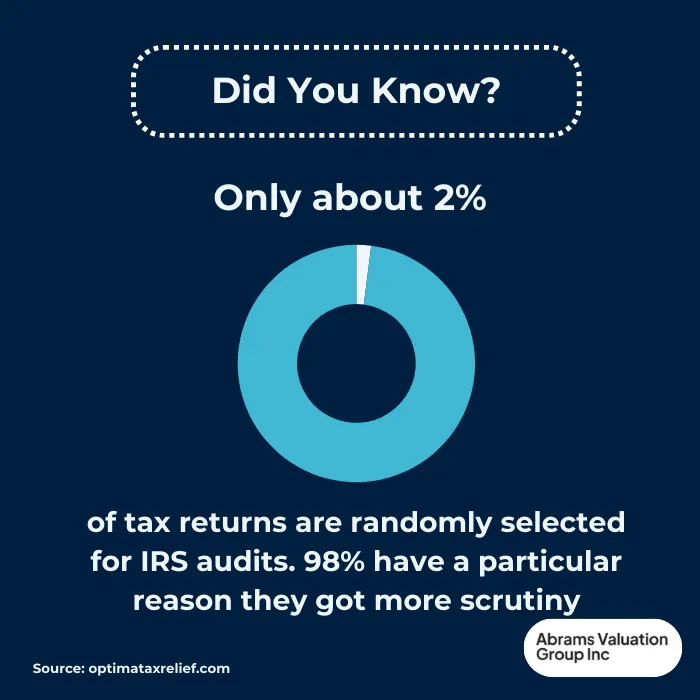
A tax audit is when the Internal Revenue Service (IRS) closely examines an individual’s or business’s tax returnto verify that income, expenses, and tax credits are accurately reported. Although some tax returns are selected for scrutiny at random, generally, most audits are triggered by unusual reporting or what the IRS deems as suspicious activity such as reporting taxable income that seems too low, or claiming an unusually high volume of tax credits. While an audit does not mean you are automatically in the wrong, it does mean that you will need to provide evidence to support the claims you filed on your tax return.
It is important to know that filing an amended return doesn’t affect the selection process of the original return, so if there was a mistake on your original return, you may still be audited.
Preparing for a Tax Audit
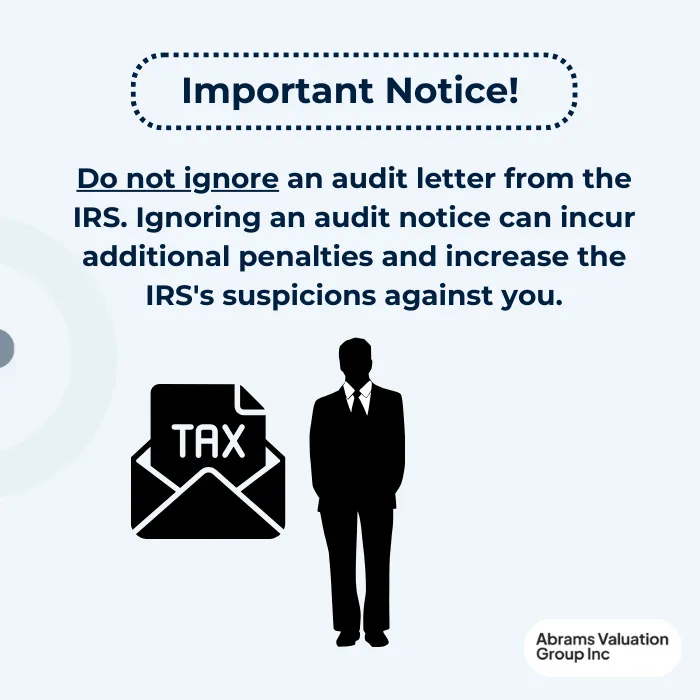
Upon receiving an audit notice, the first step in preparing for a tax audit is to review the notice carefully. The IRS will include all the instructions and contact information you will need in it to begin the audit process. Do not ignore the audit notice, it will not serve you well. Ignoring an audit notice can incur additional penalties as well as increase the IRS’s suspicions against you, thereby intensifying the audit. Instead, be sure to respond to the audit notice promptly to avoid further consequences.
Understand the particular issues that brought your tax return to the IRS’s attention and ultimately prompted them to perform an audit. Identifying the specific issue the IRS is concerned about will help direct your evidence-gathering and preparation for your audit defense. Rather than handing the auditor a filing cabinet filled with random documents and receipts, you will be able to present clear, directed evidence to ally the IRS’s specific concerns.
Organization is essential in preparing for an audit. Clearly labeled, organized, and presented evidence is much easier for you to locate and for the auditor to follow than disorganized paper forests. Organizing your financial records and documentation is crucial in an audit.
Honesty is always the best policy, especially in an audit when you and your business are coming under intense scrutiny. It’s essential to be fully transparent about your relevant financial information; purposely hiding or falsifying financial information or documents can lead to severe fines and consequences.
As with any tax matter, AVGI always strongly encourages business owners to consult with a qualified tax professional. This is especially true if you are being audited. Hiring a tax professional or authorized representative to represent you during the audit is a wise choice, as professionals bring their expertise and experience with them to each case. Tax audit representation may be an additional expense, but it can spell the difference between passing or failing an audit, with all the attached repercussions.
The Audit Process
The IRS conducts audits by mail or with an in-person interview. Often, the letter is simply requesting further documentation to support your tax return, such as missing receipts, 1099, or other tax forms. If you can easily locate the requested documentation, then you can just send it in to the IRS on your own, although it is wise to let your accountant know that the IRS contacted you for more information.
If the IRS requests an in-person interview, you’ll almost certainly be best off with hiring tax audit representation. The interview can take place at an IRS office (called an office audit) or the taxpayer’s home office or tax audit representative’s office (called a field audit). The auditor will likely ask a series of questions related to your tax return and ask to see documentation to substantiate your claims further. Tax professionals are experienced in preparing for and handling audits. IRS auditors generally prefer to work with professionals who already know how to prepare and present documentation in a way that is easy for the auditor to understand and expedites the entire process.
You’ll need to grant power of attorney to your tax audit defense to allow them to appear on your behalf for the IRS interview. However, this will give you the confidence that your audit is being handled efficiently, expertly, and professionally.
Audit Findings
Following the interview, the IRS auditor will determine whether or not you have met your tax obligation, calculate the remaining amount of tax you owe, plus additional penalties (if any), and send the results of the audit by mail. At this point, you have either passed the audit with no additional action needed or you will need to continue along the audit process. You can choose to either accept the auditor’s findings and pay the presented tax bill and fines or else appeal the audit decision, potentially escalating the case to tax court.
Audit Appeals Process
If you disagree with the audit findings, you can dispute the results and negotiate a settlement or compromise with the IRS through the appeal process. Hiring an excellent tax audit attorney to file your audit appeal is highly recommended, as professionals in this field are not only well versed in tax law, they are also experienced with tax negotiations and can often successfully work out a settlement to your benefit.
The IRS is usually willing to come to a settlement rather than allowing the case to escalate to tax court, which is a drain on time and resources for both parties involved. A skilled tax attorney will usually be able to appeal the audit decision in a clear and compelling manner and reach a favorable settlement for their client quickly.
Choosing a Tax Audit Representation Service Provider
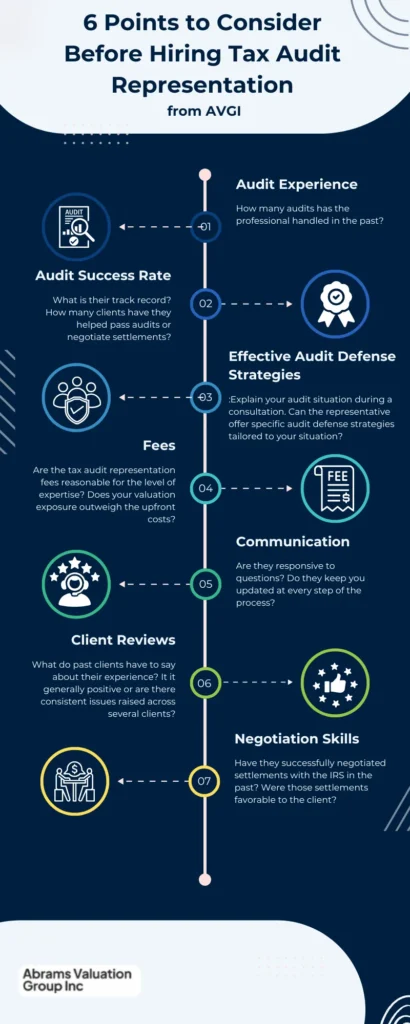
Choosing the right tax audit representation service is crucial to a successful outcome. Here are some key considerations to keep in mind before hiring a tax defense representative:
Audit experience: How many audits has the professional handled in the past?
Track Record: What is their audit success rate? How many clients have they helped pass audits or negotiate settlements?
Effective Audit Defense Strategies: Explain your audit situation during a consultation. Can the representative offer specific audit defense strategies tailored to your situation?
Fees: Are the tax audit representation fees reasonable for the level of expertise? Does your valuation exposure outweigh the upfront costs?
Communication: Are they responsive to questions? Do they keep you updated at every step of the process?
Client Reviews: What do past clients have to say about their experience? It it generally positive or are there consistent issues raised across several clients?
Valuation for Tax Audit Representation Defense Costs & Benefits
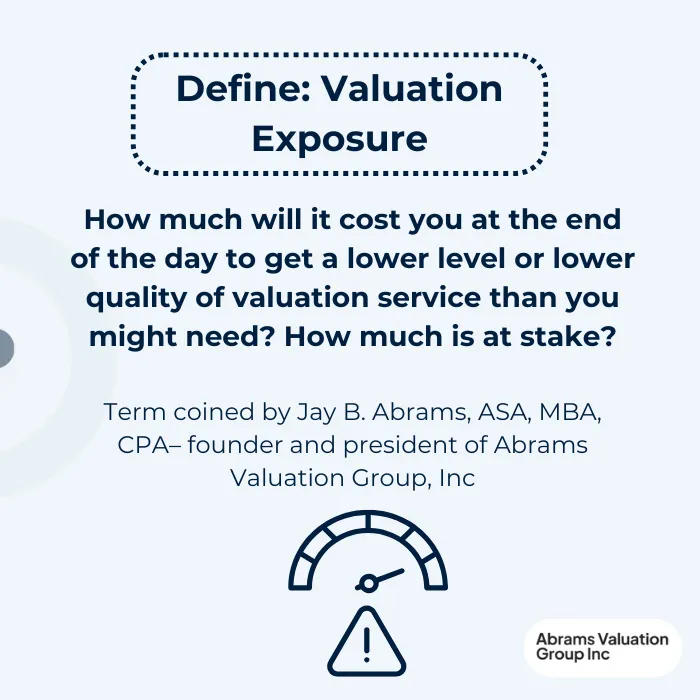
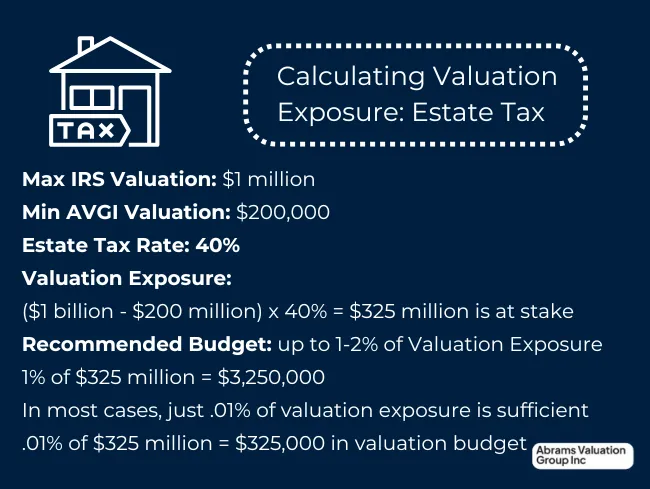
A business valuation for tax audit defense purposes is a wise move, particularly when there is high valuation exposure. Valuation exposure is a term coined by Jay B. Abrams, ASA, MBA, CPA, President & Founder of AVGI, and refers to the potential costs of not hiring the correct level of expert appraiser or level of valuation service. In a tax audit scenario, your valuation exposure is the maximum tax rate and highest valuation that the IRS auditor can potentially assign to your business, potentially driving up your tax bill by millions of dollars.
With such high exposure, AVGI recommends spending up to 1-2% of the valuation exposure on obtaining a proper valuation and tax audit representation. The fees for these professional services, often costing in the $5,000-$20,000 range, depending on the complexity of the case, are easily outweighed by the millions of dollars at stake in valuation exposure.
Bear in mind that the cost of tax audit representation depends on the complexity of your situation and the type of services you require. Most tax and valuation professionals charge hourly rates for audit work, which can add up, especially if the case drags out. However, hiring a qualified tax audit representation service can provide peace of mind, expert representation, and potentially reduced penalties. In litigation, as well as tax audit scenarios, AVGI valuation experts have seen firsthand how valuation expert witness testimony can be the deciding factor in a case and crucial to the judge’s or auditor’s final decision.
Effective Audit Defense Strategies
Depending on the audit scenario, a well-documented business valuation report can sometimes be the deciding factor in the taxpayer’s favor. A tax audit valuation report details the logic and empirical processes employed to reach a certain valuation, which may be at odds with the IRS auditor’s higher valuation. Meticulous attention to detail and methodical applications of valuation theory in practice produce highly effective audit defense strategies time and again for taxpayers in the audit process.
Automated tax technology and robust tax analysis tools can help in the data-gathering and data-sharing stages of the audit process, especially if the audit is exceedingly technical. You might also consider using pre-paid audit representation services to prepare for potential audits and reduce costs.
Working with a Tax Audit Representation Service Provider
A tax audit representation service provider is essential in managing all communications with the taxing authority on your behalf once you have granted them power of attorney. They offer expert assistance throughout the entire audit process, ensuring you have the support needed to effectively navigate complex audit notices and letters.
Additionally, these professionals assist in preparing the necessary documentation to substantiate your case and represent you during critical IRS meetings, allowing you to focus on other important aspects of your life while they handle the intricacies of the audit.
Depending on your audit situation, you may want to hire both a business valuation expert and a separate tax audit attorney as your representation. Both professionals can and often do work together to deliver accurate numbers and favorable outcomes for the taxpayer.
Conclusion
Tax audit representation is a crucial service for individuals and businesses facing an IRS audit, along with a comprehensive business valuation to support your tax audit defense and appeal. By understanding the audit process, properly preparing, and choosing the right representation service, you can ensure a stress-free compliance experience. Concerned about handling your tax audit? Reach out to AVGI’s tax audit valuation experts today.


