

Understanding Capital Asset & CAPM in Investment Strategy
What are Capital Assets?
Capital assets refer to property owned by individuals or businesses for personal or investment purposes, encompassing a wide range of items such as stocks, bonds, and real estate. Examples of capital assets also include personal-use property like household furnishings, which are considered capital assets for tax purposes. The tax code defines capital assets primarily by exclusion, meaning that most property you own is considered a capital asset except for specific items like inventory, stock in trade, accounts or notes receivable acquired in the ordinary course of business, and supplies regularly used in business.
Additionally, depreciable business property and real property used in business are generally excluded from being classified as capital assets, but may qualify for favorable long-term capital gain treatment if the property held is for more than one year. Certain creative works, such as copyrights, musical works, and art works created by individuals, are also excluded from capital asset treatment; gains from the sale of these items are generally taxed as ordinary income.
The classification of gains as capital or ordinary depends on the type of property acquired and the length of time the property held, with applicable tax rates determined by income thresholds for different taxable years and taxable years beginning after specific dates. Understanding what qualifies as a capital asset is essential for investors, as it forms the basis for wealth creation and management, influencing how gains or losses from the sale of these assets are taxed and integrated into investment strategies. Income thresholds also play a significant role in determining the taxation of capital gains and losses.
Capital Asset Pricing Model
The capital asset pricing model (CAPM) is a fundamental concept in financial economics that is used to determine the required rate of return of an asset by accounting for systematic risk, also known as market risk or non-diversifiable risk.
CAPM applies to individual assets and asset classes, which are categories of investments with similar risk and return characteristics. The model uses the expected returns of the overall market portfolio—a theoretical benchmark representing all investable assets—and a theoretical risk-free asset, assuming zero transaction costs and specific distributions of asset returns.
The CAPM formula is:
Expected Return = Risk-Free Rate + Beta × (Market Return – Risk-Free Rate).
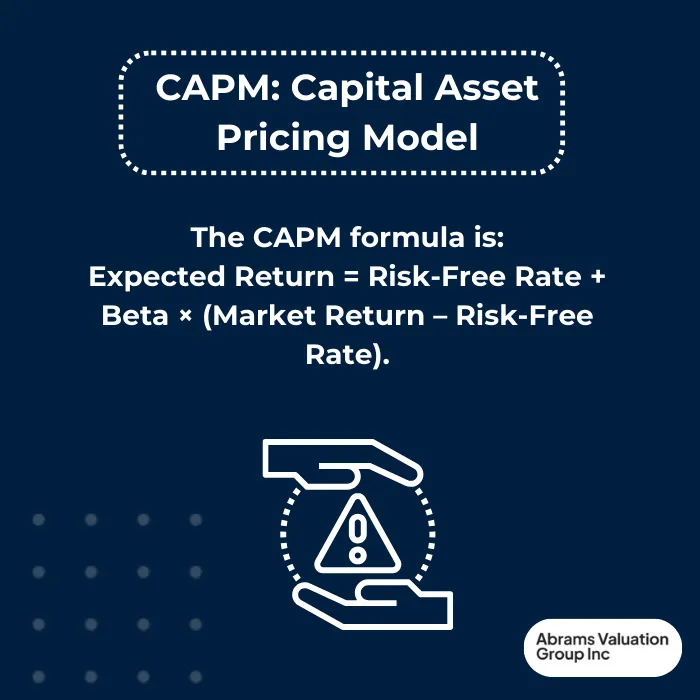
Here, the risk-free rate is typically based on a government bond interest rate, beta measures the asset’s sensitivity to market movements, and the market risk premium is calculated as market minus the risk-free rate. The expected return is equal to the risk-free rate plus the risk premium, as per the CAPM formula. The discount rate derived from CAPM is critical for asset valuation, as it reflects the required return given the asset’s risk. Estimating the future return of an asset is essential when applying CAPM, as it influences investment decisions and valuation.
Despite some empirical limitations and the existence of newer asset pricing models, CAPM remains a core tool in finance for asset valuation. The model demonstrates a linear relationship between expected return and beta, as illustrated by the security market line (SML), a graphical representation of this relationship. The cost of capital is determined solely by an asset’s beta, which measures its sensitivity to market risk. A higher beta indicates more risk and potentially higher expected returns, but beta does not capture all aspects of risk.
Changes in the interest rate, such as fluctuations in government bond yields, can impact the cost of capital and asset valuation. CAPM can be used by risk-averse investors to select portfolios that align with their risk preferences. By calculating the expected return of an asset based on its beta, the risk-free rate, and the market risk premium, CAPM helps investors understand the relationship between risk and return and make more informed investment decisions. Historical stock returns are often analyzed to test the validity of CAPM and its assumptions.
Understanding Risk and Return
Risk and return are closely linked in the context of capital assets, with higher returns often associated with higher risk. Systematic risk, or market risk, is a key consideration in investment decisions, as it cannot be diversified away. The market risk premium is a critical component of the CAPM, representing the additional return demanded by investors for taking on market risk. Understanding risk and return is essential for making informed investment decisions, as it allows investors to balance their risk tolerance with their return expectations. Investors can use the CAPM to evaluate the risk-return tradeoff of different assets, making more informed decisions about their investment portfolios.
Efficient Frontier
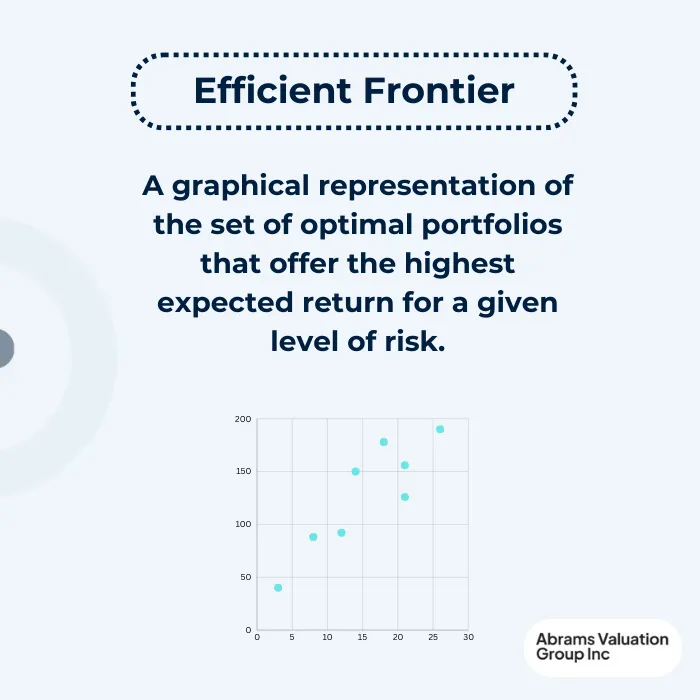
The efficient frontier is a concept in modern portfolio theory, representing the set of optimal portfolios that offer the highest expected return for a given level of risk. The efficient frontier is a graphical representation of the tradeoff between risk and return, helping investors visualize the optimal portfolio choices.
The CAPM is a key component of the efficient frontier, as it provides a framework for understanding the relationship between risk and return. Investors can use the efficient frontier to identify the optimal portfolio for their risk tolerance and return expectations, maximizing their returns while minimizing their risk. The efficient frontier is a powerful tool in finance, allowing investors to make more informed decisions about their investment portfolios.
Risk-Free Rate and Investment Decisions
The risk-free rate is a foundational element in the capital asset pricing model (CAPM) and plays a pivotal role in shaping investment decisions. Representing the return on an investment with zero risk—often exemplified by government securities like U.S. Treasury bills—the risk-free rate serves as a benchmark against which all other risky investments are measured. When determining the attractiveness of a capital asset, investors compare its expected returns to the risk-free rate to assess whether the additional risk is justified by the potential reward.
In practical terms, the risk-free rate is used to discount future cash flows, helping investors calculate the present value of an asset or investment opportunity. A higher risk-free rate increases the required return for risky investments, as investors expect to be compensated for taking on additional risk beyond what they could earn from a risk-free asset. This process is crucial in determining whether an investment adds value to a portfolio. For example, if the expected return on a stock does not exceed the risk-free rate plus a suitable risk premium, it may not be a worthwhile addition. By incorporating the risk-free rate into their analysis, investors can make more informed decisions about which assets to include in their investment strategies, ensuring that each investment aligns with their risk tolerance and return objectives.
Expected Return and Portfolio Optimization
Expected return is a central concept in portfolio optimization, guiding investors as they seek to balance risk and reward across their holdings. The capital asset pricing model (CAPM) provides a systematic approach to determining the expected return of an asset by factoring in its sensitivity to market movements, or systematic risk, as measured by beta. By understanding the expected returns of various assets, investors can strategically combine them to construct a portfolio that aligns with their financial goals and risk appetite.
Modern portfolio theory introduces the efficient frontier, a graphical representation of the optimal portfolios that offer the highest expected return for a given level of risk. Using CAPM, investors can identify assets that are either undervalued or overvalued relative to their risk and expected return, allowing for more precise portfolio adjustments. For instance, if a stock’s expected return, as calculated by CAPM, exceeds what is justified by its risk profile, it may be a strong candidate for inclusion in the portfolio. Conversely, assets with lower-than-expected returns for their risk can be removed or reduced. This disciplined approach to portfolio optimization helps investors achieve a diversified mix of assets, maximizing returns while managing overall risk.
CAPM Example
A CAPM example can help illustrate the application of the model in practice, using real-world data to calculate the required return of an asset.
For example, an investor can use the CAPM to calculate the required return of a stock, based on its beta, the risk-free rate, and the market risk premium. The CAPM example can help investors understand the relationship between risk and return, making more informed decisions about their investment portfolios. The CAPM example can also help investors evaluate the attractiveness of different investment opportunities, comparing the expected return of an asset to its required return. By using the CAPM example, investors can gain a deeper understanding of the model and its application in practice, making more informed investment decisions.
Long-Term Investment Approach
Adopting a long-term investment approach is a proven strategy for building wealth and achieving financial stability. The capital asset pricing model (CAPM) supports this perspective by providing a framework for evaluating the expected return and risk of assets over extended periods. Rather than reacting to short-term market fluctuations, long-term investors focus on the underlying value and growth potential of their investments, using CAPM to guide their decisions.
By considering the expected returns of assets such as stocks and bonds over a multi-year horizon, investors can better withstand market volatility and avoid making impulsive decisions based on temporary price changes. CAPM helps identify assets that offer attractive risk-adjusted returns for the long term, making it easier to construct a resilient portfolio. For example, an investor might use CAPM to assess the expected return of a diversified portfolio over a decade, ensuring that each asset contributes to the portfolio’s long-term growth objectives. This approach not only enhances the potential for higher returns but also reduces the impact of short-term market noise on investment outcomes.
Managing Capital Gains
Managing capital gains is a critical component of investment strategy, as it can help investors minimize their tax liability and maximize their returns. Capital gains are the profits earned from the sale of a capital asset, such as a stock or a piece of real estate. Investors can utilize tax-loss harvesting to manage their capital gains by selling losing positions to offset gains from winning positions. The tax code provides a framework for managing capital gains, with different tax rates applying to short-term and long-term gains. Investors can use the CAPM to evaluate the expected return of an asset, making more informed decisions about their investment portfolios and minimizing their tax liability.
Conclusion and Investment Strategy
In summary, the capital asset pricing model (CAPM) remains a useful tool for investors aiming to understand the relationship between risk and expected return on various assets. By factoring in the risk-free rate, systematic risk, and expected return, investors can make more informed decisions about which assets to include in their portfolios. Embracing a long-term investment approach, supported by the insights provided by CAPM, allows investors to navigate market fluctuations and pursue their financial goals with greater confidence.
When developing an investment strategy, it is important to recognize both the strengths and limitations of the CAPM. While it offers valuable guidance on portfolio optimization and asset selection, investors should also consider other analytical tools and market factors to refine their decisions. By integrating CAPM with additional investment techniques, such as fundamental and technical analysis, investors can create a comprehensive strategy that balances risk and return, positioning themselves for long-term success in the ever-evolving financial markets.


