

How to Value a Small Company Effectively
A business valuation is the process of determining a company’s economic value based on a comprehensive picture of its cash flow, market positioning, and tangible and intangible assets. An accurate valuation is a crucial first step in mergers, acquisitions, investments, and other business transactions, and is essential to ensure that the business’s value is fairly assessed and priced accordingly. But a professional valuation can take time and be expensive- is all of that necessary for a small company? AVGI breaks down how to value a small company effectively, exploring the most cost-and time-efficient methods in most scenarios, and when it is time to call in the experts.
Understanding Business Value through Business Valuation Methods
Business value is the monetary worth of a business, and can be assessed in one of three main approaches
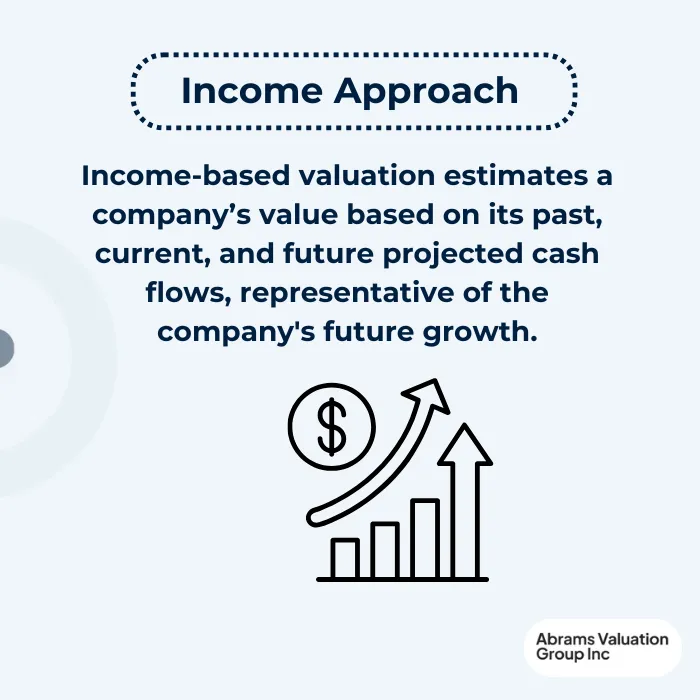
Either determined by its ability to generate future cash flows (Income Approach)
Its market positioning and competitive edge (Market Approach)
Or its valuable physical or intangible assets (Asset Approach)
Each of these approaches branches out into several more specific methods we employ to determine a business’s value. Learn more about how we value businesses with different methods. Usually, a blended approach that incorporates two or three of these will yield the best and most accurate valuation. Of course, the most appropriate valuation approaches will depend on the company details, the business context, available data, and the valuation purpose.
The Income Approach: Cash Flow Considerations
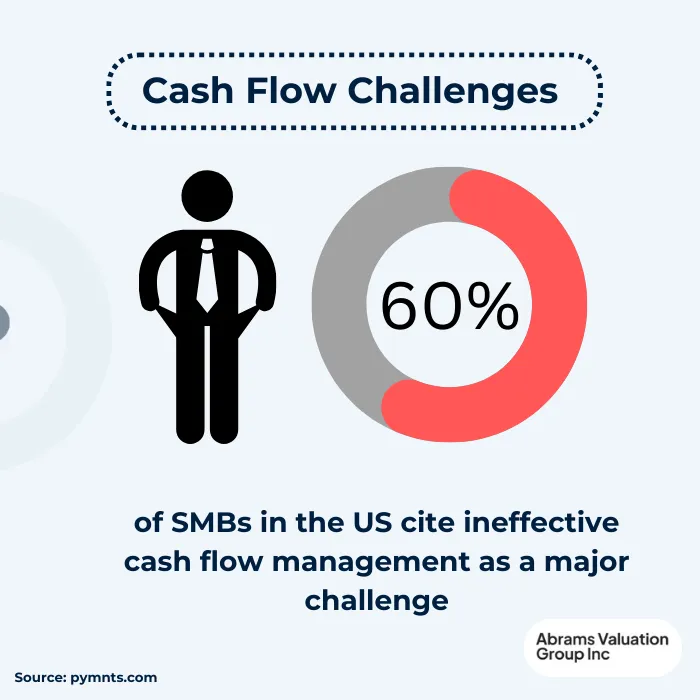
Examining cash flow is a critical part of valuing any business, as it represents a company’s ability to generate earnings. Cash flow is particularly important when valuing a small company, as this is an area where small businesses tend to struggle, and it is a leading cause of small businesses failing. Because this is such a common value pitfall for SMBs, a small company with average to excellent cash flow may be valued more highly than its similarly sized competitors. On the flip side, struggling with cash flow will certainly impact an SMB’s valuation, but as this is such common struggle, it is also “par for the course,” depending on the industry.
The discounted cash flow method, in particular, determines a business’s value based on how much the business’s projected future earnings are worth today, taking into account growth projections and industry standards. The rule of thumb in valuation is that money in the bank today is more valuable than money that will be in the bank at some point in the future, as many unknown factors could influence the future value of the money. A discounted cash flow analysis helps to calculate the present value of future cash flows, providing a more accurate valuation.

Asset Based Approach
The asset-based approach values a business based on its net assets, which are calculated by subtracting liabilities from total assets. This method is best suited for businesses with significant physical or tangible assets, such as manufacturing or real estate, or intangible assets. Valuable intangible assets, such as customer loyalty, goodwill, and trademarks, are also considered in this approach and can generate significant value, depending on the business’s asset composition. For example, a dental practice valuation might draw most of its value from high customer loyalty, which can be hard to quantify in dollars and cents for the average business appraiser. The asset-based approach focuses on the business’s tangible asset value, providing a clear picture of its financial health.

Market Considerations
Market considerations play a crucial role in business valuation, as they reflect the current market value of a business. The market approach estimates business value by comparing it to similar companies in the same industry. Market data is used to determine the value of a business, taking into account factors such as the industry average and growth projections. The market approach provides a realistic benchmark for a business’s value, helping owners make informed decisions.
For small businesses in particular, the market approach can offer significant benefits. By comparing their business to comparable companies, small business owners can gain insight into how their company stacks up against competitors and understand how market trends affect their value. For example, a small technology startup that has developed cutting-edge software may use the market approach to compare itself to other emerging tech firms with similar innovations and growth potential. This helps establish a fair valuation based on what comparable businesses are achieving in the market, which can be especially useful when seeking investment or preparing for a sale.

Similarly, small businesses in retail or hospitality industries can leverage the market approach by analyzing recent sales of comparable businesses in their local market. A boutique coffee shop or a rising competitor in the craft brewing industry, for instance, can use market data to assess their sale value relative to similar establishments, helping them set realistic expectations and negotiate effectively with potential buyers.
Overall, the market approach offers small business owners a practical way to understand their business’s market position, align their valuation with industry standards, and make strategic decisions to increase the business’s market value over time.
Calculating Business Worth
Calculating the worth of a small business involves a comprehensive evaluation of various financial factors, including revenue, net income, and cash flows. AVGI employs a sophisticated approach that blends multiple valuation methods to provide a more accurate and reliable estimate of a business’s value. By integrating the income approach—which focuses on the business’s potential to generate future cash flows—with the earnings method, which applies industry-standard multiples to earnings such as EBITDA or net income, AVGI captures both current performance and future profitability.
Additionally, AVGI incorporates asset-based and market approaches to account for tangible and intangible assets as well as market positioning relative to comparable companies. To further enhance valuation precision, AVGI utilizes regression analysis, a statistical technique that analyzes historical data and identifies key factors influencing business value. This allows for adjusting valuation models based on patterns and correlations found within industry data, market trends, and company-specific characteristics.
The combination of these approaches, as appropriate, and advanced analytics ensures that the calculated business worth reflects not only the financial health and growth projections but also external market conditions and industry standards. This blended methodology enables AVGI to deliver empirical, nuanced, data-driven valuations that help small business owners make informed decisions, negotiate effectively with prospective buyers, and strategically plan for the company’s future growth and success.
Business Valuations and Decision-Making
Business valuations play a crucial role in providing business owners with a clear and comprehensive picture of their company’s financial health. An accurate business valuation enables owners to make informed decisions about the expansion, sale, or strategic restructuring of their company. By establishing a realistic benchmark for the business’s value, valuations also serve as a powerful tool during negotiations with prospective buyers, ensuring that owners can confidently advocate for a fair price.
Moreover, the valuation process helps identify areas for improvement, enabling owners to implement targeted strategies to increase their business’s value over time. Regularly conducting business valuations allows owners to monitor progress, adapt their plans as needed, and stay aligned with market trends and industry standards. Key business decisions that a business valuation supports include:
- Determining the optimal timing for selling or acquiring a business
- Planning for business expansion or diversification
- Securing financing or attracting investors by demonstrating monetary value
- Structuring partnerships or ownership changes based on company valuation
- Implementing operational improvements to enhance profitability and growth potential
In summary, understanding and utilizing business valuations effectively is essential for making strategic decisions that drive sustainable growth and maximize the value of your company.
Growing Business Value
Improving a business’s value involves a multifaceted approach that includes increasing revenue, reducing costs, and enhancing overall financial health. Strategic investments in research and development, alongside the cultivation of valuable internal intangible assets such as intellectual property, can significantly boost a company’s worth.
Conducting regular business valuations not only provides owners with a clear understanding of their company’s current value but also helps identify key areas for improvement, offering a practical roadmap to increase business value over time. By consistently tracking progress through these valuations, owners can make informed adjustments to their strategies, ensuring sustained growth and maximizing the business’s potential in a competitive market.
Choosing the Right Expert for Your Small Company Valuation with Valuation Exposure
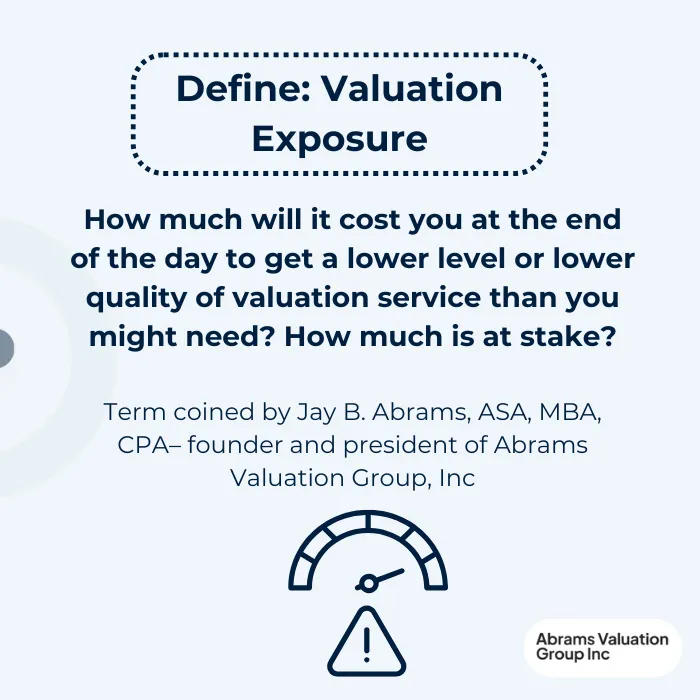
Valuation exposure is a key concept coined by Jay B. Abrams, ASA, MBA, CPA, Founder and President of Abrams Valuation Group, Inc. (AVGI). It refers to the potential cost or risk associated with obtaining a valuation that is lower than what your company actually requires. In other words, valuation exposure measures the consequences of an undervalued business appraisal, which can have significant financial and strategic repercussions.
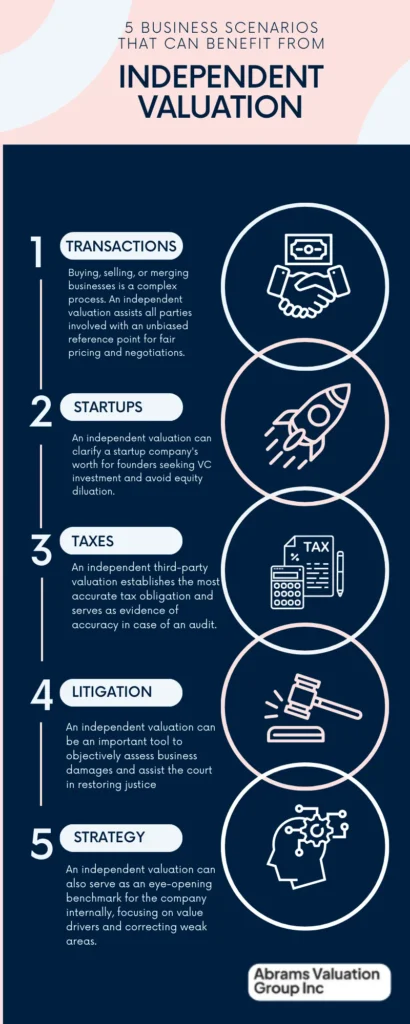
Determining the appropriate level of expertise to hire for your small company valuation largely depends on your valuation exposure. This means carefully assessing the purpose of the valuation and the stakes involved. High-stakes scenarios—such as litigation, tax reporting, or mergers and acquisitions (M&A)—carry substantial valuation exposure because errors or undervaluations in these contexts can lead to costly legal disputes, tax penalties, or lost business opportunities. In such cases, it is highly recommended to engage top-level valuation experts who possess specialized knowledge and experience to ensure an accurate and defensible valuation.
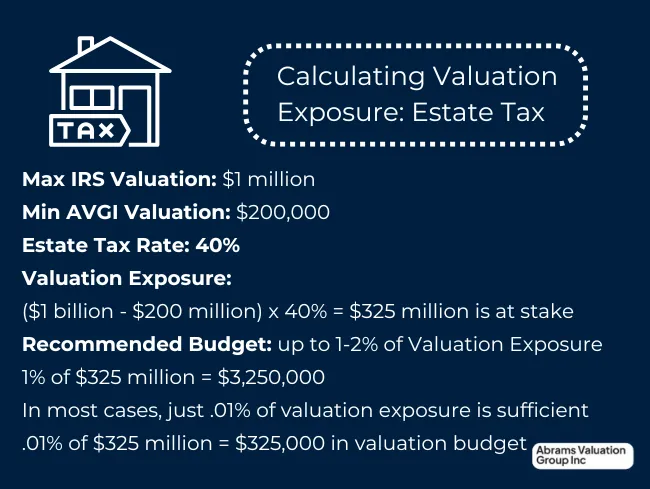
Conversely, in lower-stakes situations where the valuation is primarily intended for internal growth strategy, business planning, or routine financial assessments, the valuation exposure is relatively low. Here, it may not be necessary to invest in a top-tier valuation expert. Instead, a qualified CPA with business valuation experience can often provide a sufficiently accurate valuation to meet the company’s needs without incurring excessive costs.
By understanding valuation exposure, business owners can make informed decisions about the level of financial expertise required for their valuation. This approach helps balance the cost of the valuation with the potential risks involved, ensuring that the business obtains the right valuation quality for its specific purpose and risk profile.
Empower Your Small Business with an Accurate Valuation
Understanding how to value a small company is essential for making informed decisions that drive growth, attract investors, and maximize your business’s potential. Whether you choose the income approach, asset-based method, or market approach, combining these valuation methods provides a comprehensive and accurate picture of your business’s worth. Regular business valuations not only clarify your company’s financial health but also highlight opportunities to increase value and strengthen your market position.
At AVGI, we specialize in delivering expert, data-driven valuations tailored to small businesses. Our zero-obligation small business valuation consultation offers you a risk-free opportunity to gain valuable insights into the value of your company and explore strategies for future growth. Don’t leave your business’s worth to chance—reach out to AVGI today and take the first step toward unlocking the full potential of your small company.


